
Brief Introduction
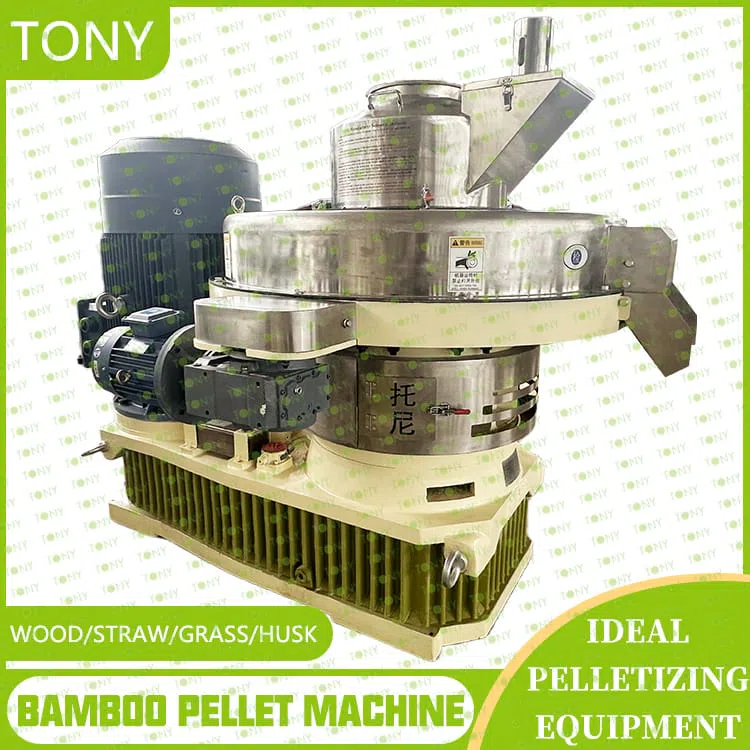
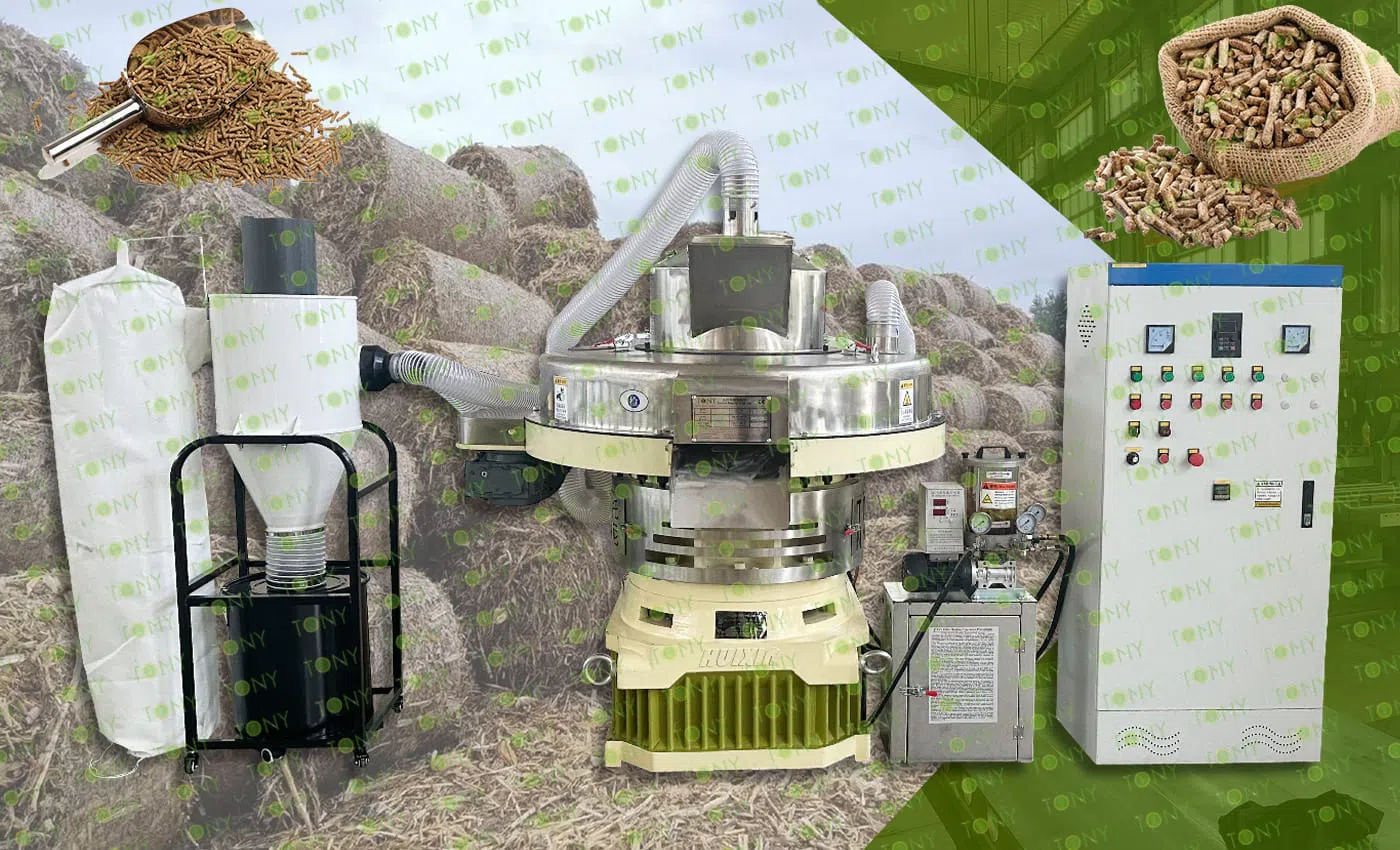
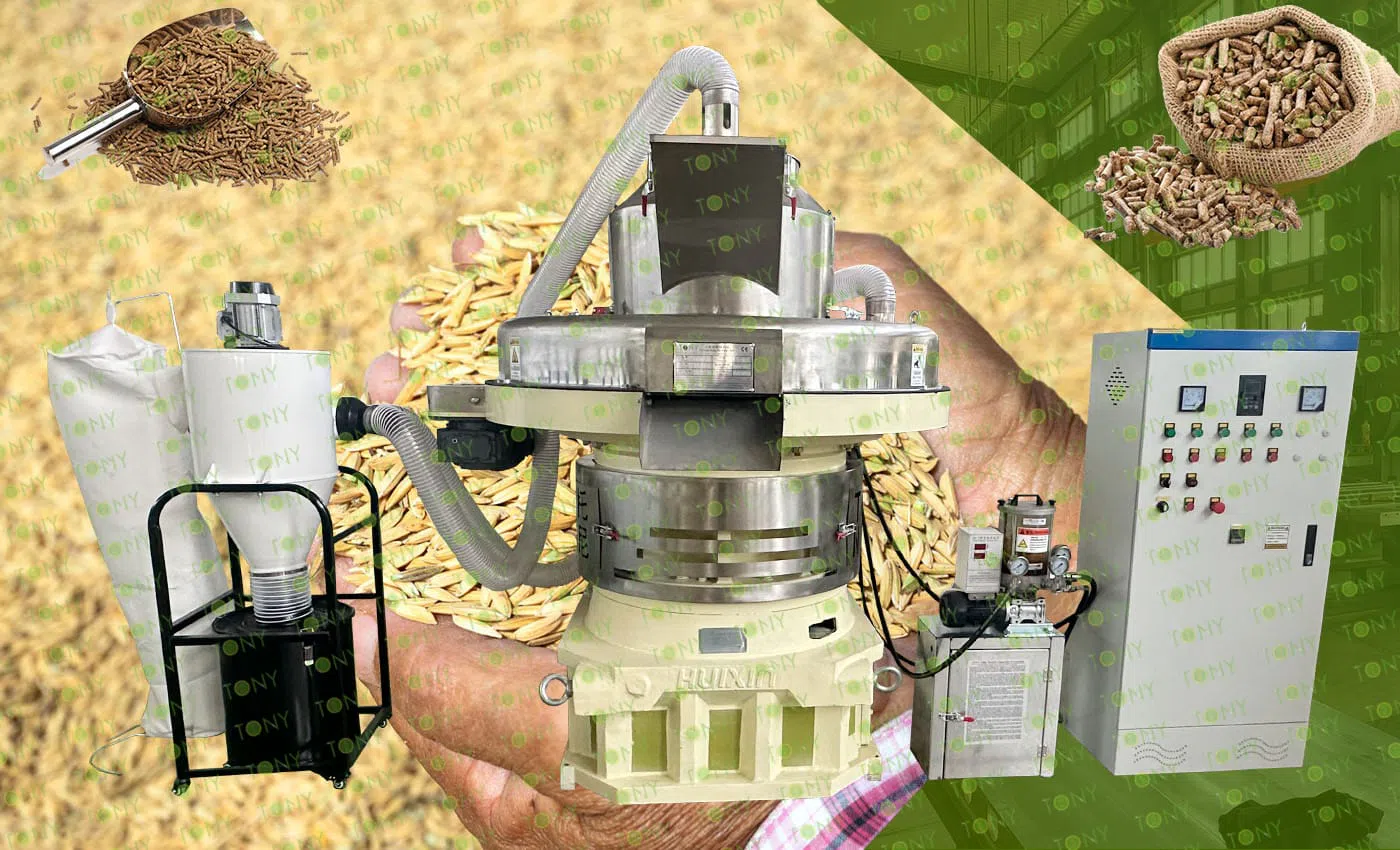
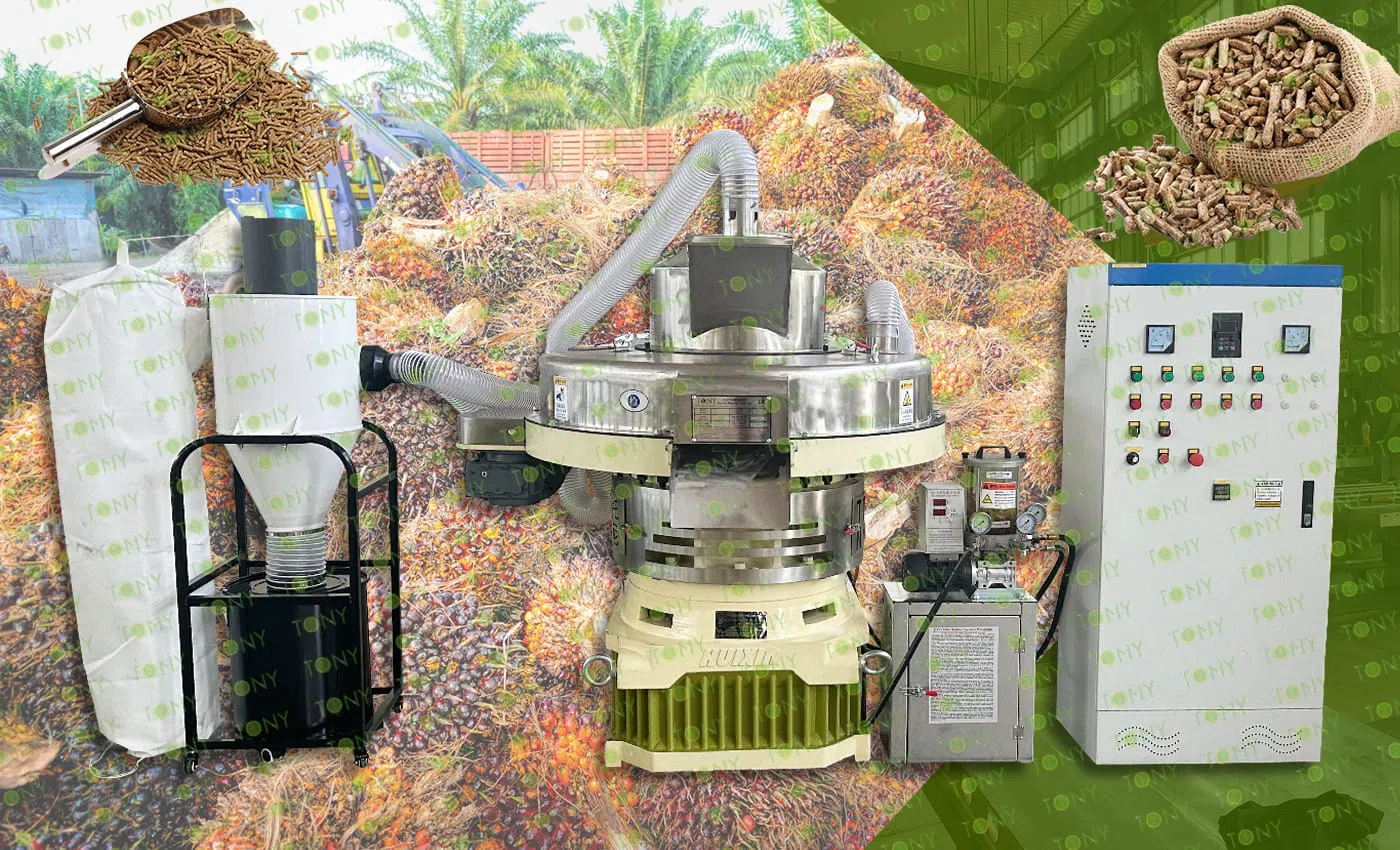
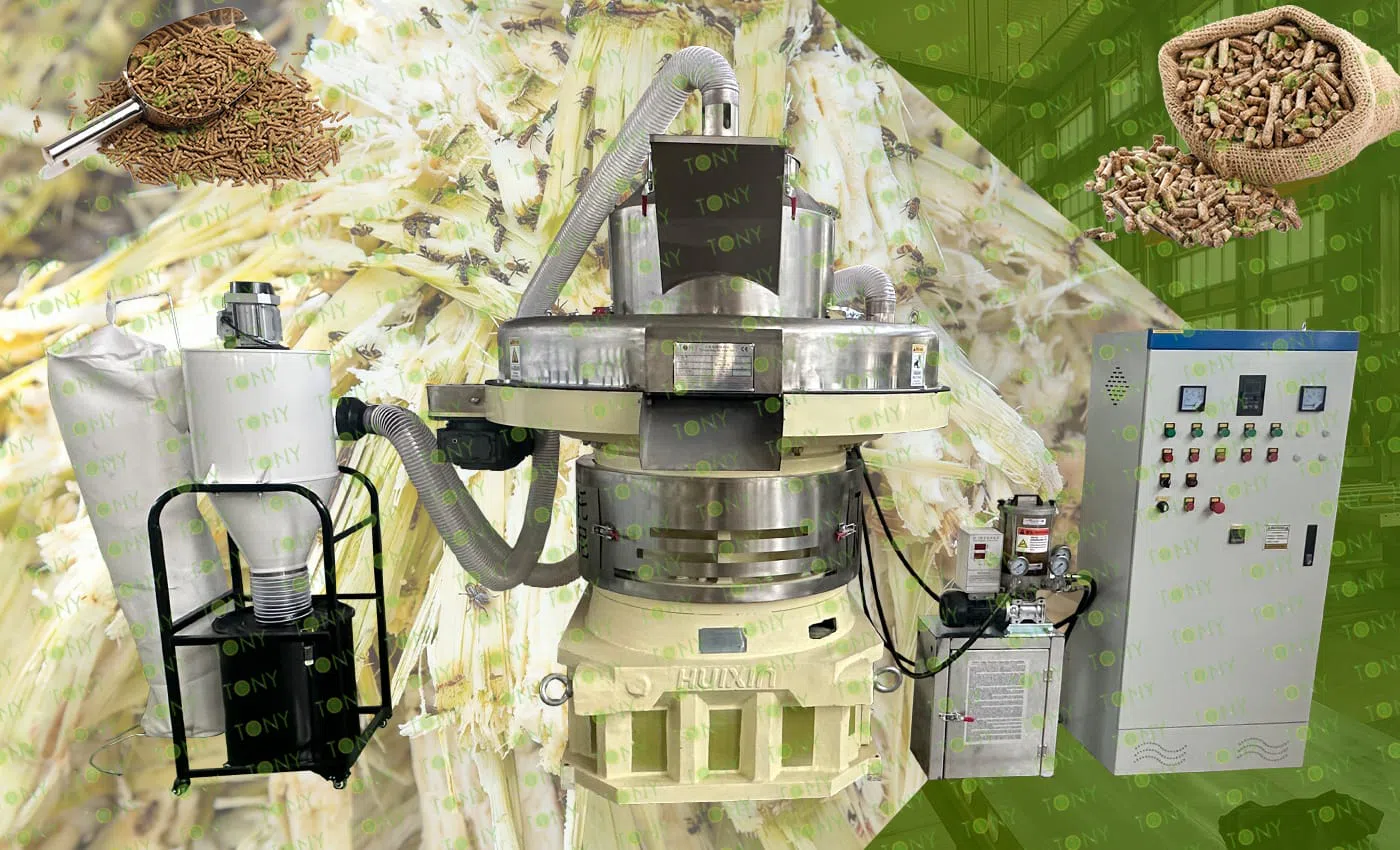
TONY biomass pelletizing mill is tailor-made for mid-size and large manufacturing facilities. It belongs to our newly developed eco-friendly energy-saving equipment range. This press turns pre-shredded timber, corn stalk, crop residues, bamboo flour, forage, cereal straw, rice husk and similar biomass feedstock into compact fuel pellets.
This bamboo pelletizing unit adopts dual-stage speed regulation. It features modest power draw, well-structured layout, low running cost and extended service lifespan.
The vertical ring die pelletizing mill processes eucalyptus, pine, birch, poplar, fruit tree scraps, straw and bamboo into fine sawdust for biofuel production. It is equipped with an innovative double-layer vertical ring die. This model works with rotating pressing rollers and a stationary die, making it highly suitable for processing diverse hardwood species.

Working Principle
Feeding and Distribution: Material enters vertically from the feed port and lands on a rotating platen. The rotation of the platen distributes the material continuously and evenly across the mold cavity surface, i.e., the contact surface between the press roller and the mold.
Compression Molding: The press roller rotates under power, applying pressure to the material distributed on the mold surface. The material is squeezed into the mold cavity by the press roller and the mold. During this process, the material is subjected to high pressure and high temperature, undergoing physical or chemical changes, gradually forming a cylindrical solid body that continues to lengthen.
Cutting and Discharging: When the cylindrical solid body reaches a certain length, it is cut by cutters evenly distributed around the mold, forming pellets of a specific size. Particles scattered around the mold are collected by the feed teeth and discharged to the discharge port, where they fall automatically under the influence of gravity, completing the pelletizing process.
Main Parts
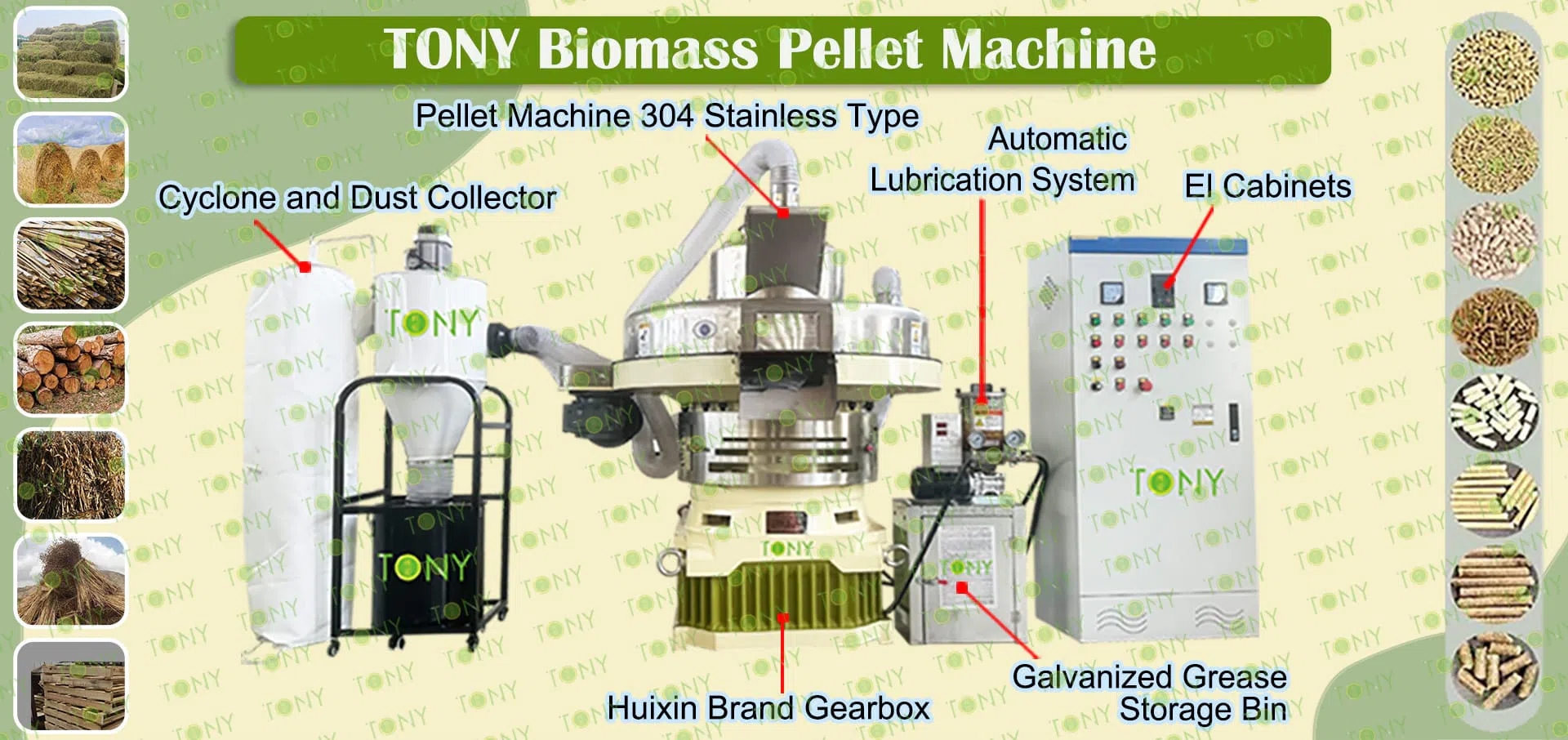
TONY's Bamboo Pellet Making Machine
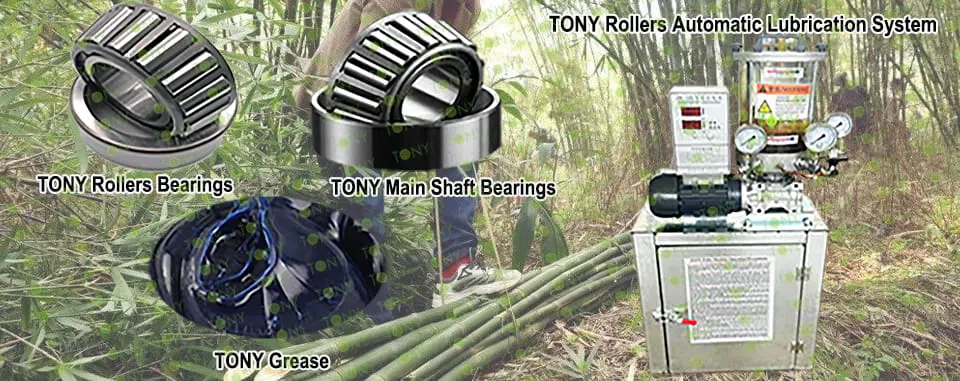 |  |
 |  |
 |  |
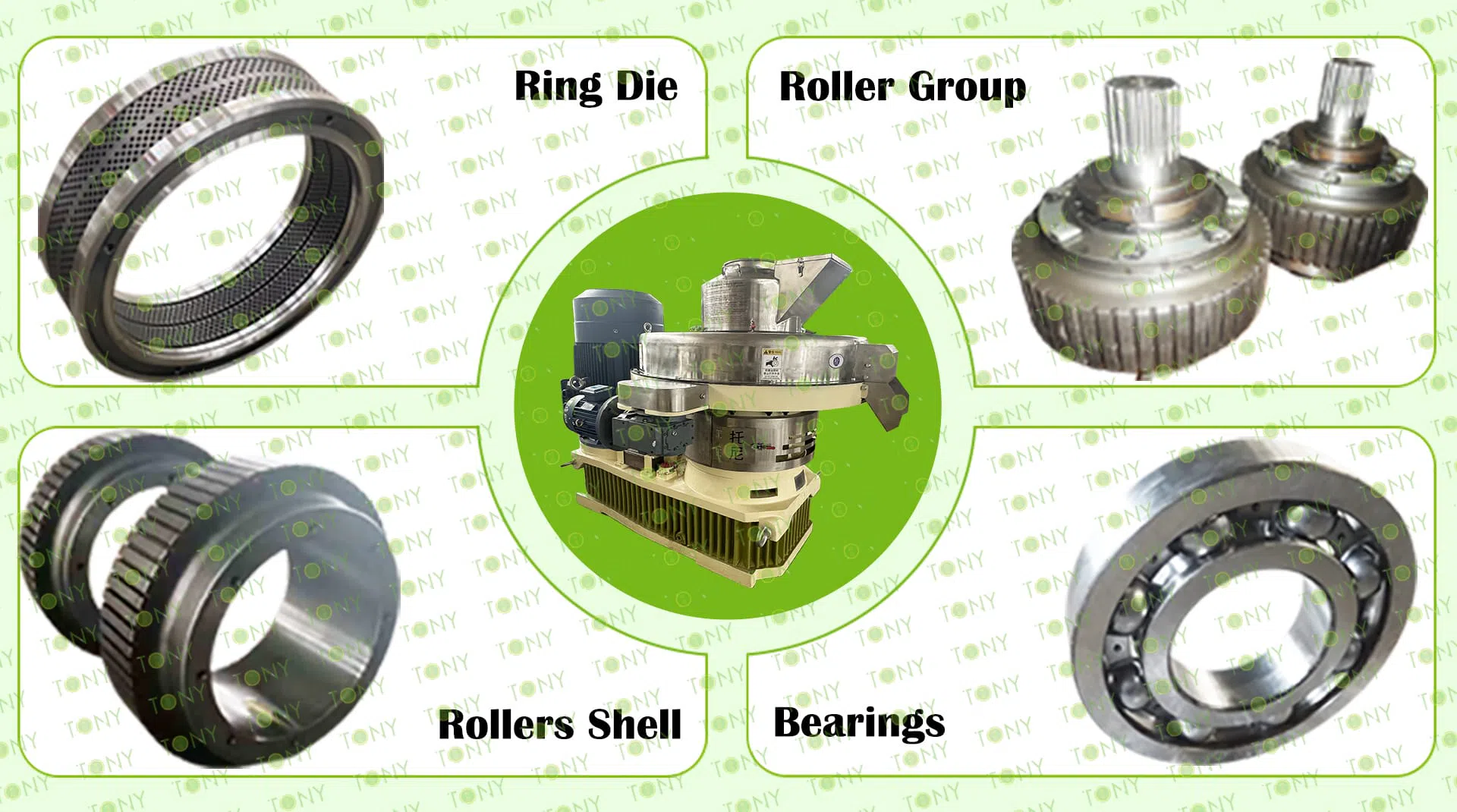
Main Spare Parts
Parameter
TONY Bamboo Pellet MachineType Model | |||||||||
NO | Model | Main Power | Lubrication Power | Dust Power | Capacity | Weight | Ring Die Inner Size | Machine Size | Remarks |
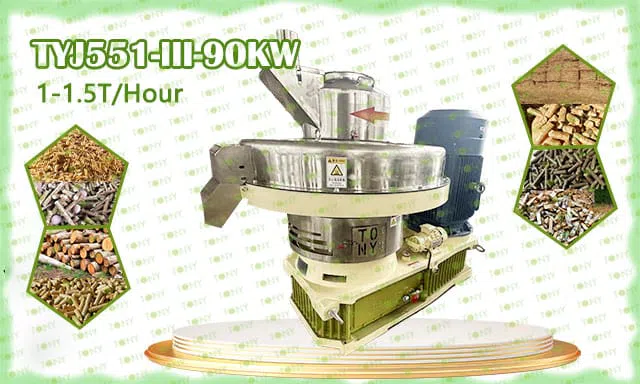
1 | TYJ551-III-90 | 90KW+3KW | 0.25KW | 0.95KW | 1-1.5TPH | 5.2T | 560MM | 2364*1550*1705MM | Same Model For Huixin Brand Gearbox Everthing the same,just motor different |
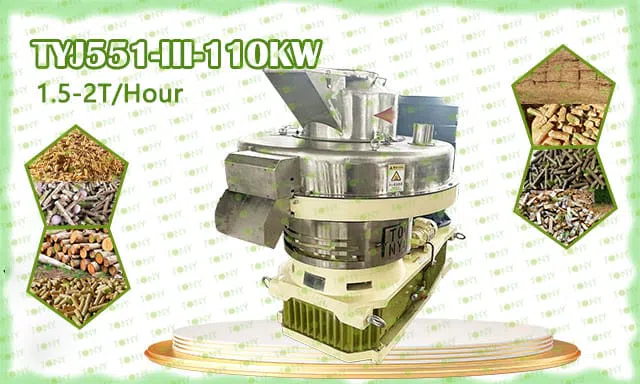
2 | TYJ551-III-110 | 110KW+3KW | 0.25KW | 0.95KW | 1.5-2TPH | 5.3T | 560MM | 2364*1550*1705MM | |
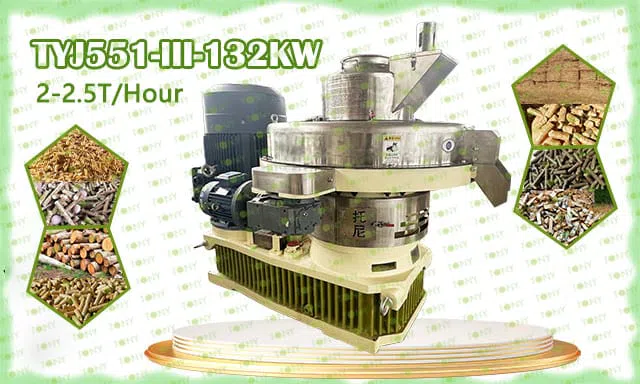
3 | TYJ551-III-132 | 132KW+3KW | 0.25KW | 0.95KW | 2-2.5TPH | 5.5T | 560MM | 2364*1550*1705MM | |
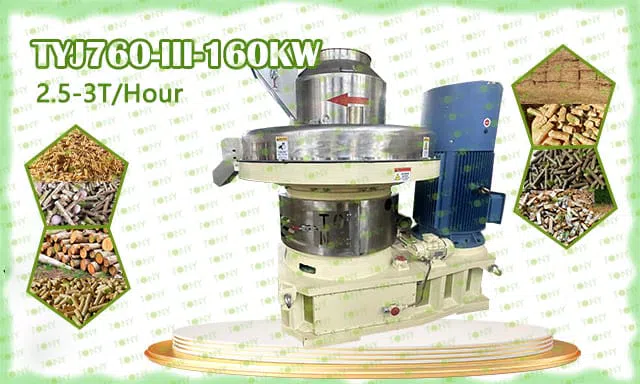
4 | TYJ760-III-160 | 160KW+4KW | 0.25KW | 0.95KW | 2.5-3TPH | 9T | 760MM | 2464*1750*2150MM | Huixin Brand Gearbox |
5 | TYJ760-III-185 | 185KW+4KW | 0.25KW | 0.95KW | 2.8-3.3TPH | 9.2T | 760MM | 2564*1850*2150MM | Bigger Model Huixin Brand Gearbox |
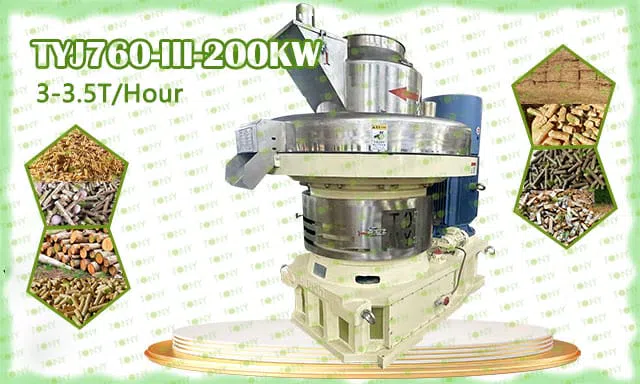
6 | TYJ760-III-200 | 200KW+4KW | 0.25KW | 0.95KW | 3-3.5TPH | 9.3T | 760MM | 2564*1850*2150MM | Bigger Model Huixin Brand Gearbox |
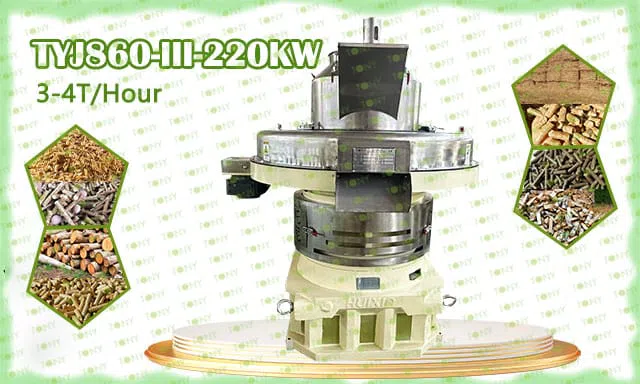
7 | TYJ850-III-220 | 220KW+4KW | 0.25KW | 0.95KW | 3-4TPH | 11T | 860MM | 2664*1950*2150MM | Huixin Brand Gearbox |
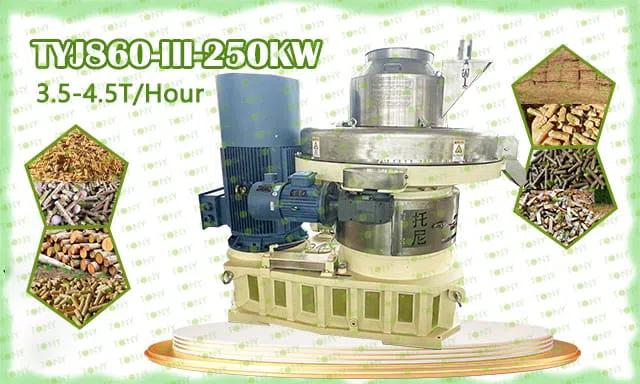
8 | TYJ860-III-250 | 250KW+4KW | 0.25KW | 0.95KW | 3.5-4.5TPH | 12T | 860MM | 2864*2150*2150MM | Bigger Model for Huixin Brand Gearbox |
9 | TYJ860-III-280 | 280KW+4KW | 0.25KW | 0.95KW | 4-5TPH | 13T | 860MM | 2864*2150*2150MM | Bigger Model for Huixin Brand Gearbox |
10 | TYJ860-III-315 | 315KW+4KW | 0.25KW | 0.95KW | 4.5-5TPH | 14T | 860MM | 2864*2150*2200MM | Bigger Model for Huixin Brand Gearbox |
Suitable Raw Materials
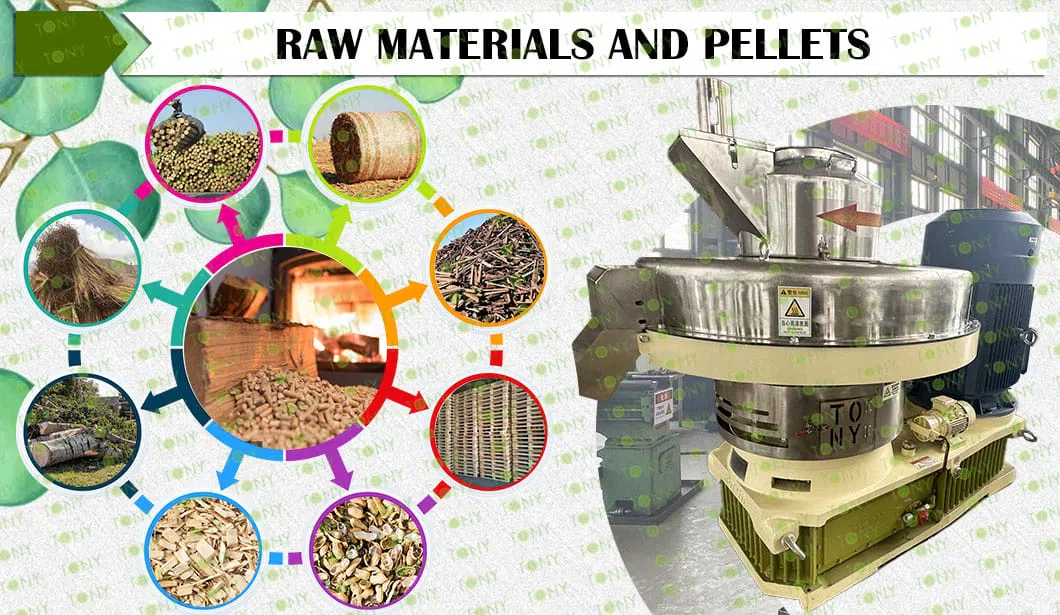
1. Forestry-Related Raw Materials
Sawdust: Sawdust cut by band saws in wood processing plants. It generally has a moisture content below 15% and is uniform in size. It is a good raw material for pellet processing and requires no further processing. It can be directly fed into the biomass pellet machine.
Wood shavings: Commonly produced by furniture factories, they can be divided into large and small shavings based on their size.
Wood chips: These are usually scraps from furniture processing.
Bark, waste wood, and branches: Bark, waste wood, and branches generated during wood processing and wood-based panel production.
Logs: Freshly felled trees.
2. Agricultural-Related Raw Materials
Crop straw: Various types of crop straw, including wheat straw, cotton straw, rice straw, and corn stalks, are produced after harvest. They can be used as feedstock for biomass pellet machines.
Corn cobs: A type of crop residue, they can be used as an energy source.
3. Other Raw Materials
Livestock wastewater: Contains a large amount of organic matter and is easy to collect. Other types of combustible biomass: such as bamboo, sugar cane, alfalfa, rice husk, peanut shell, efb, coconut shell, etc.
What Are The Biomass Pellets Used For?
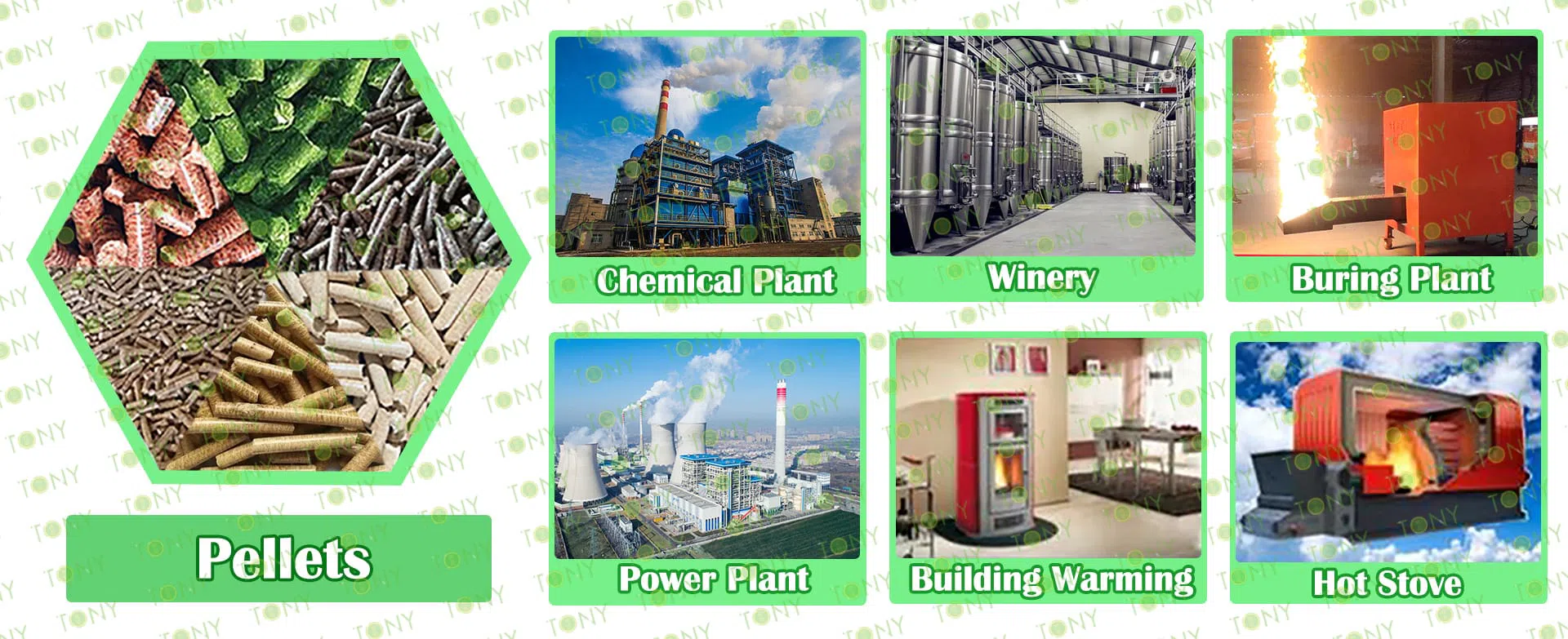
Application Areas
1.Energy
Domestic Heating Application: Biomass granules suit household heating furnaces and fireplaces to substitute coal and firewood. They deliver superior burning efficiency with lower pollution, convenient storage and simple operation.
Industrial Boiler Fuel: These granules serve as major fuel sources for industrial boilers. Replacing coal helps enterprises cut down sulfur dioxide, nitrogen oxide and particulate discharges to realize clean manufacturing and satisfy environmental standards.
Power Supply: Biomass granules are applicable in thermal power plants. Different from coal power, this renewable carbon-neutral fuel can lower carbon output and lessen reliance on fossil energy.
2.Agriculture and Forestry
Biomass Waste Recycling: Straw, wood shavings, rice husk, bark and other agroforestry residues can be turned into valuable fuel granules. This circular utilization cuts contamination and raises the economic value of forest and farm resources.
Livestock Breeding: Certain biomass granules work as compound feed on large-scale farms. Easy for storage and shipment, pelletized feed provides balanced nutrition to promote livestock healthy growth.
Details
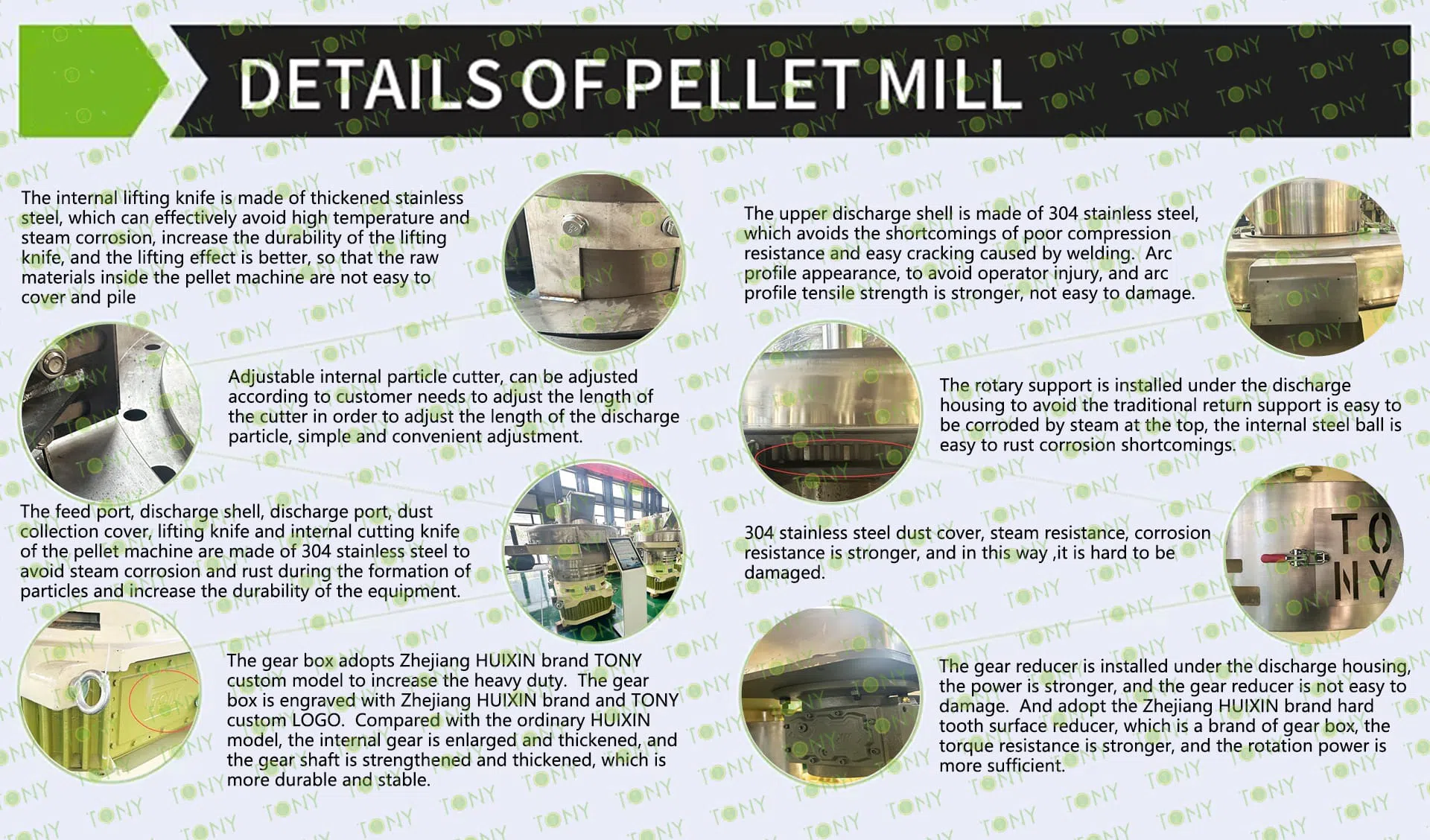
Unique Advantages
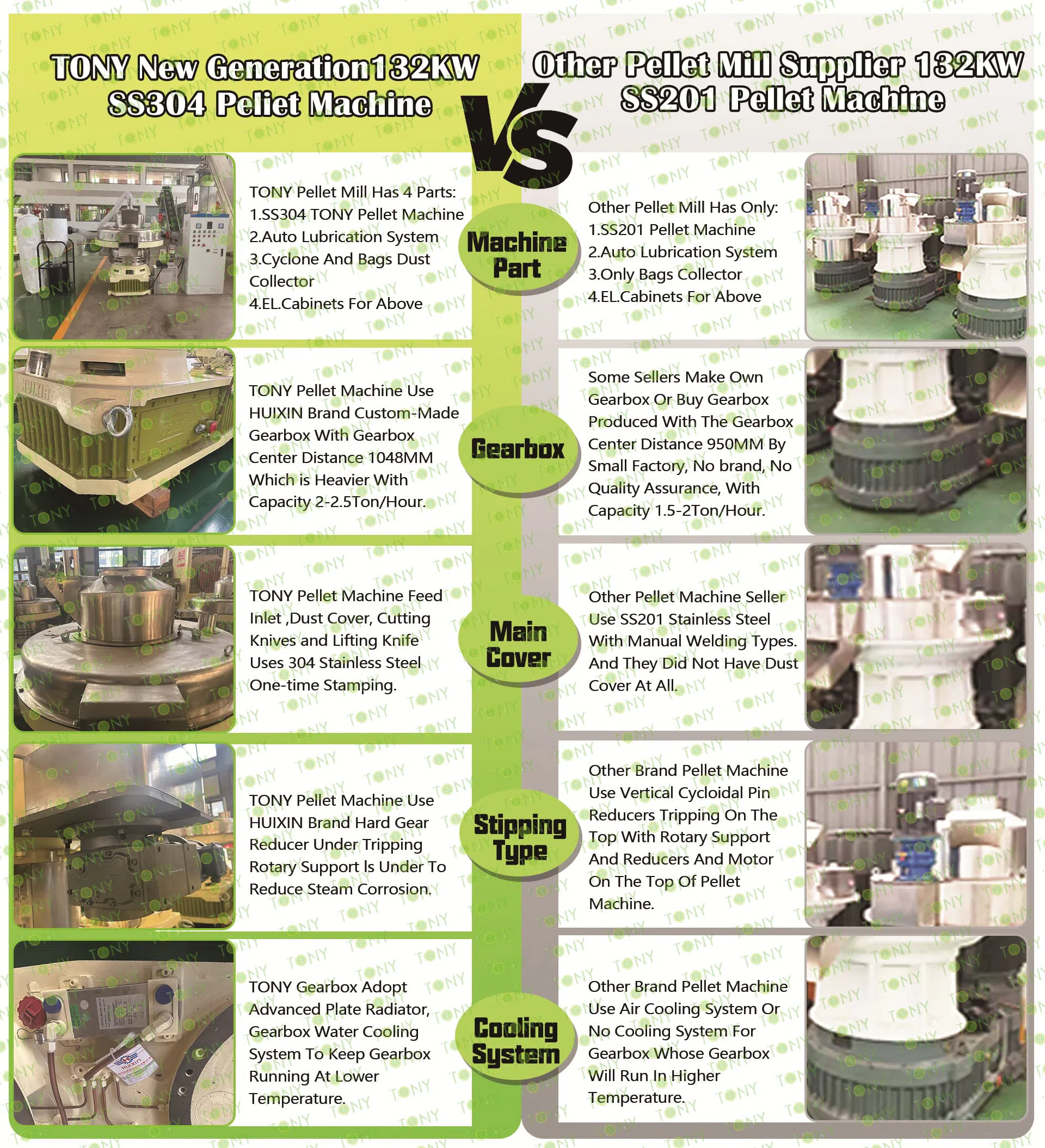
Other Models Pellet Machine
 |  |  |
 |  |  |
Pellet Machine With Different Output
Pellet Mill Maintenance Guidelines
TONY pellet mill is essential equipment for producing feed, biomass fuel and organic fertilizer. Working in long-term high-load and high-dust environments, it is susceptible to component wear and die hole blockage. Standardized daily and regular maintenance can effectively reduce failure rates, extend equipment service life, lower maintenance costs, and ensure stable and efficient production line operation. The key maintenance specifications are summarized as follows:
1. Pre-operation Maintenance. Before each startup, inspect key components including bolts, bearings, pressure rollers and dies to rule out looseness, cracking and deformation. Clean sundries and accumulated materials in the feed inlet and die holes to prevent jamming. Check the lubrication system to ensure sufficient and clean lubricating oil. Perform 1-2 minutes of no-load trial operation, and start formal feeding only after confirming the transmission system works normally without abnormal noise or vibration.
2. In-operation Monitoring. Overload and over-speed operation are strictly prohibited. Keep uniform feeding and avoid unevenly damp materials or hard foreign matters to prevent damage to dies and pressure rollers. Continuously monitor equipment temperature, current and vibration. Shut down the machine immediately for troubleshooting once abnormalities occur; faulty operation is forbidden. Regularly clean surface dust and residual materials to guarantee good heat dissipation and flexible component movement.
3. Post-operation Maintenance. After shutdown, thoroughly clear residual materials from die holes to prevent blockage after drying. Clean oil stains and deposits on pressure rollers, main shafts and chains, and properly adjust the tightness of belts and chains to reduce transmission wear. Cut off the power, check circuits and switches, and record equipment operation and maintenance conditions truthfully for subsequent overhaul reference.
4. Regular In-depth Maintenance. Clean oil pipelines and replace deteriorated lubricating oil weekly, and adjust pressure roller gaps for uniform granulation. Monthly inspect vulnerable parts such as bearings and oil seals, replace worn or aged accessories, and fasten loose bolts. Conduct a comprehensive annual overhaul to clean core structures, inspect motors and hydraulic systems, and replace worn dies, seals and all lubricants to restore full equipment performance.
5. Safety Operation Prohibitions. Do not open the equipment cover or clean sundries manually during operation to avoid safety accidents. Never use inferior lubricating oil or mix different oil types. For long-term shutdown, empty internal materials, conduct anti-rust treatment on metal parts, and store the equipment in a dry and ventilated place. Strict maintenance implementation stabilizes equipment performance and ensures efficient production.
Services

Certificate