
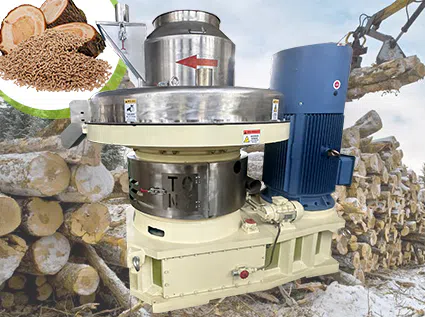
Industry experts caution that blindly applying standard pellet mills to diverse biomass materials can lead to poor pellet quality, low output, and frequent equipment failures.
In the rapidly growing biomass pelletizing industry, many newcomers often ask whether a single pellet mill can universally process all types of raw materials, including straw, sawdust, rice husks, bark, and forage. The answer, according to industry professionals, is that pellet mills are not completely universal. While they can handle multiple materials, successful processing depends heavily on proper adaptation and adjustment.
The fundamental challenge lies in the varying physical properties of different raw materials. Lightweight, soft materials such as straw, rice husks, and hay have short fibers and are relatively easy to compress. Conventional compression-ratio dies can process these materials effectively, and most standard pellet mills can maintain stable production.
However, hard materials such as large sawdust, bamboo chips, hardwoods, and bark possess long fibers, high hardness, and strong resistance. Processing these materials demands significantly higher equipment power, die strength, and compression ratios. Forcing ordinary models to handle such materials frequently results in die blockages and machine stalls.
The so-called "universal pellet mills" currently on the market are therefore not universally applicable but rather require specific adjustments and adaptations. A standard multi-functional TONY pellet mill, for example, can be adapted to most agricultural and forestry waste materials by changing dies with different compression ratios, adjusting the gap between pressure rollers, and controlling the feeding speed.
Moisture content is another critical factor. Raw materials must generally be maintained between 12% and 18% moisture. If too dry, pelletizing becomes difficult; if too wet, pellets easily become loose and moldy. Regardless of the material, insufficient moisture content will prevent proper pelletizing.
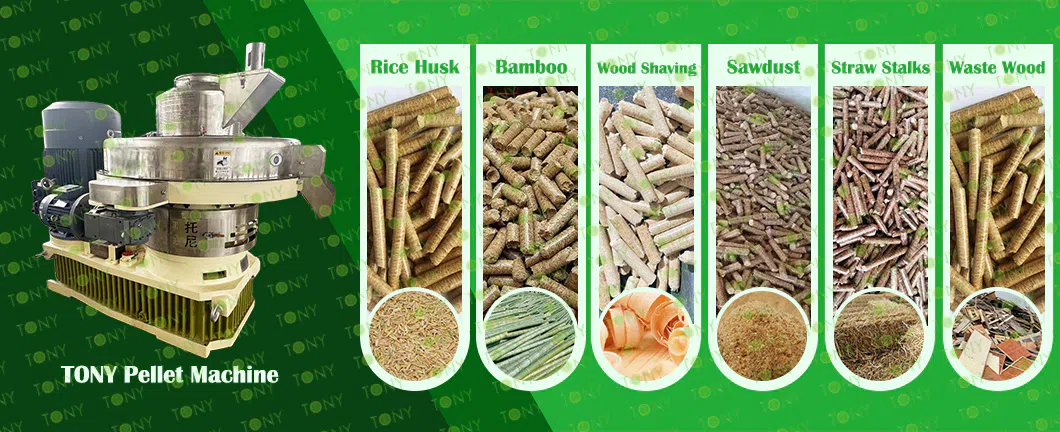
Industry experts emphasize that achieving multi-purpose functionality and stable production requires more than just universal equipment. Parameters must be adjusted to match specific material characteristics. Targeted selection and scientific adjustment of equipment parameters can prevent equipment failures, extend machine life, and ensure good pellet formation, stable output, and satisfactory quality.
This approach ultimately allows one machine to process multiple raw materials, reducing equipment investment costs and increasing production profits for operators.


