Brief Introduction
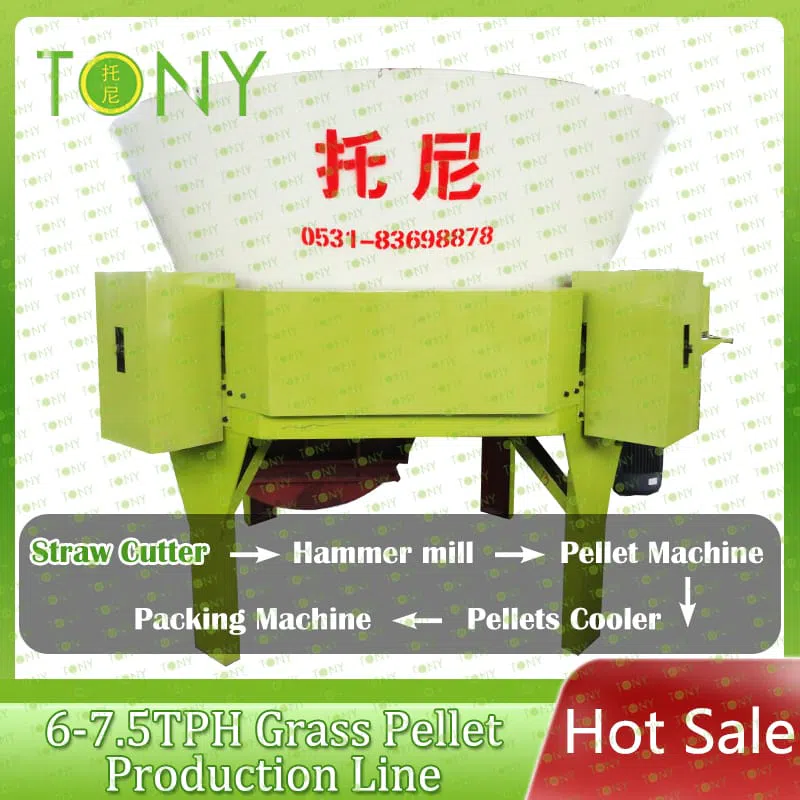
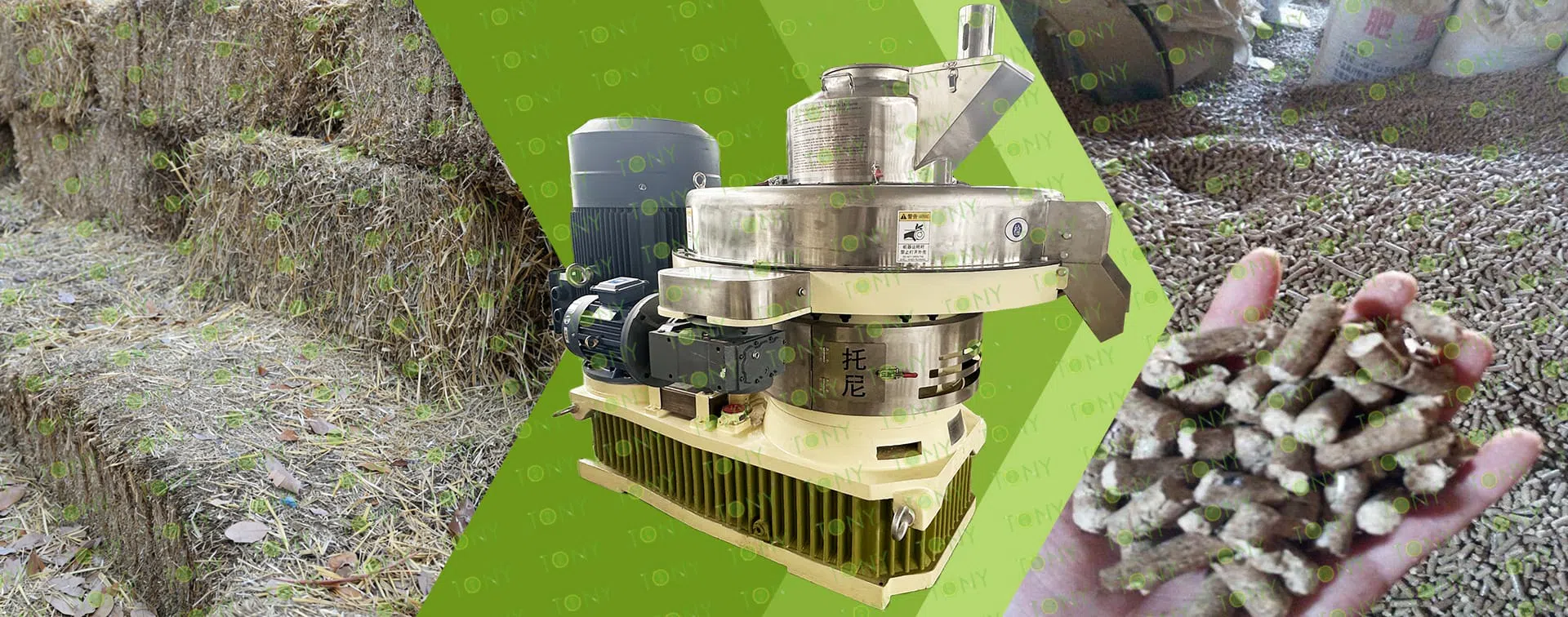
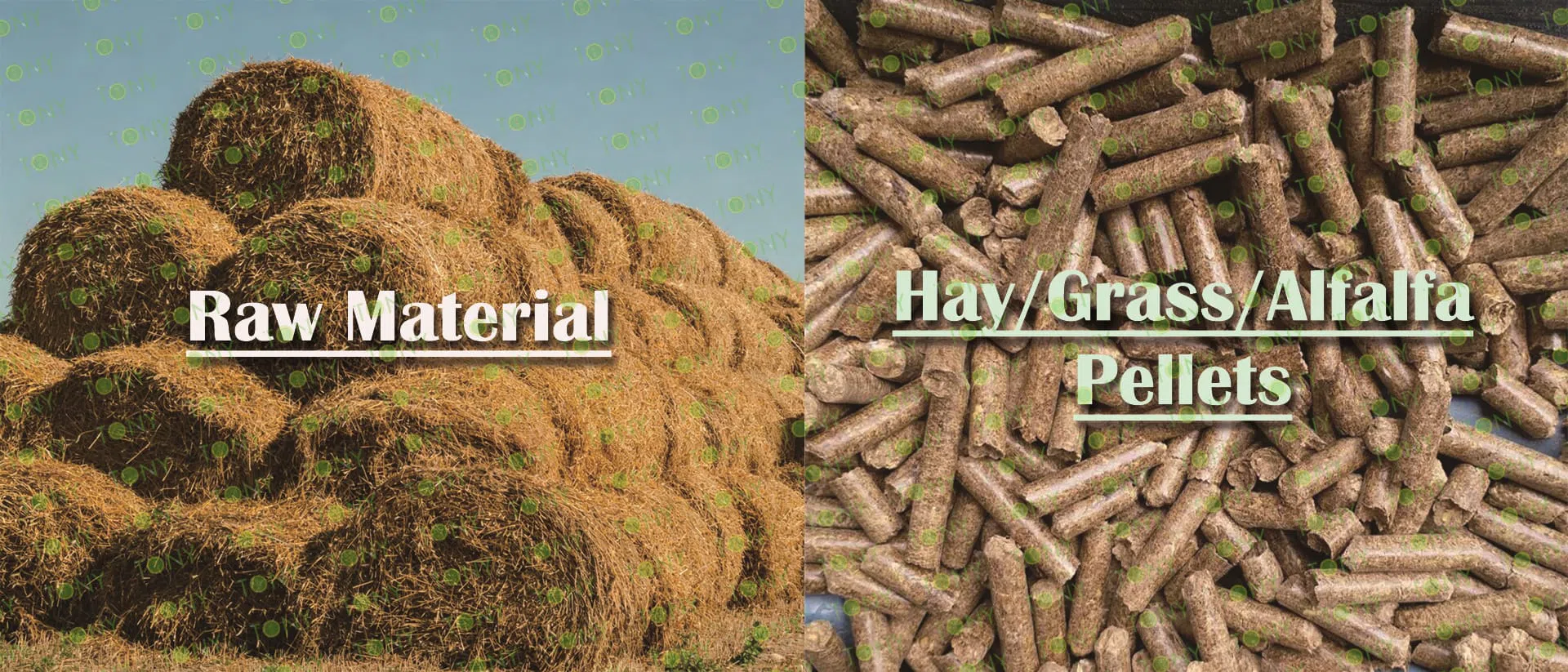
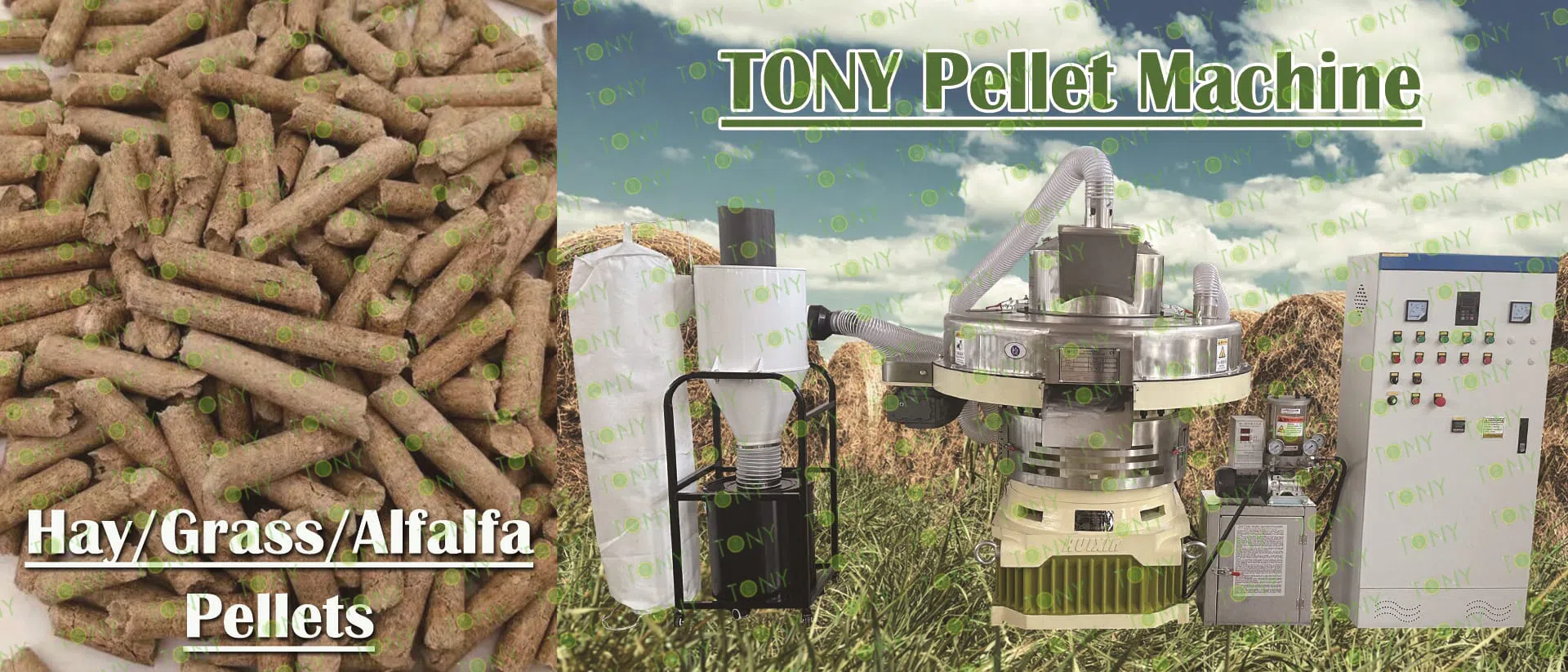
TONY Brand 6–7.5TPH Dried Grass Pellet Line transforms dried grass and other agricultural biomass residues into biomass pellets. Grass pellets have two major uses. When applied as fuel, they fit power station boilers, industrial boilers and residential heating systems. Their heat value approximates coal, with reduced expenses and cleaner combustion, making them a sustainable energy option. When used as animal fodder, pellets manufactured from this grass pellet mill are ideal for livestock. They optimize grass resource usage, cut fodder expenditure and address the challenge of excess grass waste treatment. | 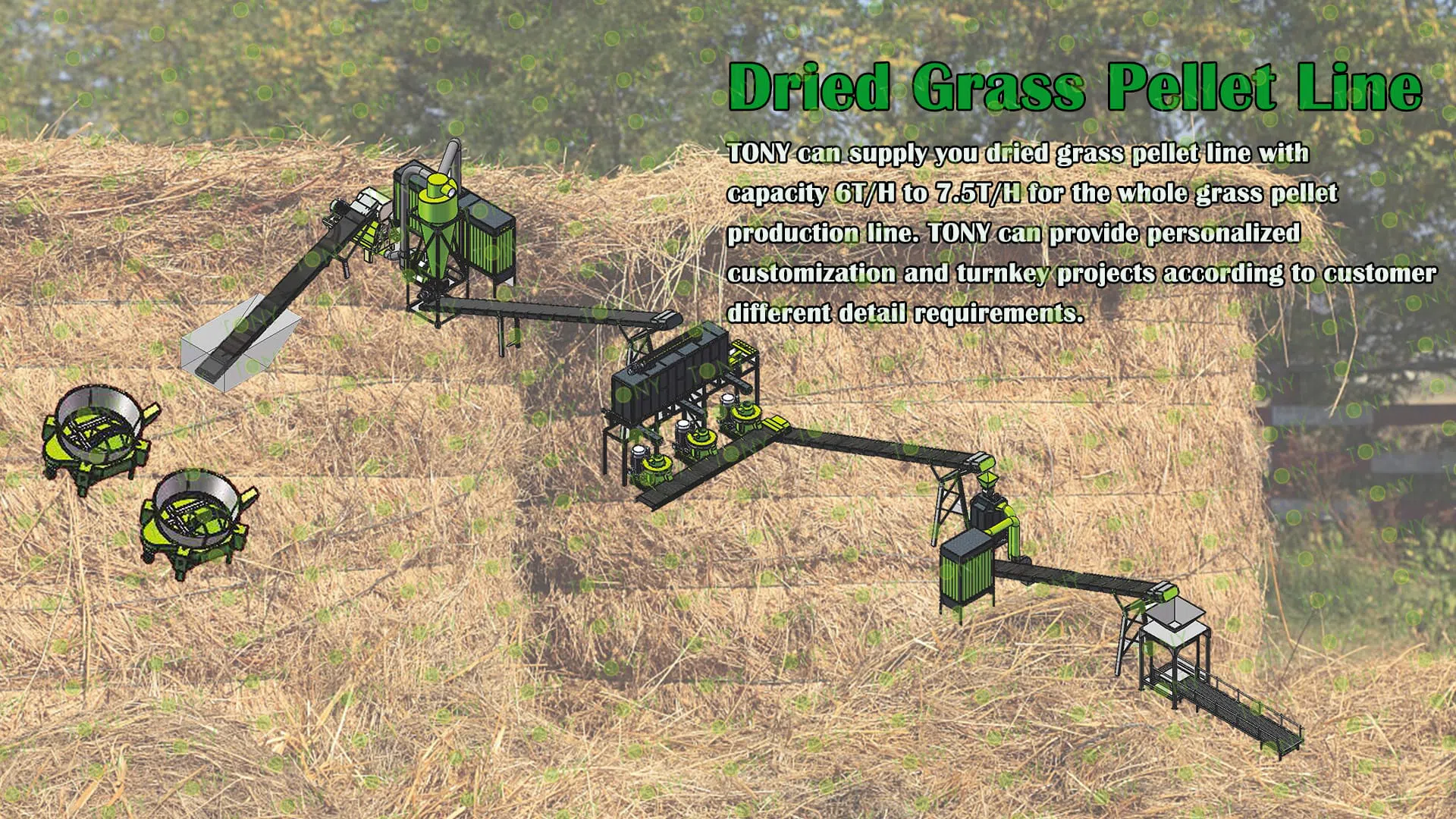 |
1.Output: 6–7.5 Ton/Hour
2.Feedstock: Dried grass
3.Moisture content: Approximately 10–15%
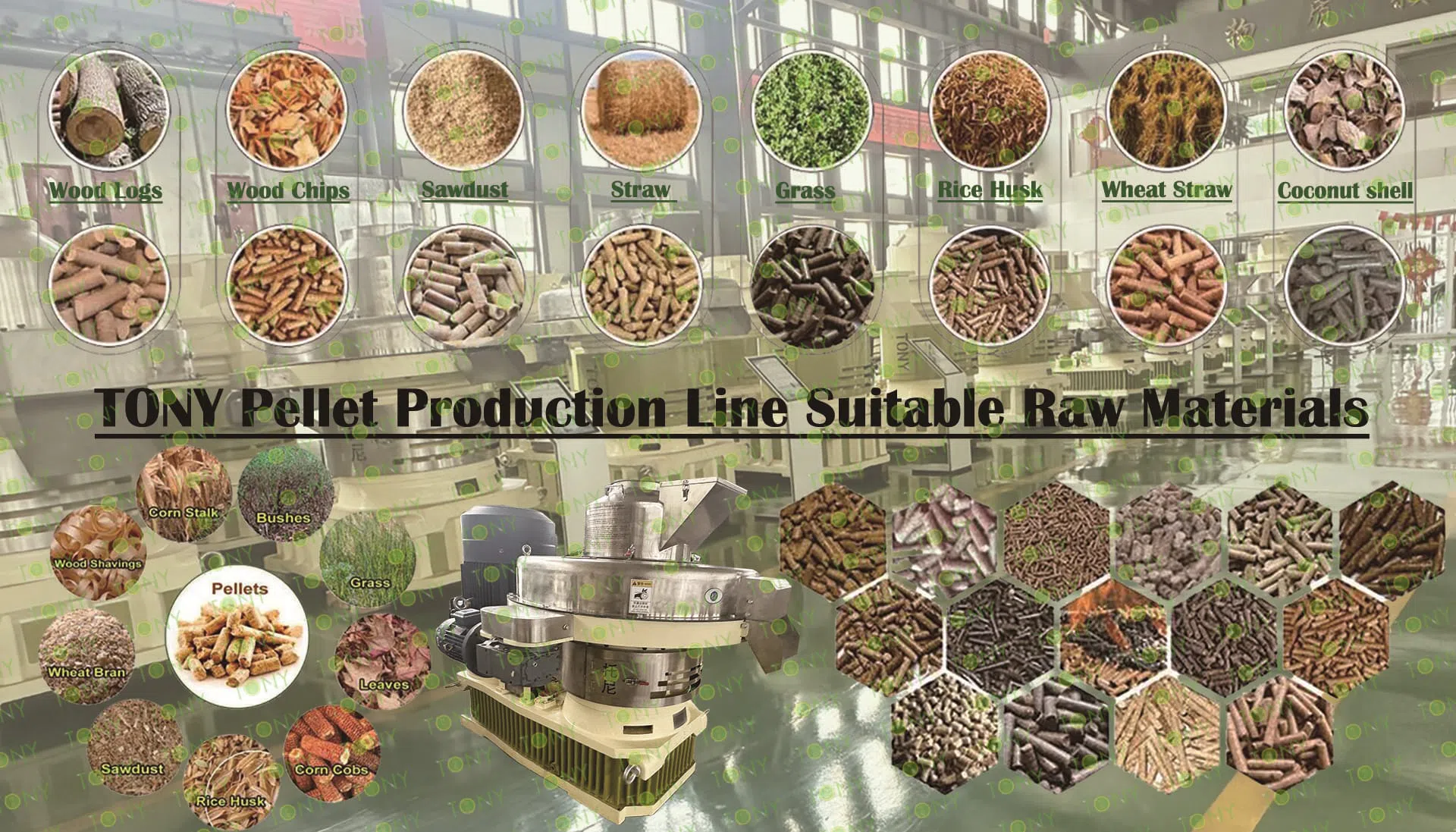
4.Application: Various biomass raw materials qualified for pelletizing. Target clients: Renewable energy enterprises, farm cooperatives and small rural processing workshops with stable supplies of dried grass and other agricultural byproducts.
5.Finished pellet market: Grass pellets feature two core utilization routes: clean energy replacement and feed supplement. They can be adopted in multiple scenarios including industrial heating, livestock breeding and domestic heating. The product helps eliminate pollution risks from discarded grass, while supplying low-cost energy and fodder resources.
Processing Procedure
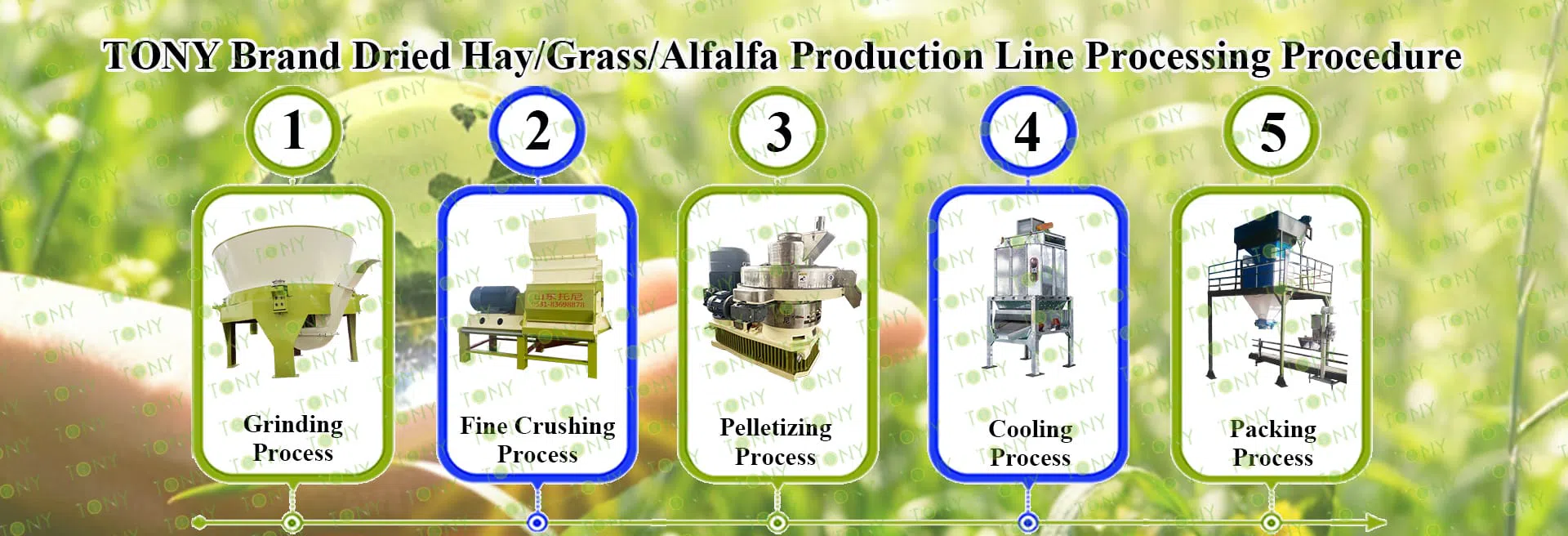
This pellet line adopts roughly 5 working procedures to turn dried grass with 10–15% moisture into 6–8mm finished pellets.
It mainly includes: 1. Grinding Stage → 2. Fine Crushing Stage → 3. Pelletizing Stage → 4. Cooling Stage → 5. Packing Stage, the full 5 procedures listed above.
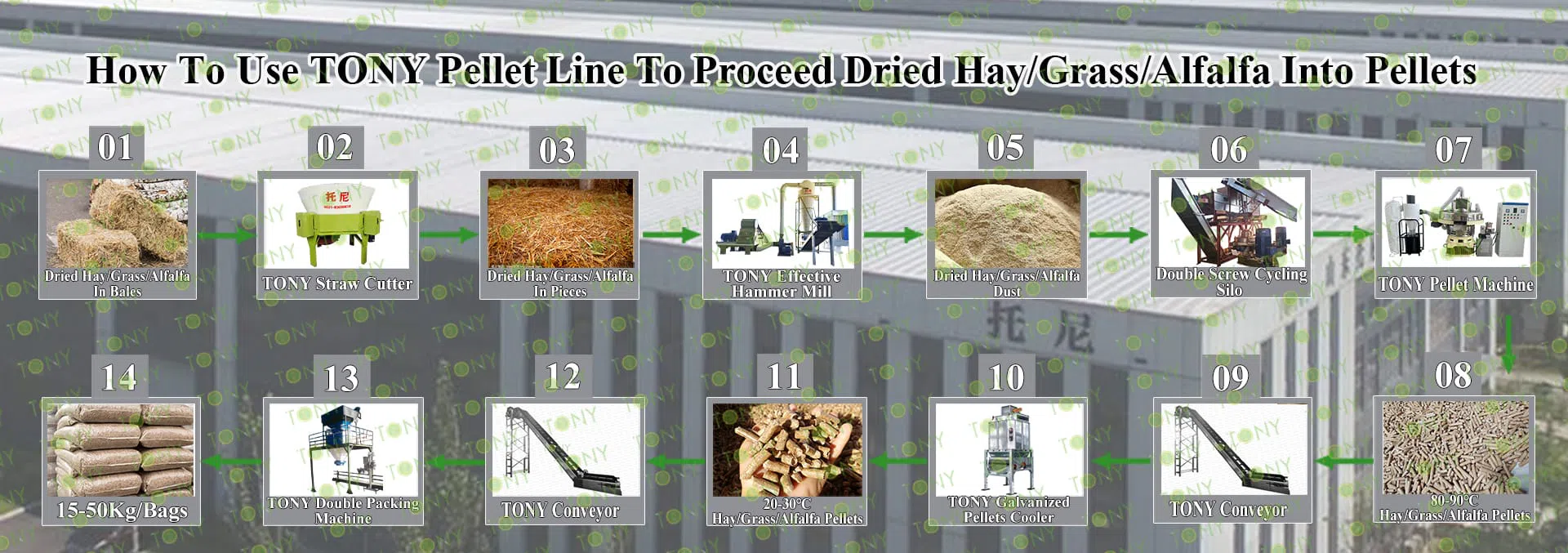
The complete workflow and supporting equipment are shown below:
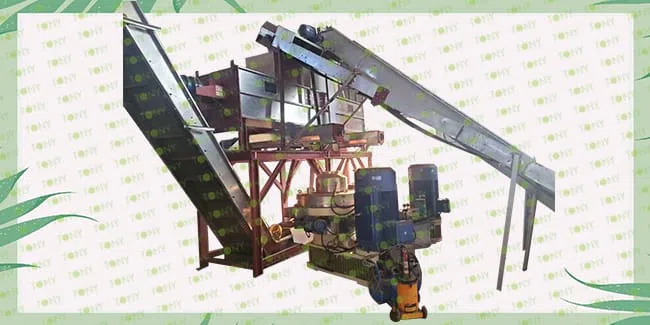
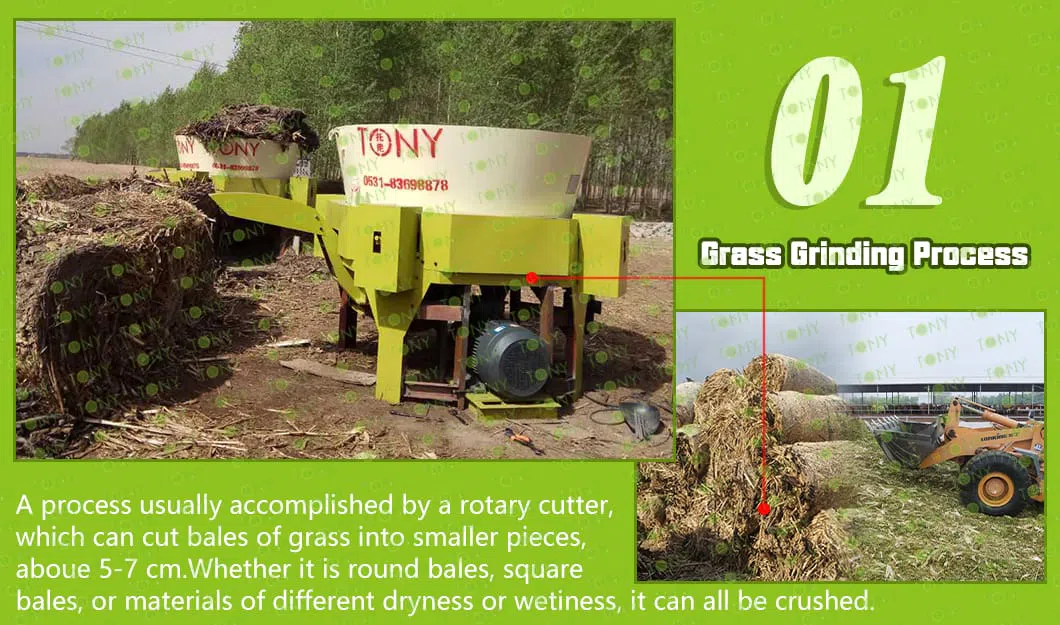
1.Adopt the TONY straw shredder to process dried hay, grass and alfalfa bales (φ ≤1.8m) into 60–70mm fragments.
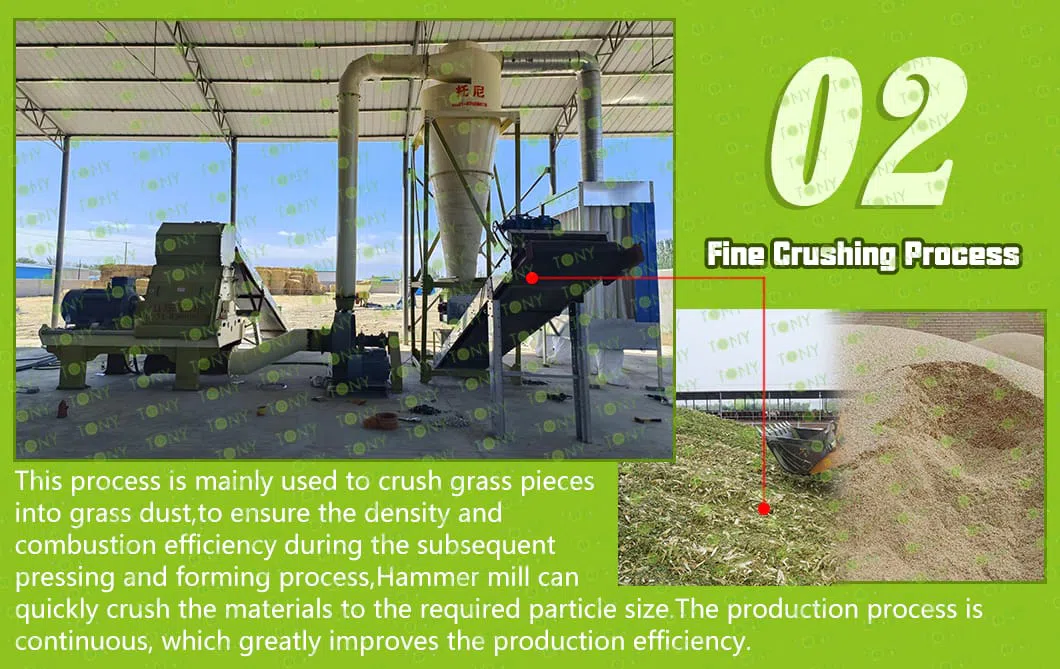
2.Utilize the high-efficiency TONY hammer mill to reduce 60–70mm hay, grass and alfalfa fragments into 8–14mm fine powder.
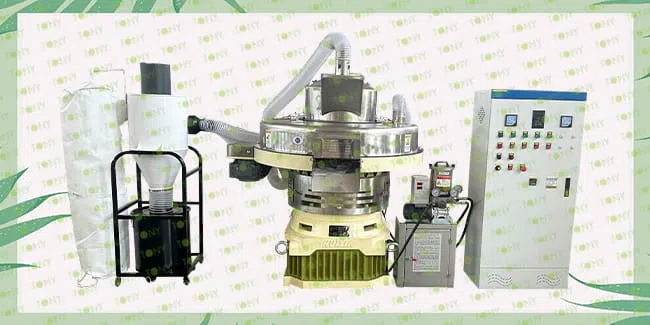
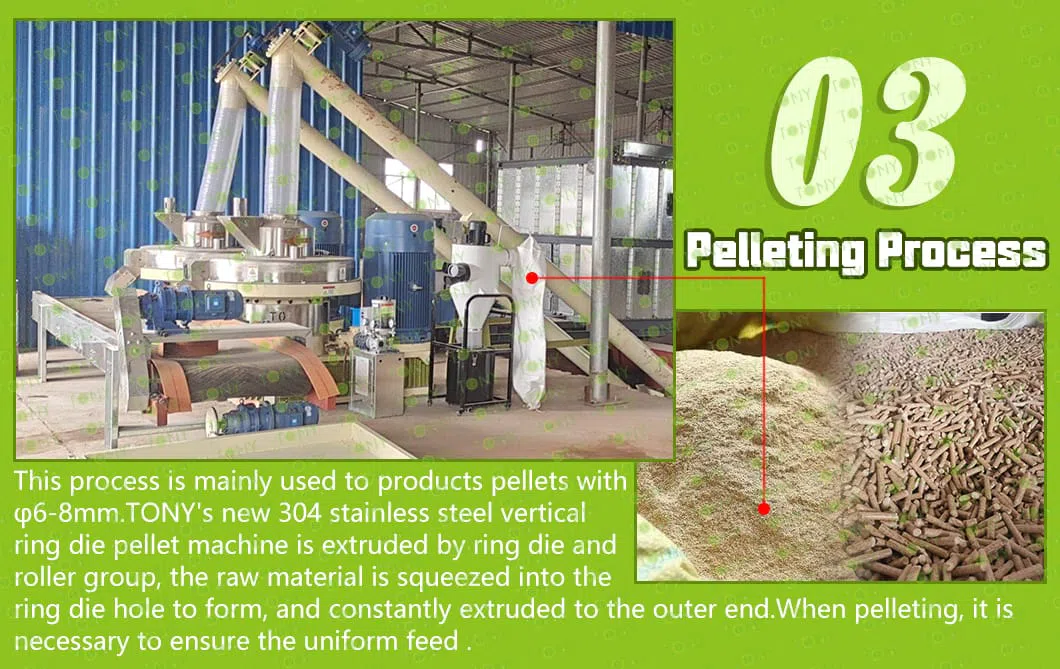
3.Deploy the TONY vertical ring die pellet mill to manufacture 6–8mm diameter pellets.
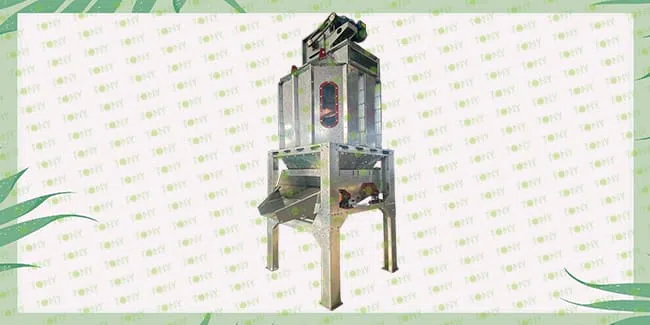
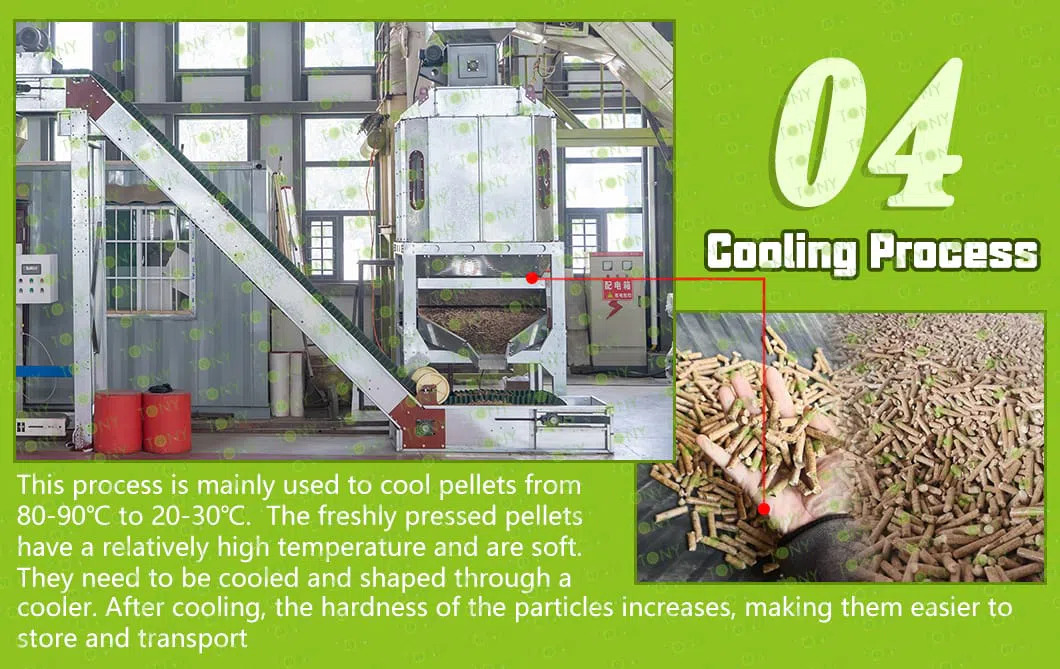
4.Apply the galvanized TONY pellet cooler to lower pellet temperature from 80–90℃ down to 20–30℃.
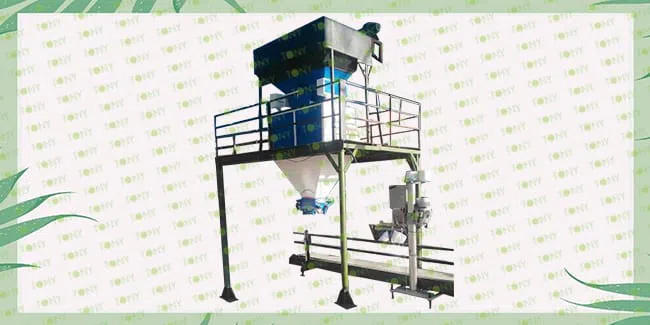
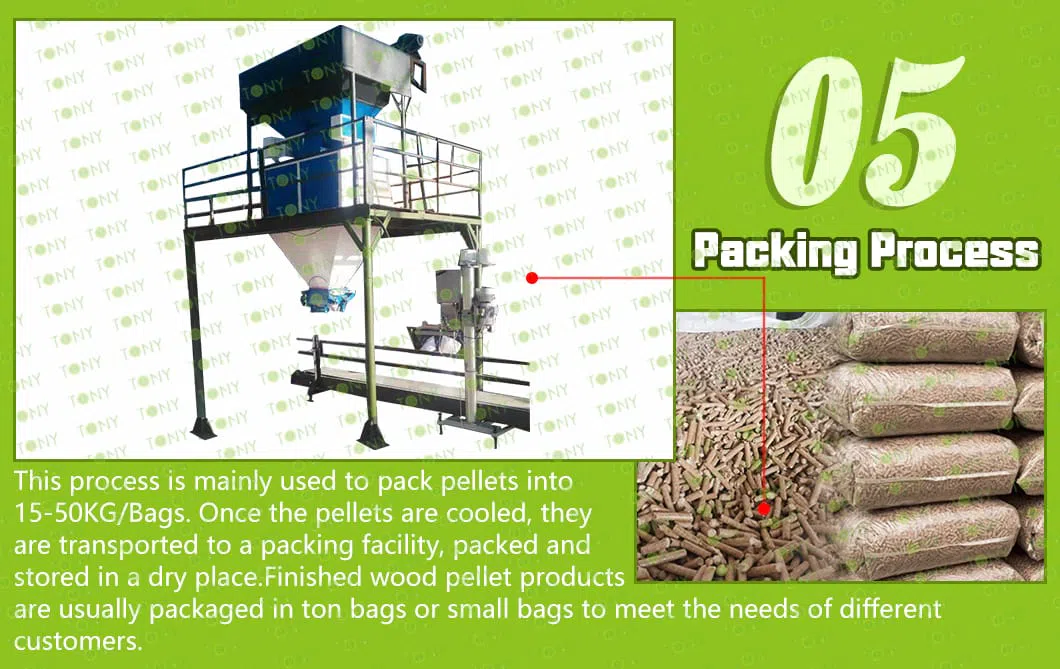
5.Employ the TONY dual packaging machine to bag pellets in 15–50kg per sack.
Feel free to contact TONY for further specifications and price quotations.
TONY is able to provide all the above equipment with premium quality and competitive rates.
Main Machine List
| |||||||
Capacity :6-7.5T/H | |||||||
Main Machine | Pellet Machine | Double Packing Machine | All Belt Conveyor | EL.Cabinets | |||
Model | TPX2000 | TFD85-250 | TYJ551-III-132 | TCN-2.5 | TPZ-50 | TSP Series | TDD |
QTY | 2 | 1 | 3 | 1 | 1 | 6 | 8 |


Detailed Design Machine
 | 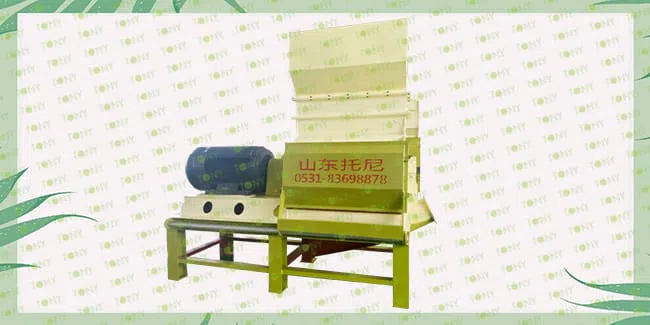 |  |
Straw Cutter | Effective Hammer Mill | |
1.To Grind Dried Grass Bales Diameter ≤1.8 m Into 60-70mm Dried Grass Pieces 2.Model:TPX2000-90kw*2Sets 3.Capacity:3-4Ton/Hour/Set | 1.To Crush 60-70mm Dried Grass Pieces Into 8-14mm Dried Grass Dust. 2.Model: TFD85-250-250kw*1Set 3.Capacity:8-10Ton/Hour/Set | 1.To Storage Grass Dust Before Pellet Machine;Adjust The Speed Of Grass Dust Entering The Pellet Machine 2.Model: TLC-6*1Set 3.Capacity:6-7.5Ton/Hour/Set |
 |  |  |
Vertical Ring Die Pellet Machine | Galvanized Pellets Cooler | Double Packing Machine |
1.To Press Grass Dust Into 6-8mm Biomass Pellets 2.Model: TYJ551-III-132KW*3Sets 3.Capacity:2-2.5Ton/Hour/Set 4.New 304SS Type | 1.To Cool Pellets From 80-90℃ to 20-30℃ 2.Model:TCN-2.5*1Set 3.Capacity:6-7.5Ton/Hour | 1.To Pack Pellets Into 15-50KG/Bags. 2.Model: TPZ-50*1set 3.Capacity: 6-7.5Ton/Hou |
Detailed Explanation
This pellet production system converts dried grass at 10–15% moisture into 6–8mm pellets via around five processing stages. Listed below are all machinery units and essential components offered by TONY for this complete pellet production line. You may also reach TONY for full specifications and an official quotation sheet of this dried grass processing line.
Biomass Pellets- -Green Clean Energy
Grass pellets and biomass pellets emit the same amount of carbon dioxide as they absorb when burned, making them a relatively environmentally friendly option. Furthermore, biomass pellet fuel ignites better than coal, is easier to ignite, and significantly reduces start-up time. The solid emissions from biomass pellet fuel are lower than those from coal, reducing slag costs and environmental pollution. Solid emissions from biomass pellet fuel consist entirely of ash, accounting for approximately 0.4% to 7.0% of the total weight; while coal combustion produces a mixture of ash, alkali, and residual coal, accounting for approximately 25% to 40% of the total weight. Coal causes far greater air pollution and boiler corrosion than biomass pellet fuel. Coal smoke contains large amounts of particulate carbon and toxic corrosive gases such as SO₂ and CO. The main components of biomass pellet fuel are C-H organic matter. The flue gas contains no particulate C and SO₂ gases, but mainly C-H volatile gases. Its SO₂ and CO emissions are close to zero. The smoke color during combustion is less than Ringelmann 1, which will significantly reduce air pollution and carbon dioxide emissions. Biomass pellet fuel has a reputation as a clean fuel internationally.
Suitable Raw Materials
TONY Projects
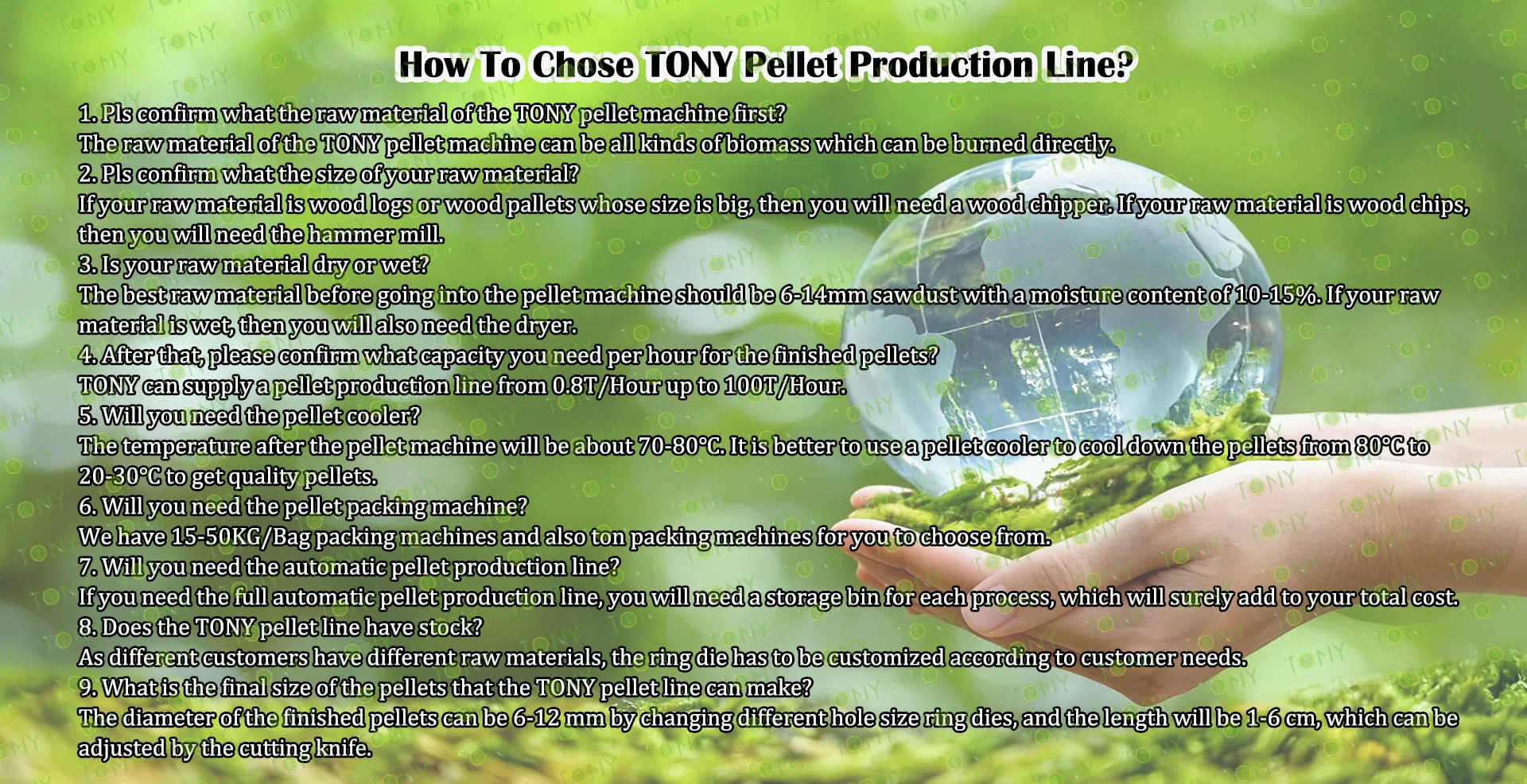
How To Chose TONY Pellet Production Line?
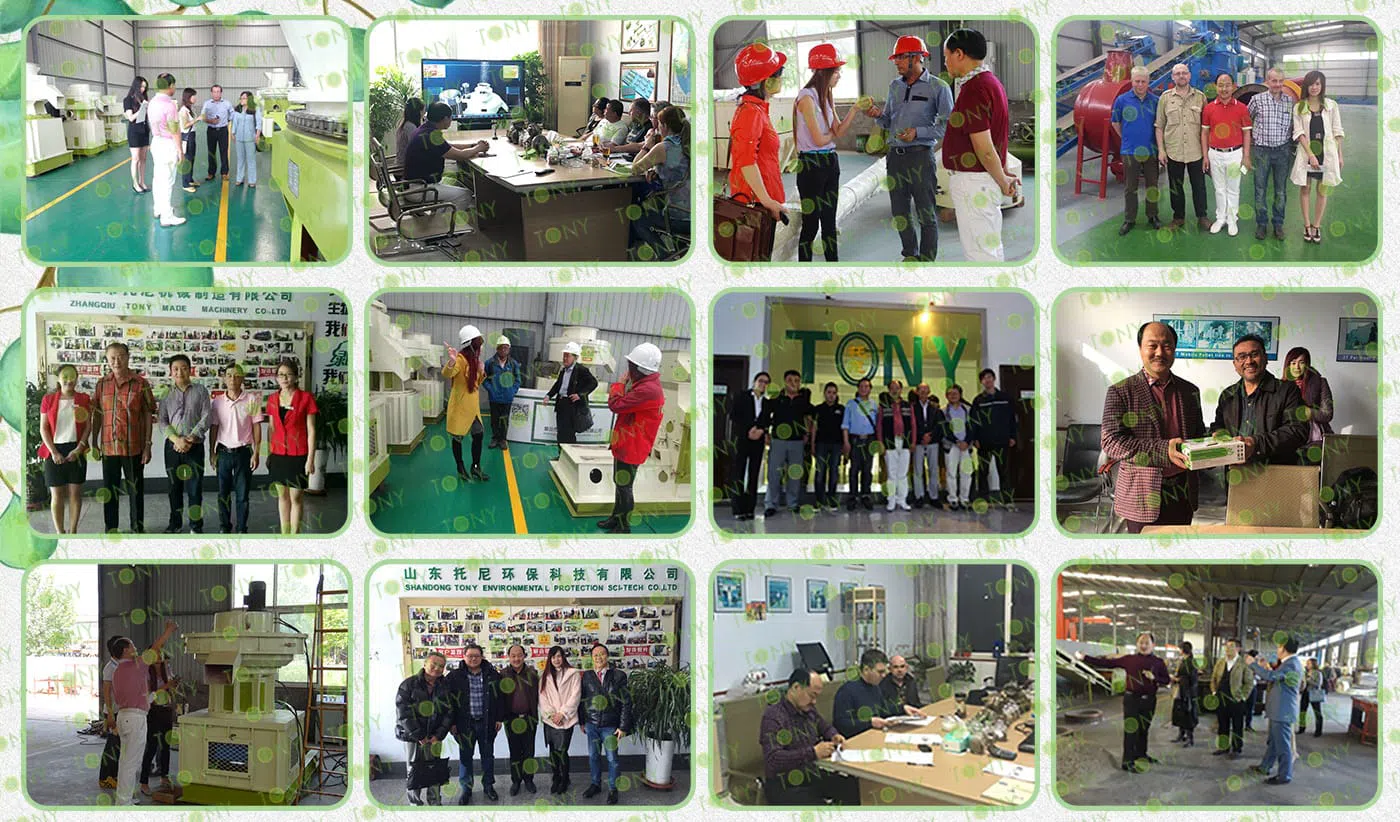
 Customer Visiting