
Brief Introduction
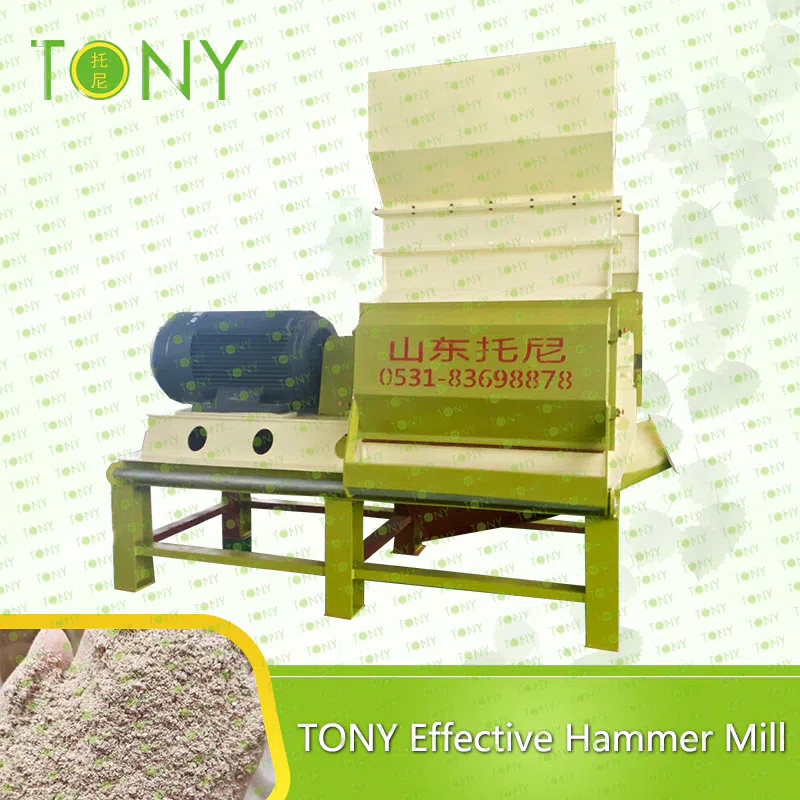
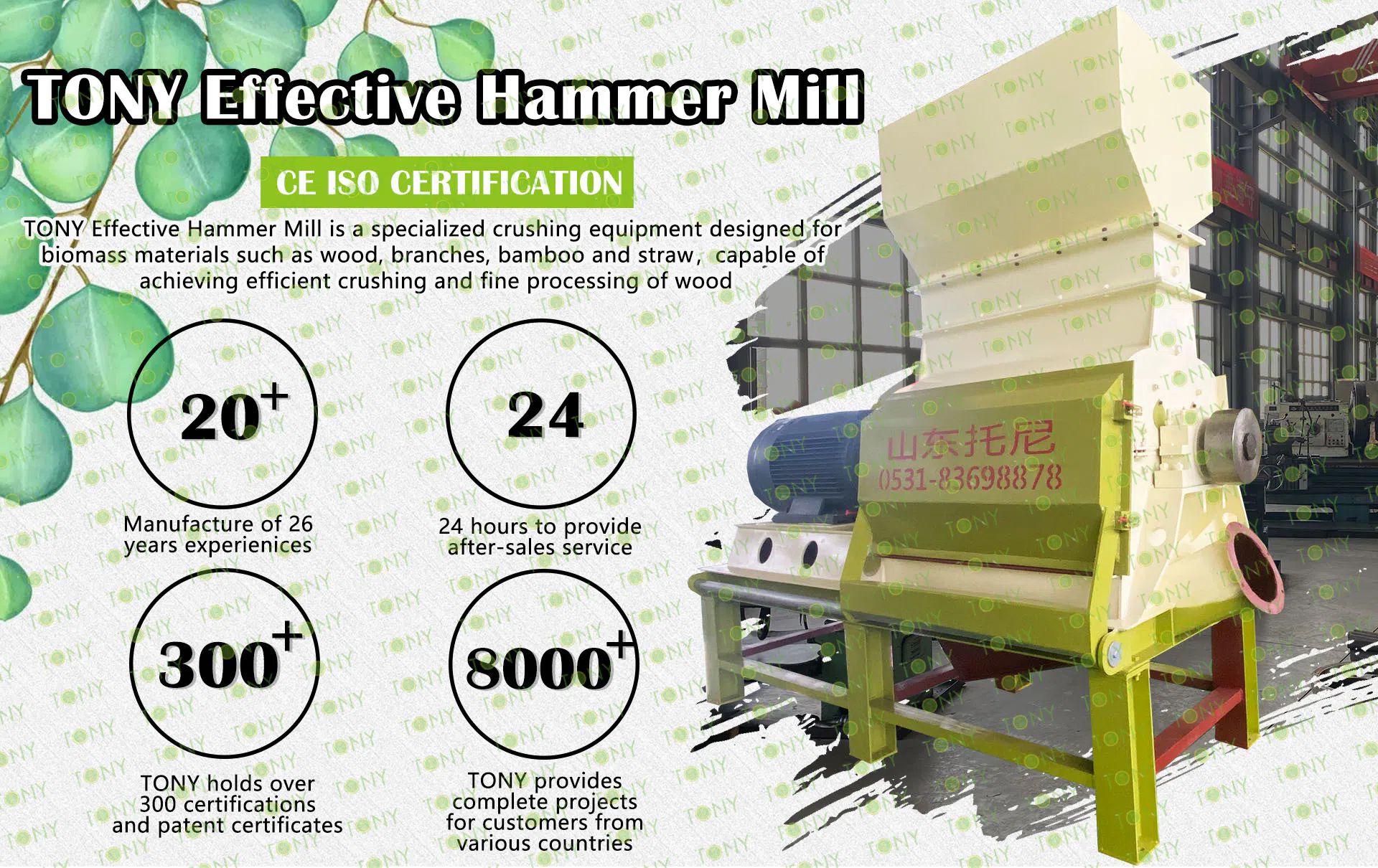
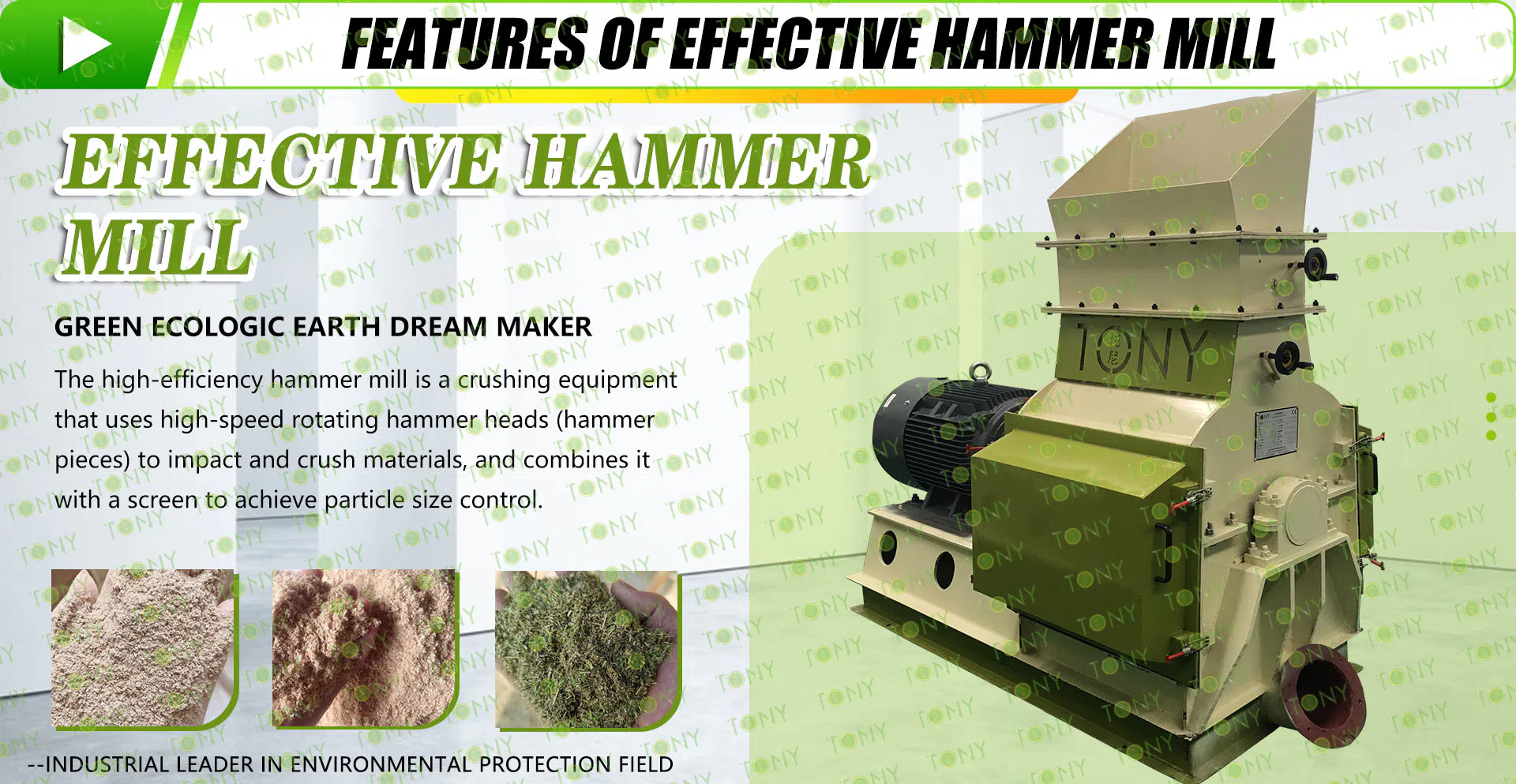
The TONY high-efficiency hammer mill is a versatile crushing machine. It breaks materials into smaller particles with high-speed rotating hammers, and is widely used in agriculture, biomass energy, mining and waste recycling for its robust build, adaptability and cost-effectiveness. It works through impact, shear and grinding forces, making it ideal for brittle, fibrous and medium-hard materials.
This mill features high efficiency, stable operation, easy use, low noise and low energy consumption. To ensure safe and normal running, avoid long-time continuous operation to prevent bearing overheating and motor damage, and place it in a well-ventilated, dry and clean area.
Working Principle
The high-efficiency hammer mill is a high-speed impact-shear crusher. Its high-speed rotating rotor drives hammers and blades to break materials into fine particles through impact, shear and grinding.
Materials enter the crushing chamber via the inlet: they are first fragmented by high-speed hammer strikes, then thrown against internal liners for further breakage, while inter-particle collisions also help reduce particle size.
An adjustable screen is fitted at the bottom of the unit. Particles that meet the size requirement pass through and discharge from the outlet, while oversize materials stay in the chamber and keep being hammered until qualified. Output particle size can be flexibly controlled by swapping screens with different apertures.
Powered by a motor, the rotor runs at high speed. With a compact structure and high crushing efficiency, the machine is suitable for fine pulverization of brittle or moderately tough materials such as wood, plastics, straw and various industrial offcuts. It can be paired with conveyors for continuous feeding to ensure a smooth production process.
Protective devices are equipped to prevent damage from foreign objects entering the crushing chamber. This impact-based pulverizer further refines pre-crushed materials to meet the needs of granulation, powder making and biomass fuel manufacturing. It is not suitable for directly crushing oversize items or heavy metal objects, which will cause severe hammer wear or equipment failure.
Mill Main Parts
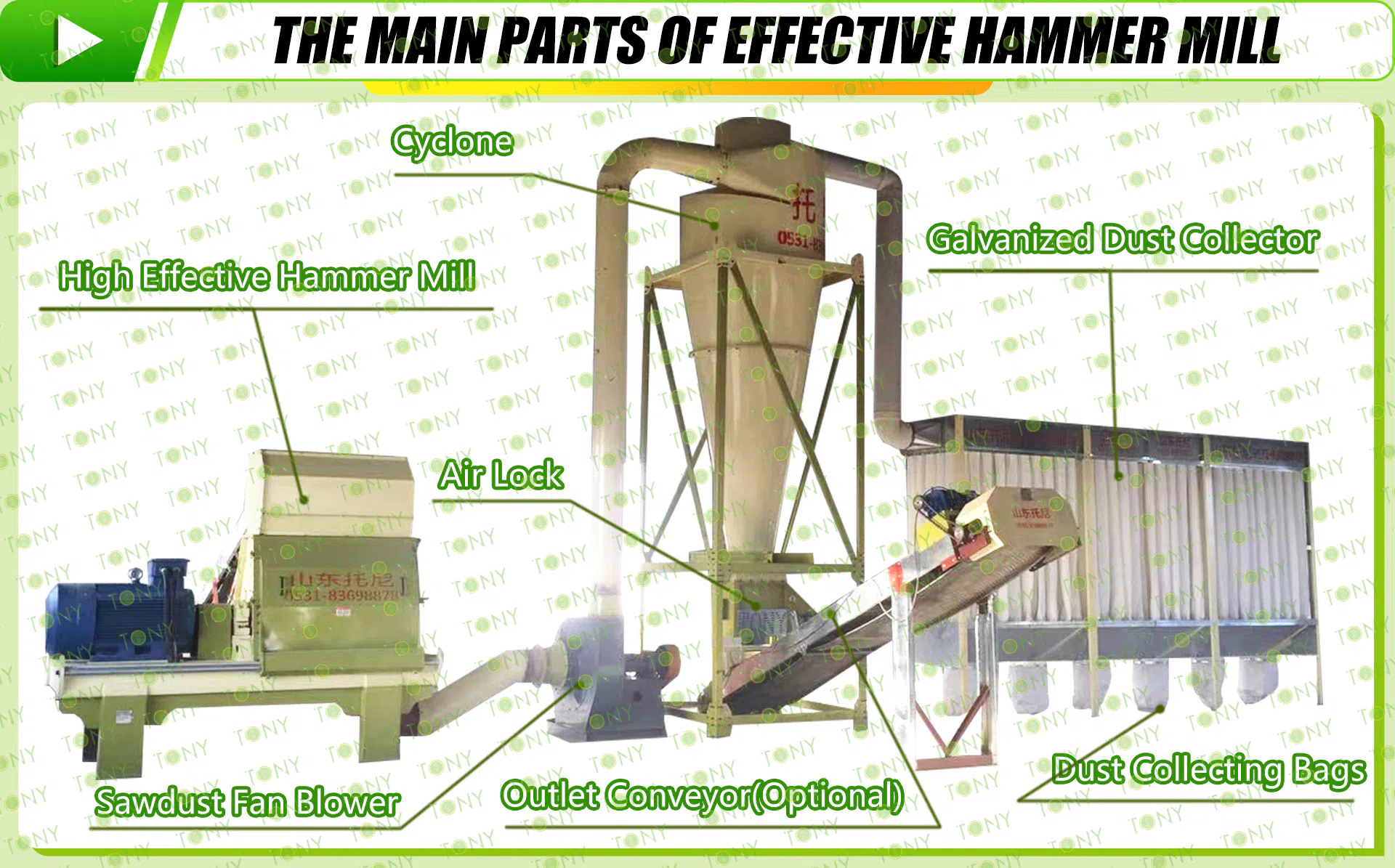
 | To discharge the materials and collect the dust. 1.The TONY cyclone separator adopts centrifugal separation principle. Dust-containing air enters its cavity; solid particulates spin down and collect at the base, while clean air exits upward. 2.Effective dust capture helps keep the workshop tidy and safe, cuts airborne pollution, and protects end-product quality. 3.This integrated performance supports industrial systems that require both material recovery and dust containment. |
To crush the materials into 3-5mm sawdust. 1.TONY high-efficiency hammer mill reduces feedstock into 3–5 mm sawdust. 2.It pulverizes raw stock, additives and granular materials to reach target particle sizes for trouble-free pelletizing downstream. 3.This heavy-duty crusher boasts a compact layout, long service life, excellent crushing effect, low power draw and low noise. | 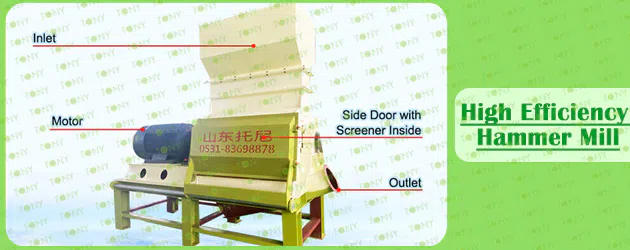 |
 | To help transport the sawdust into dryer. 1.Matched with the hammer mill, this blower generates powerful suction to suck away dust generated in crushing. 2.It builds negative pressure to carry dust toward collectors or filters, cutting airborne dust and improving site conditions. 3.It protects operators from dust risks, keeps the work area safe, and prevents dust accumulation on equipment. |
To discharge the materials and collect the dust. 1.The TONY cyclone works via centrifugal separation. Dust-charged air enters the chamber; centrifugal force splits solid particles out. Dust gathers at the bottom, and clean air vents out from the upper outlet. 2.Proper dust recovery keeps the workshop hygienic, minimizes particulate pollution, and protects final product quality. 3.Such combined separation performance suits industrial lines needing both material recycling and dust abatement. |  |
 | To prvent the outside air from entering inside. 1.It seals against outside air infiltration, controls dust escape, upgrades workshop conditions and guarantees consistent material discharge. 2.It stops ambient air from flowing inward, blocks foreign contaminants and lowers the chance of dust dispersion. 3.Installed beneath the cyclone at the crusher outlet, it restrains dust on-site, safeguards workers and supports stable machine operation. 4.It also streamlines the unloading procedure for consistent, high-throughput output while containing dust leakage. |
To collect the dust while in the production. 1.Airborne dust is trapped on the surface and within the filter media once polluted air passes through. 2.Impaction and interception: Coarser dust fractions strike and get retained by fiber meshes along the air route. 3.The unit contains process waste particulates to prevent them from drifting into the open atmosphere. 4.Such filtration curbs emissions, complies with environmental codes and cleans exhaust airstreams. |  |
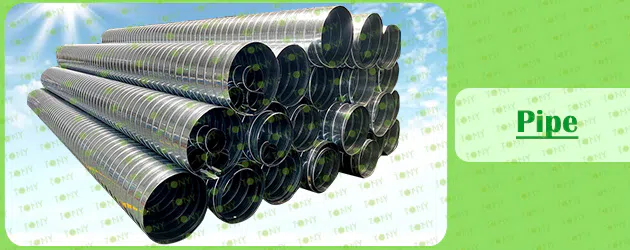 | To control dust pollution during the crushing process 1. As the hammer mill functions, feedstock enters the crushing chamber. Rapidly rotating hammers apply impact force to break materials apart and release abundant dust. 2. Negative-pressure air suction captures dust right at its source and transfers the dust stream to the dust collection unit. 3. Block dust from spreading throughout the production zone, maintain sanitary workshop conditions and safeguard on-site operators. 4. Reduce component wear caused by dust deposition, including overheating failures of bearings and drive motors. |
To Ensure safe, stable, and hammer mill operation. 1.This electrical control module oversees crusher startup and shutdown, tracks operational performance and integrates safety fault safeguards. 2.Power regulation: It manages the main drive motor and supporting motors, covering feed conveyors and dust extraction blowers. 3.Safety protection: Once overload, short circuit, phase failure or bearing overheat is detected, the system powers down automatically and activates warnings, preventing motor burnout, rotor stuck-up and shaft rupture. 4.Condition monitoring: Live metrics including electric current, cumulative working hours and fault IDs are displayed on the panel, allowing operators to review machine status easily. |  |
 | To Transport crushed materials quickly and stably. 1. It delivers crushed feedstock from the mill outlet to subsequent processing sections. 2. It prevents clogging and material stacking at the discharge opening for uninterrupted, high-efficiency crushing. 3. Equipped with VFD, its transport speed can be tuned to fit the throughput of follow-up machines. 4. Constructed from galvanized steel, this TONY conveyor boasts reliable rust resistance and extended service life. |
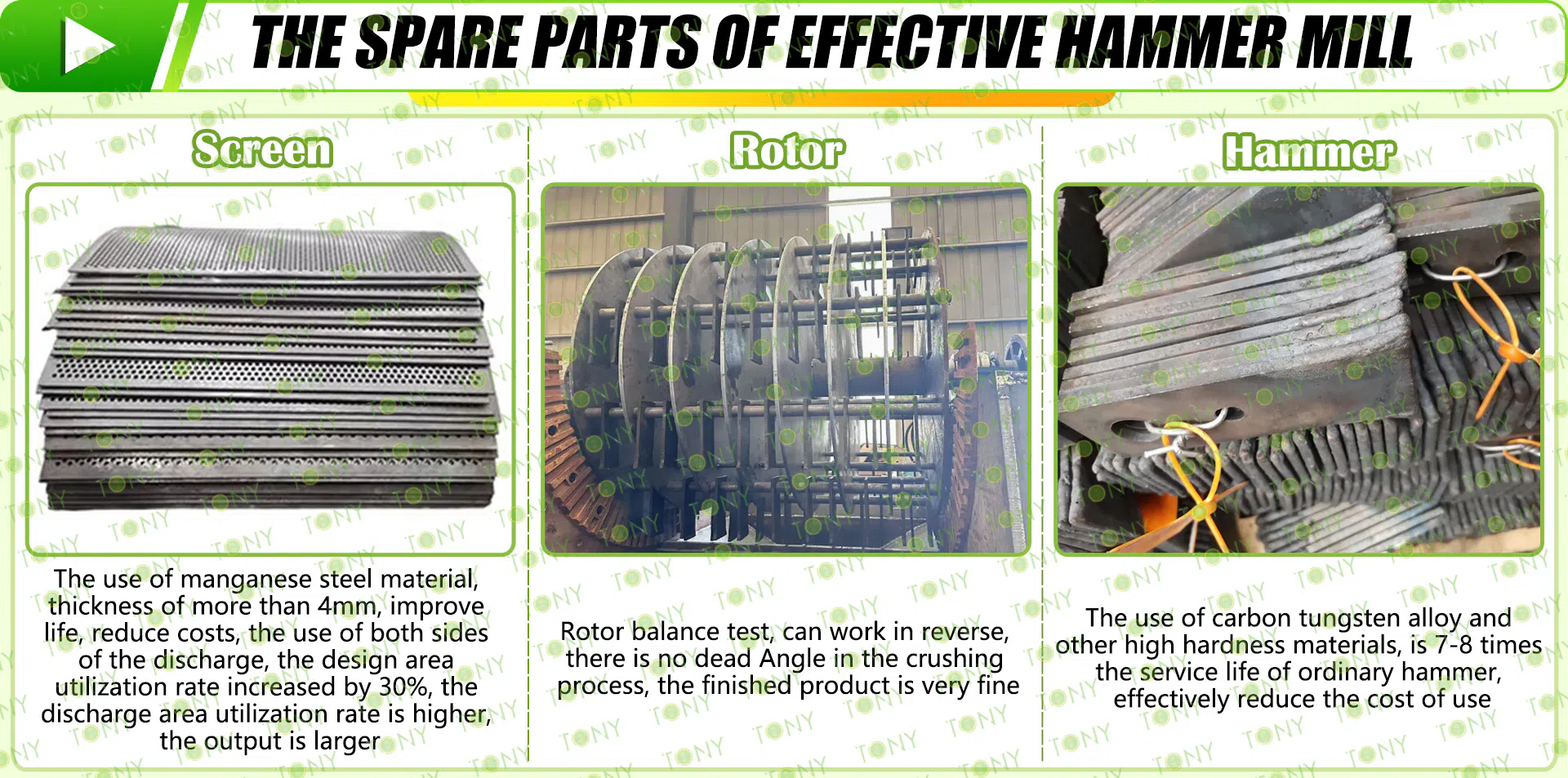
Spare Parts
Mill Parameter
TONY Effective Hammer Mill Technical Parameters | ||||||
NO | Model | Power(KW) | Capacity(T/H) | Hammer QTY(PC) | Size:L*W*H | Weight |
1 | TFD65-55 | 37 | 1-1.5 | 48 | 2000*1600*1700 | 2.5 |
2 | TFD65-55 | 45 | 1.5-2 | 48 | 2000*1600*1700 | 2.5 |
3 | TFD65-75 | 55 | 2-2.5 | 72 | 2000*1800*1700 | 3.2 |
4 | TFD65-75 | 75 | 2-3 | 72 | 2000*1800*1700 | 3.2 |
5 | TFD75-100 | 90 | 3-3.5 | 96 | 2000*1800*1900 | 4.5 |
6 | TFD75-100 | 110 | 3-4 | 96 | 2000*1800*1900 | 4.5 |
7 | TFD75-132 | 132 | 4-5 | 120 | 3000*1950*2200 | 5.9 |
8 | TFD75-160 | 160 | 5-6 | 120 | 3000*1970*2200 | 6.7 |
9 | TFD85-200 | 200 | 6-8 | 150 | 3200*2100*2300 | 7.2 |
10 | TFD85-250 | 250 | 8-10 | 150 | 3400*2200*2400 | 7.8 |
11 | TFD95-280 | 280 | 10-12 | 150 | 3600*2300*2450 | 8.4 |
12 | TFD100-200 | 315 | 12-14 | 88 | 3700*2400*2500 | 10 |
13 | TFD120-200 | 355 | 13-15 | 88 | 3800*2500*2600 | 11 |
14 | TFD1400 | 400 | 15-18 | 120 | 3900*2600*2700 | 13 |
15 | TFD1600 | 500 | 18-20 | 120 | 4500*3000*3000 | 16 |
Suitable Raw Materials
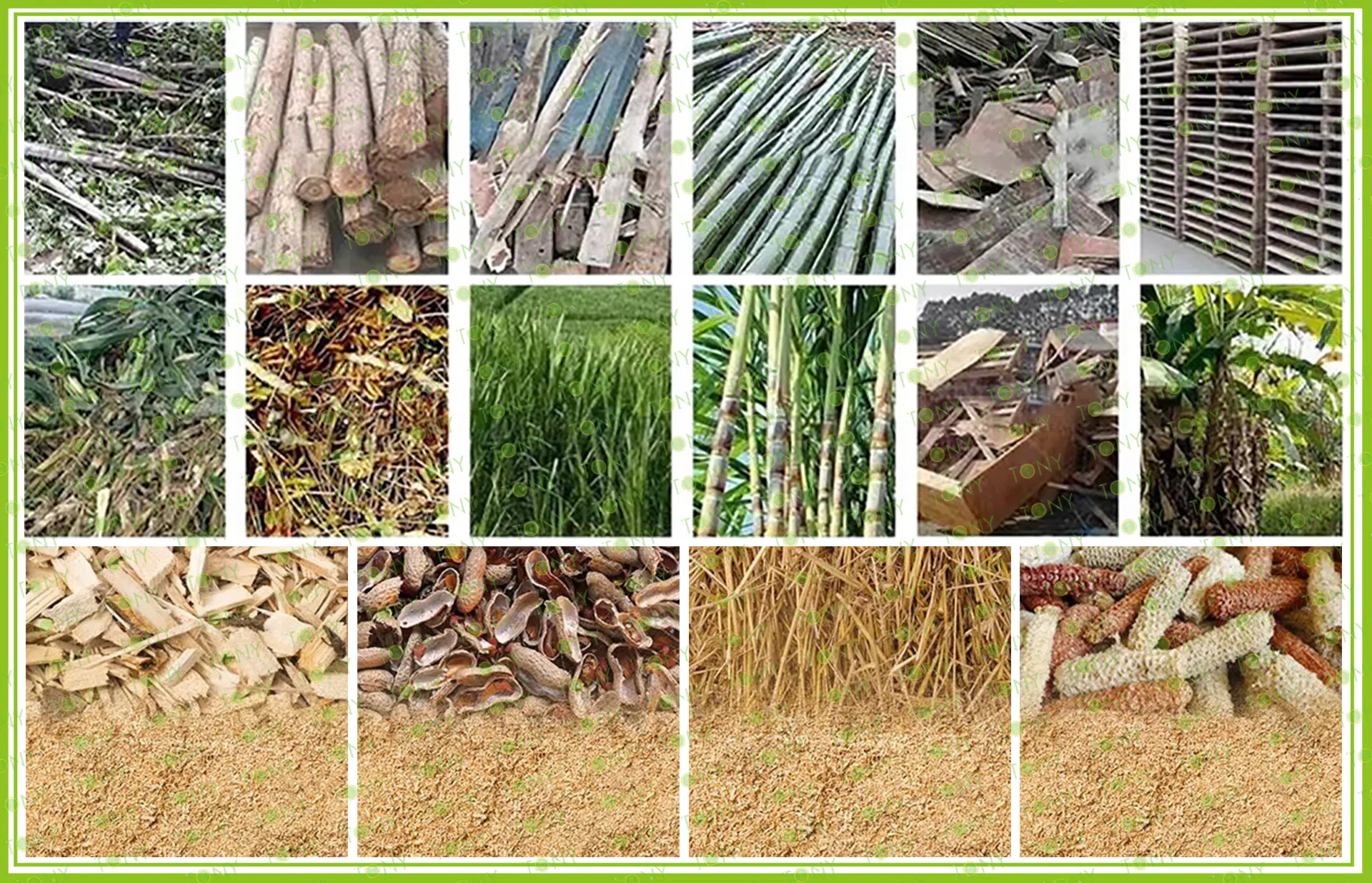
High-efficiency hammer mills are machines that use high-speed rotation or impact to pulverize raw materials into sawdust. They are primarily used in biomass pellet production lines to crush various wood and biomass materials.
Wood processing: Logs, branches, sawdust, and waste wood, etc., are pulverized for use in papermaking, fiberboard, biomass pellet fuel, and edible fungus culture.
Agricultural waste:
Straw (corn stalks, rice straw, wheat straw), rice husks, peanut shells, and sugarcane bagasse, etc., can be pulverized for use as feed, organic fertilizer, or biomass energy.
Fruit shells (such as walnut shells and coconut shells) are pulverized for use in activated carbon production, grinding materials, or as garden mulch.
What Are The Application Areas?
Typical Application Scenarios
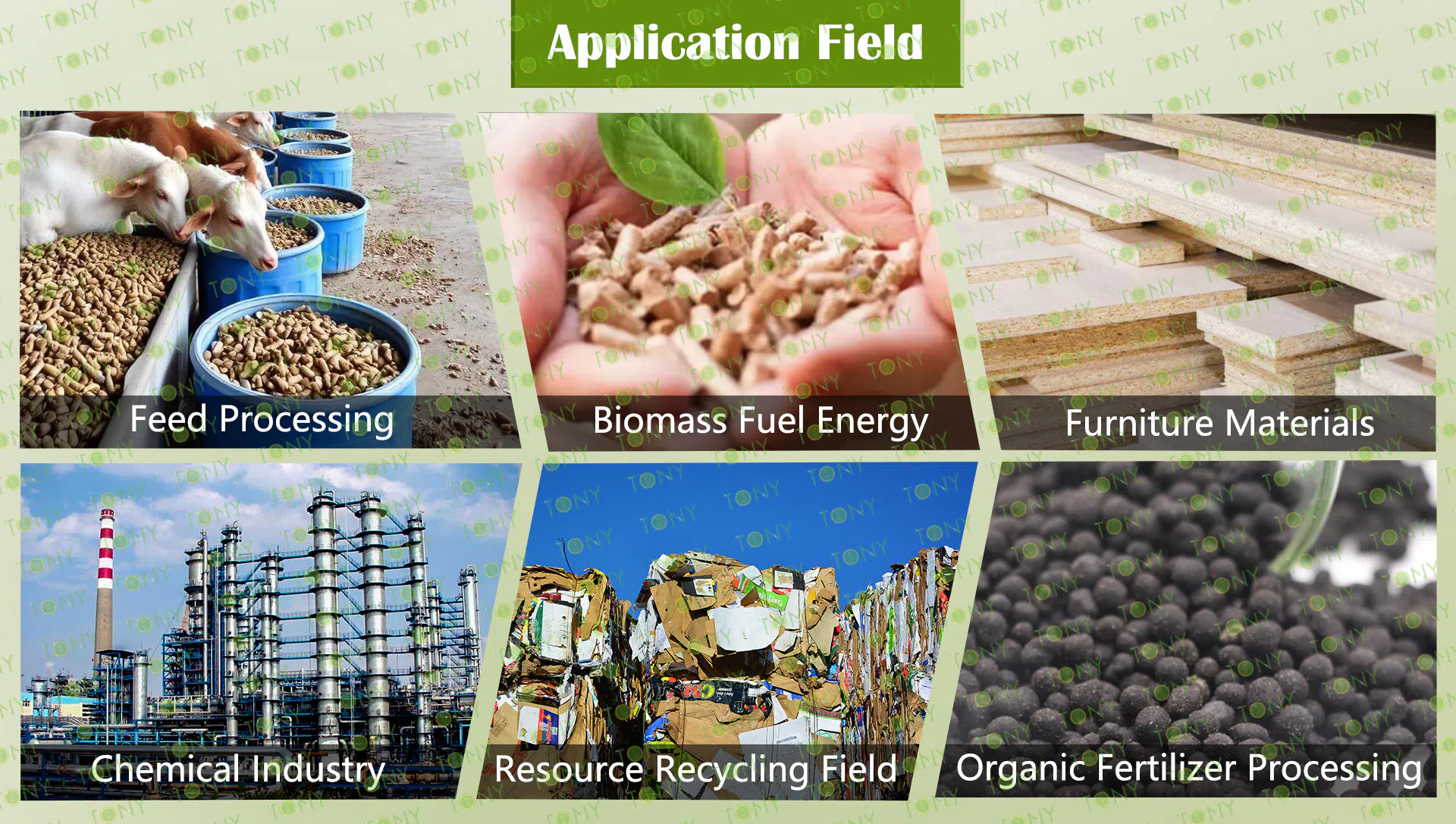
Feed Processing: Grinding raw materials such as corn and soybean meal to produce compound feed for livestock and poultry;
Biomass Energy: Grinding straw and sawdust for pellet fuel or biomass power generation;
Environmental Recycling: Grinding waste plastic and rubber to produce recycled pellets;
Organic Fertilizer Production: Grinding livestock and poultry manure and plant straw to mix and produce organic fertilizer.
Details
Advantages
1. High Crushing Efficiency
The high-speed rotation of the hammer creates a strong impact force. Combined with the optimal chamber design, it can quickly process wood chips with a thickness of 5-50mm. The output per unit can reach 1-20 tons (depending on the model), far exceeding that of ordinary crushers.
2. High Adaptability
It can process a variety of wood materials, including:
Wood chips (pine, fir, poplar, hardwood, etc.);
Wood waste (branches, bark, board, furniture scraps, etc.);
Pre-treated biomass materials such as straw and bamboo chips (parameter adjustment required).
3. Controllable Output Particle Size
By replacing screens with different apertures, the output particle size can be flexibly adjusted (e.g., wood powder under 3mm, sawdust 5-10mm), meeting the needs of different downstream production processes (e.g., fine particle size for pellet processing, medium particle size for papermaking).
4. Easy Maintenance and Low Energy Consumption
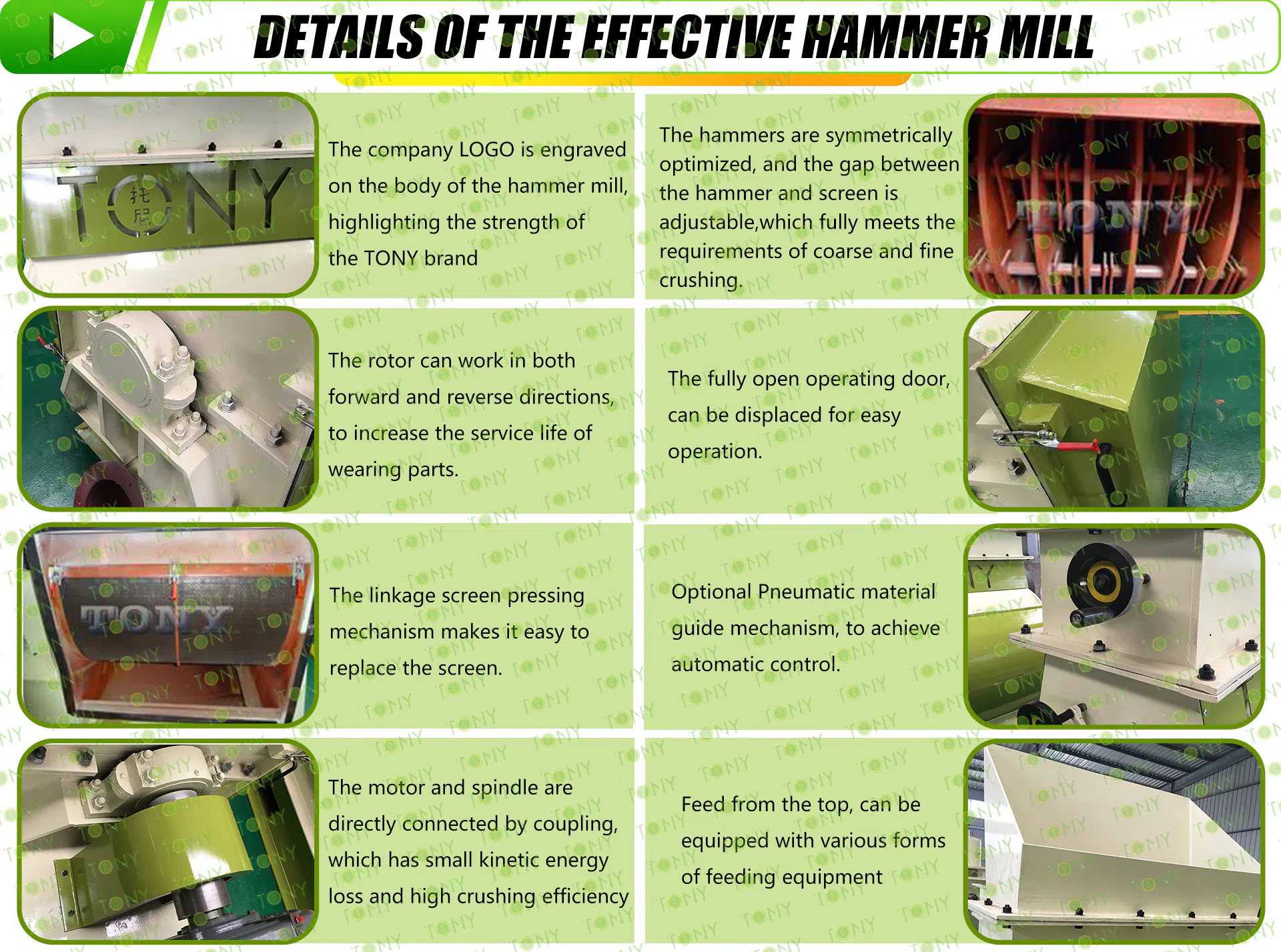
The hammer heads are removable and can be replaced individually when worn, reducing maintenance costs.
Some equipment features an automatic lubrication system to minimize downtime for maintenance.
5. High Safety
Overload protection devices (such as automatic shutdown for belt slippage and motor overload) and a feed inlet screen are typically included to prevent metal impurities or large hard objects from entering the chamber and potentially damaging the equipment.
The Pellet Production Line
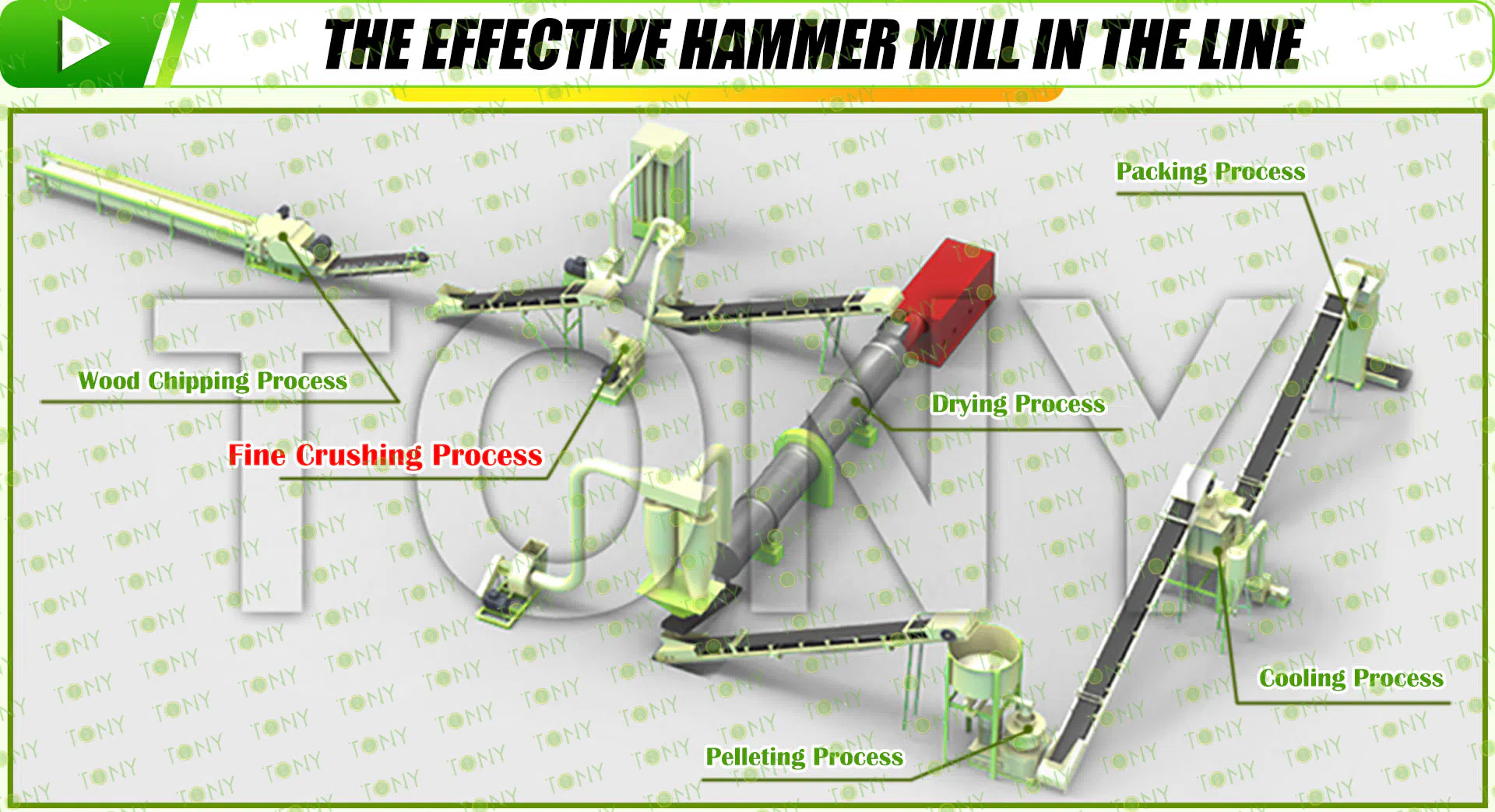
Wood is the primary raw material for wood pellet manufacturing. How to configure a proper wood pellet production line with wood feedstock?
First, a drum wood chipper cuts wood into 2.5–3.5 cm wood chips. Next, a hammer mill grinds the chips into 6–12 mm sawdust. A dryer may be needed, since raw wood usually carries 30–50% moisture. Then a vertical ring die pellet mill compresses the dried sawdust into premium wood pellets. After cooling, the finished biomass pellets are packed and stored for easy transportation and sale.
This is the basic workflow for wood pellet production. Always follow safety guidelines on site, and perform routine equipment maintenance to sustain stable output and consistent pellet quality.
Key Factors Affecting Efficiency
1.Raw Material Characteristics Wood Chip Hardness: Hardwoods (such as oak and sandalwood) are more difficult to crush than softwoods (pine and poplar), resulting in a 10%-30% reduction in efficiency. Raw Material Moisture: Excessive moisture content (>20%) can cause the material to stick to the screen and hammers, blocking the discharge port and significantly reducing efficiency. It is recommended to control the raw material moisture content to 10%-15%. Wood Chip Size: Excessive thickness and length of the incoming wood chips (beyond the equipment's design range) will increase the crushing difficulty and require pre-processing in a chipper. 2.Equipment Parameters Hammer Speed and Number: Higher speeds and more hammers (matching power) increase the impact force and improve efficiency, but also increase energy consumption. Screen Aperture: Smaller apertures increase the crushing time and reduce efficiency, but also result in finer particle size. Hammer Wear: Worn hammers reduce their impact force and require timely replacement (typical service life is 500-1000 hours, depending on the hardness of the raw material). 3.Operation and Maintenance Feed Uniformity: A feed rate that is too fast can easily lead to equipment overload and blockage; a feed rate that is too slow can prevent full capacity operation, reducing efficiency. Regular Cleaning: A clogged screen or residual material in the chamber can affect discharge, requiring regular machine shutdown and cleaning. Lubrication and Tightening: Insufficient lubrication of the rotor bearings or a loose hammer head can increase mechanical wear and reduce operating efficiency. |  |
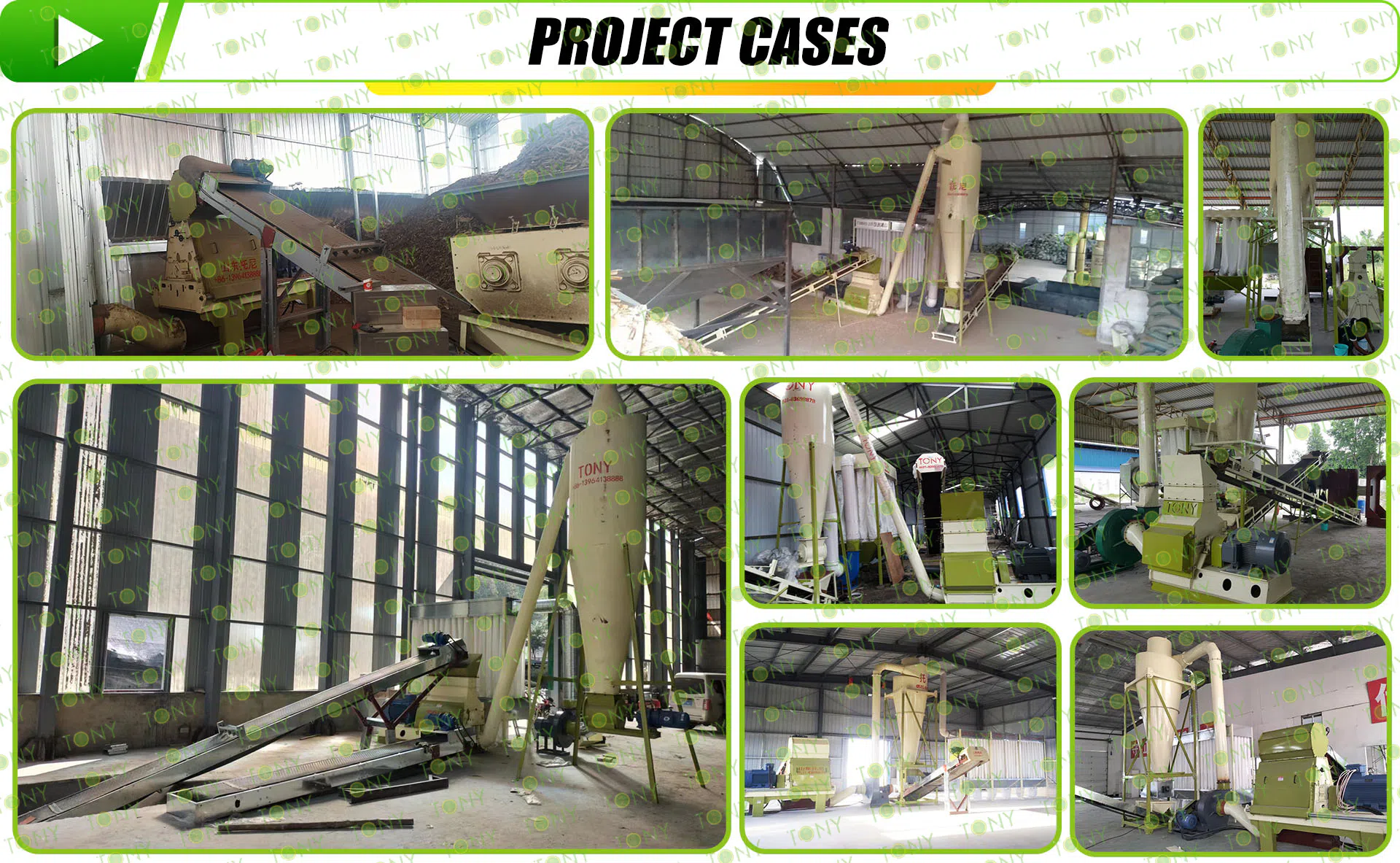
Customer Cases
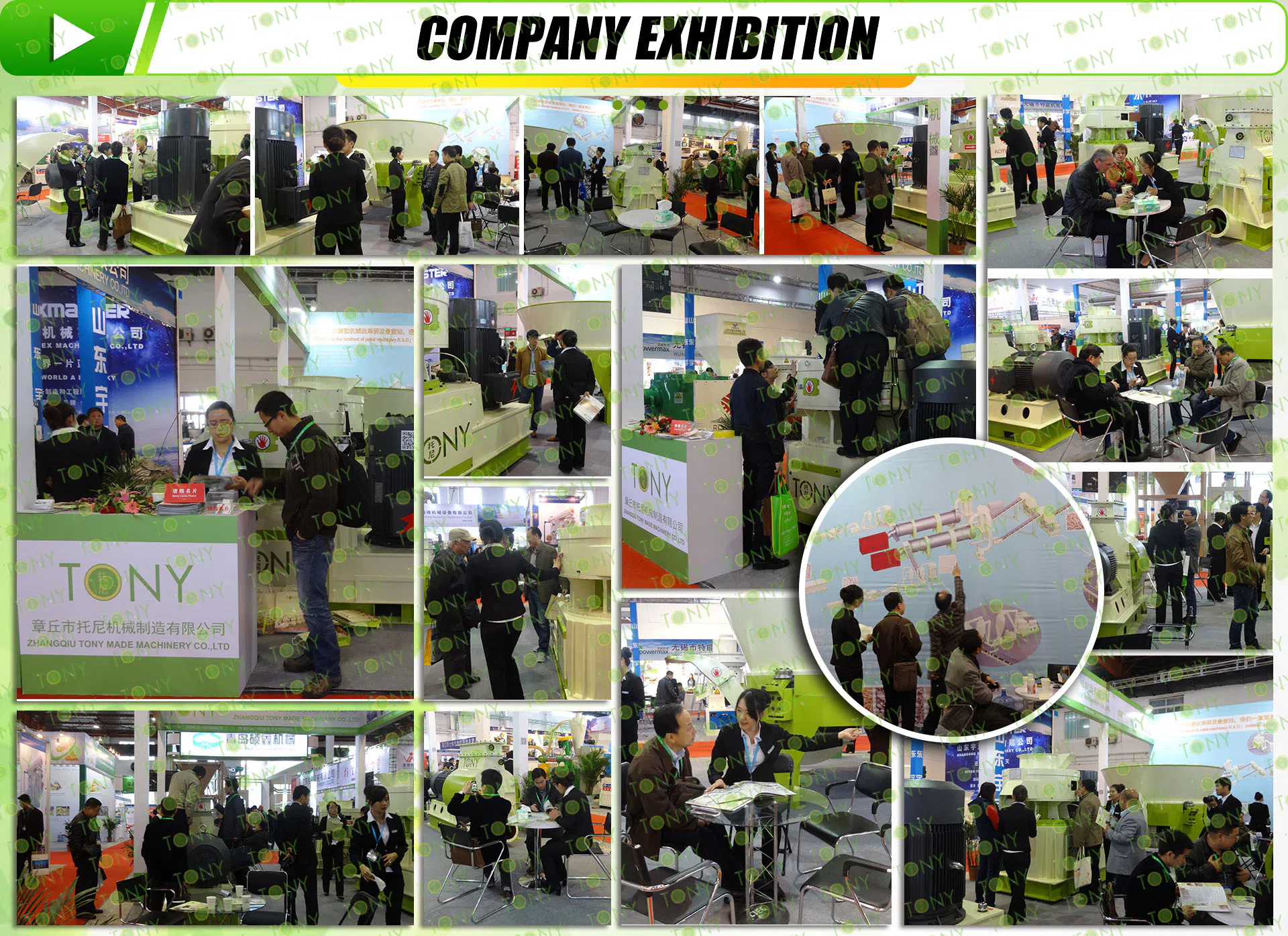
Company Exhibition
FAQ
Q: What is a Hammer Mill?
A: A Hammer Mill is a machine that pulverizes wood chips, shavings, grains and plant fibers into sawdust.
Q:What is raw material?
A,Stalk, wood chips, nut shell, straw, rice husk, bamboo chips, paper, leaves, waste wood.agriculture waste
Q:What is the usage?
A:Hammer mill is widely used in fodder factories, cultivation factories, and organic fertilizer factories, It can be used in producing Chinese medicine, chemical industry and in other areas.
Q: What is your main market?
A: South America, Eastern Europe, Southeast Asia, Africa, Oceania, Eastern Asia
Q: What is your producing time?
A: Producing time depends on that machines you ordered, Usually takes 45 days.
Q: If equipment have some quality problem, how would you deal with?
A: We will responsible for all the quality problems. We will check the machine to get the problem. If need parts, will send them to you.
Q. What is your payment term?
A: T/T 40% down payment, balance to be paid before shipment.


