
Brief Introduction
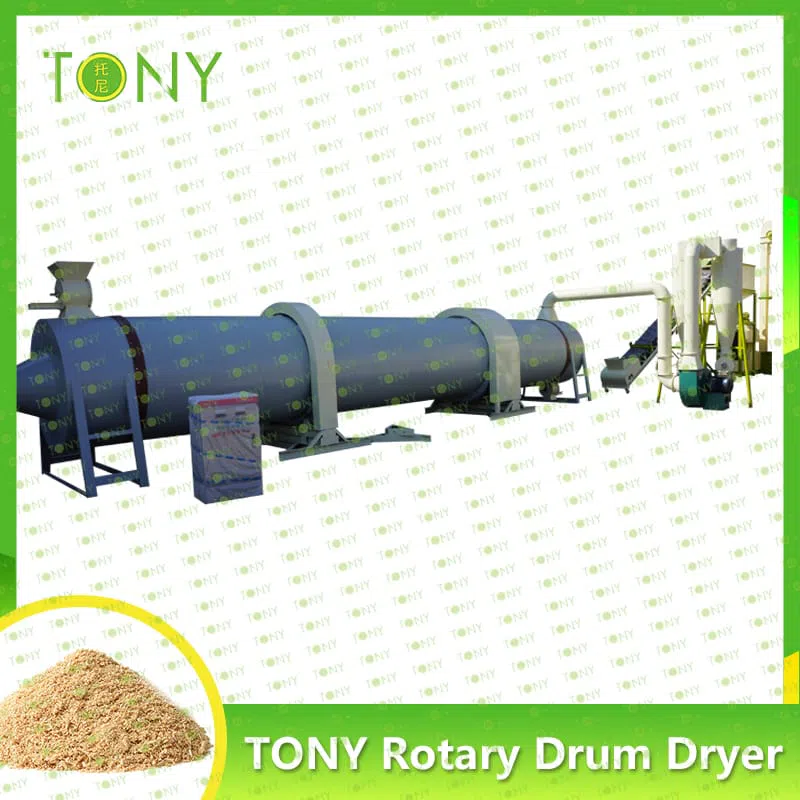
TONY rotary drum dryer is a device specifically designed for processing sawdust, wood chips, and other wet powdery materials. It uses high temperatures and a drying medium to dry the material, thereby reducing its moisture content.
TONY rotary drum dryer uses a low-speed rotating curved plate hammering method to disperse the raw material, mixing the hot airflow with the raw material to complete the drying process. It is primarily suitable for drying various powdered raw materials.
TONY rotary drum dryer typically has an evaporation capacity of 30 to 80 kg/hour, which increases with increasing air temperature and changes in material properties.
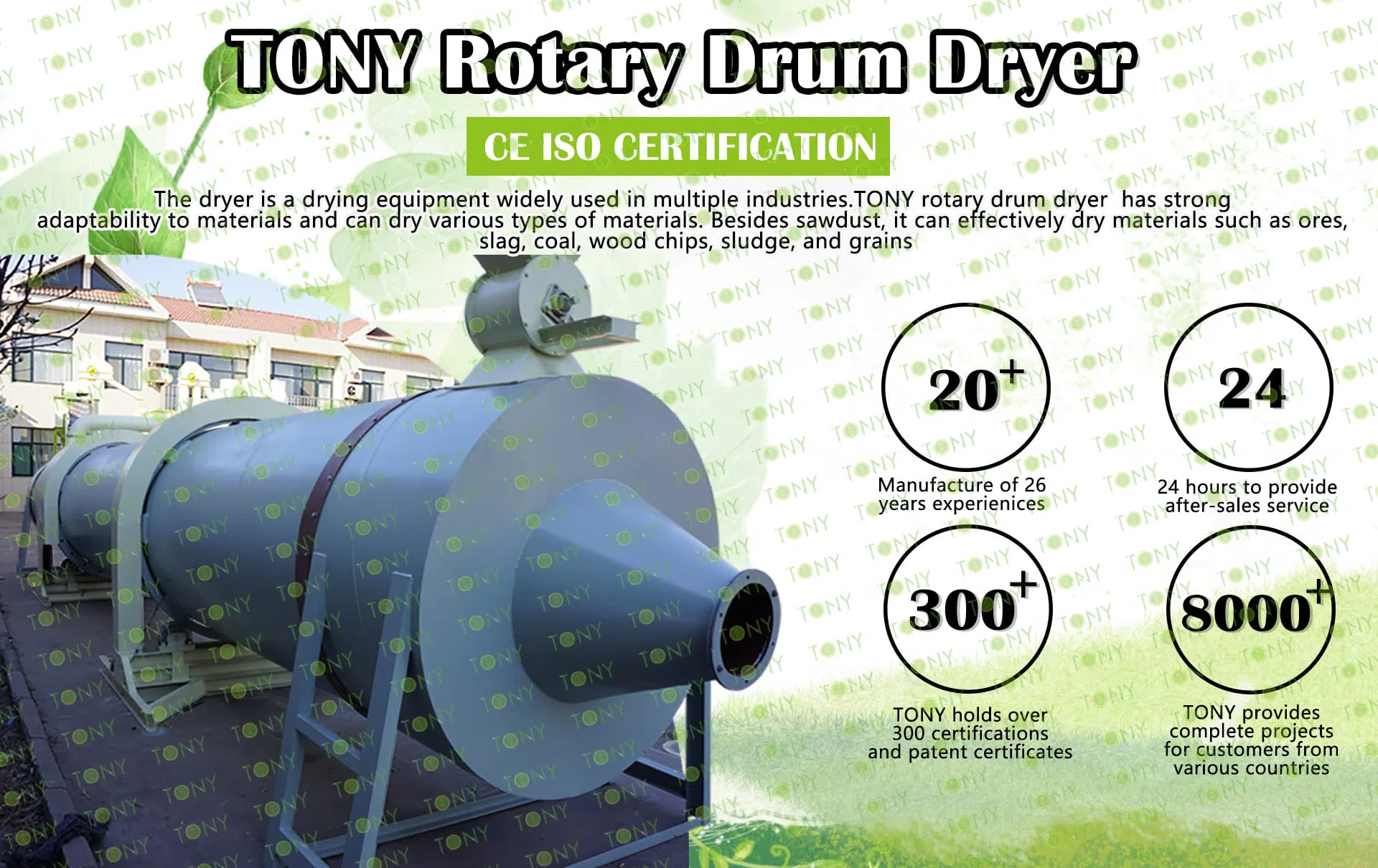
The equipment operates smoothly, performs reliably, has no wear on components, rarely fails, and has a long service life, making it widely used in the drying industry.
Working Principle
The operating principle of a drum dryer is based on the synergistic effects of heat conduction, convection, and material movement. The rotation of the drum ensures full contact between the material and the heat source, evaporating and discharging moisture, ultimately resulting in dry material. The core process can be broken down into the following key steps:
1.Material Feeding and Initial Contact
Wet material to be dried enters the drum through the feed port at the upper end via a conveyor belt or screw feeder. The drum then rotates slowly, driven by the drive system. Gravity and the drum's inclination cause the material to move toward the lower end.
2.Material Turning and Heat Exchange
Lifting plates on the drum's inner wall rotate with the drum, continuously lifting the material to a certain height before dispersing it, forming a uniform "material curtain" (similar to a waterfall).
Simultaneously, hot air (or hot flue gas) generated by the heat source system enters from one end of the drum (which can be divided into forward flow (hot air flowing in the same direction as the material) and counterflow (hot air flowing in the opposite direction of the material), making full contact with the dispersed material curtain. Heat exchange occurs in two ways:
Convection: Hot air directly contacts the material surface, removing evaporated moisture;
Conduction: The high-temperature drum wall contacts the material, transferring heat and accelerating moisture evaporation.
3.Moisture Evaporation and Discharge
As the material moves through the drum, it continuously absorbs heat, causing moisture to gradually evaporate into water vapor. This vapor mixes with the incompletely heated hot air and forms wet exhaust gas. This exhaust gas is discharged from the other end of the drum by an induced draft fan and treated in a dust collector (to remove dust) to meet emission standards and avoid pollution.
4.Dried Material Discharge
After a period of drying (determined by the material's moisture content, drum length, and speed), the material's moisture content is reduced to the target value (usually 1%-10%). The material is then discharged from the drum's lower outlet for subsequent cooling, screening, or packaging.
Main Parts
Spare Parts
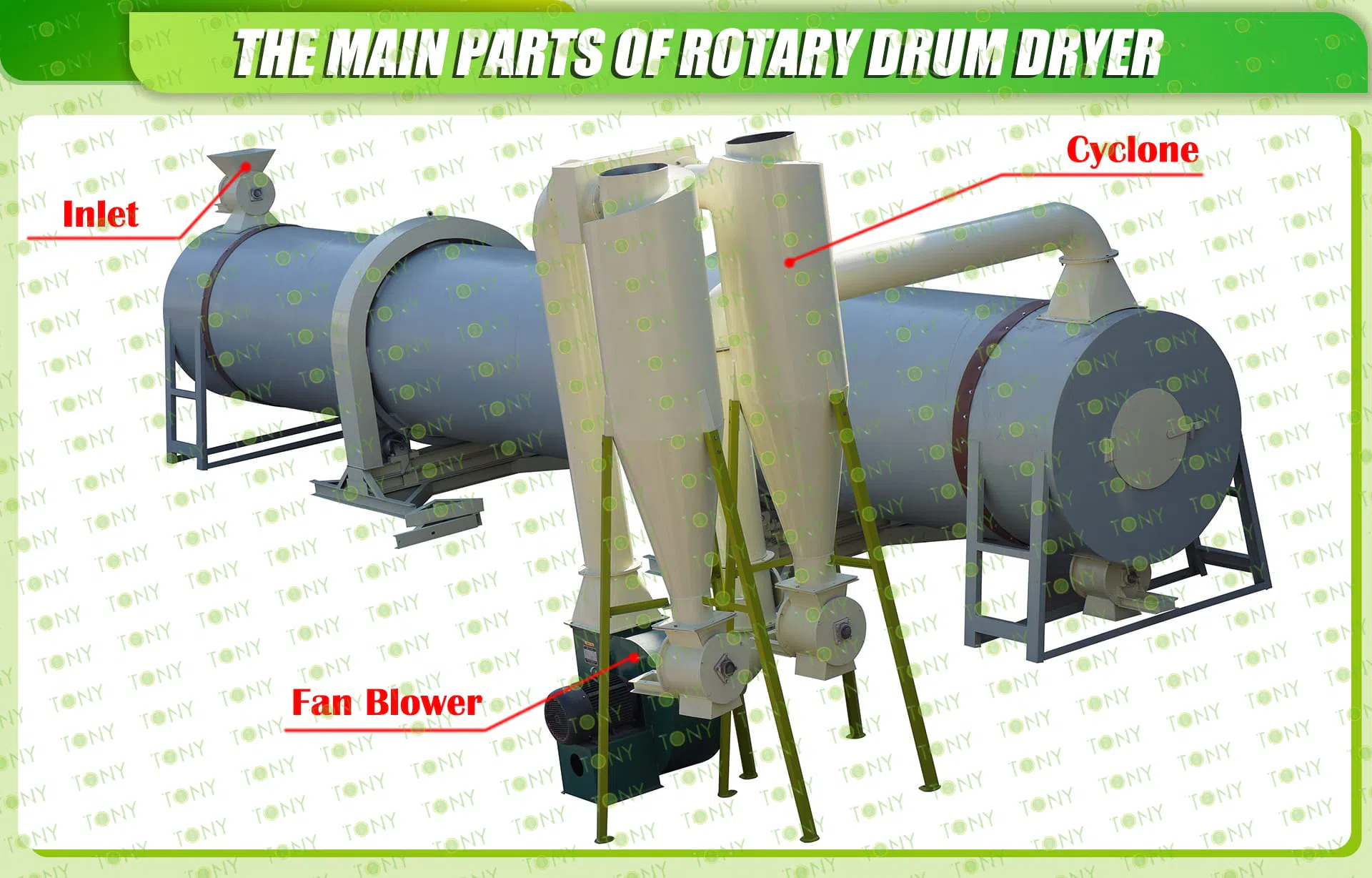
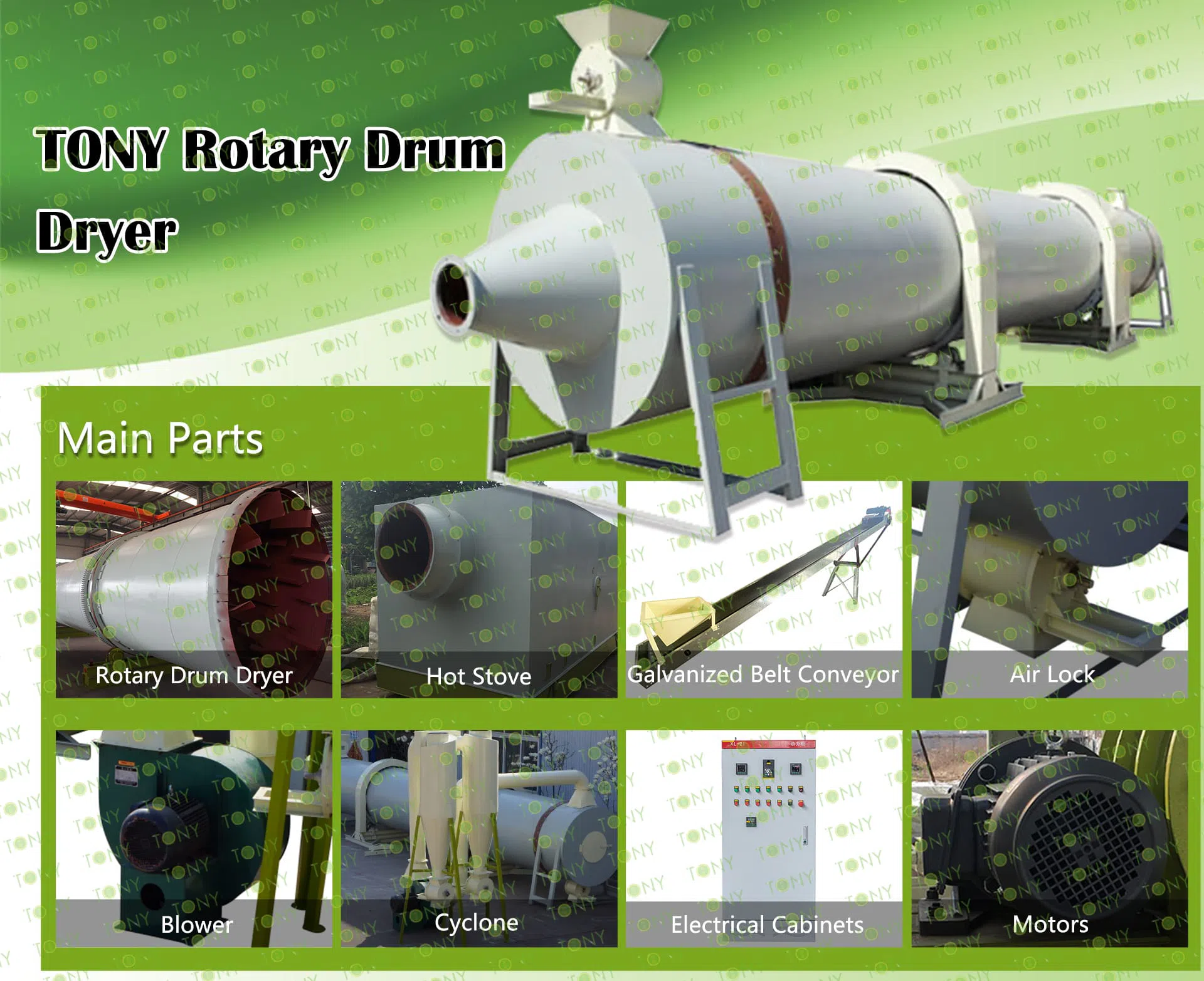 1.Drum main body
It is rolled from steel plates, installed at an Angle of 3° to 5°, and driven to rotate by a motor (with a rotational speed of 3 to 8 revolutions per minute).
The inner wall is welded with "lifting plates" (such as lift type or paddle type) to lift sawdust and increase the contact area with the hot air flow.
2.Heat source device
Optional coal-fired furnaces, gas furnaces, oil furnaces, electric heating or biomass pellet burners are available. Choose based on environmental protection requirements and costs.
The temperature of the hot air flow is usually controlled at 200 to 400℃ (the ignition point of sawdust is approximately 250℃, and over-temperature should be avoided).
3.Transmission system
Including the motor, reducer, gear/idler set, to ensure the smooth rotation of the drum.
4.Feeding and discharging device
A screw feeder is installed at the feeding end, and a screening device (for filtering large particles that have not been dried) is provided at the discharging end.
Equipment is equipped with dust removal systems (such as bag filters) to reduce dust emissions
Parameter
TONY Single-Layer Rotary Drum Dryer Models | ||||||
Model | Dryer cylinder diameter | Dryer cylinder length | Dryer cylinder volume | Roll speed | Power | Weight |
(mm) | (mm) | (m³) | (r/min) | (kw) | (t) | |
THGD1.2-12 | 1200 | 12000 | 13.6 | 1-6 | 7.5 | 12.5 |
THGD1.5-12 | 1500 | 12000 | 21.2 | 1-5 | 15 | 17.8 |
THGD1.5-15 | 1500 | 15000 | 26.5 | 1-5 | 15 | 19.2 |
THGD1.8-12 | 1800 | 12000 | 30.6 | 1-5 | 18.5 | 21 |
THGD1.8-15 | 1800 | 15000 | 38.2 | 1-5 | 18.5 | 26.3 |
THGD1.8-18 | 1800 | 18000 | 45.8 | 1-5 | 22 | 31 |
THGD1.8-20 | 1800 | 20000 | 46.3 | 1-5 | 22 | 29.3 |
THGD1.8-24 | 1800 | 24000 | 47.8 | 1-5 | 18 | 29.8 |
THGD2-12 | 2000 | 12000 | 48.4 | 1-5 | 18.5 | 30.5 |
THGD2-15 | 2000 | 15000 | 49 | 1-5 | 27 | 30.8 |
THGD2-18 | 2000 | 18000 | 51.6 | 1-5 | 28 | 31 |
THGD2-20 | 2000 | 20000 | 62.2 | 1-5 | 30 | 31.5 |
THGD2-24 | 2000 | 24000 | 65.8 | 1-5 | 22 | 32 |
THGD2.2-12 | 2200 | 12000 | 45.6 | 1-4 | 22 | 31.2 |
THGD2.2-15 | 2200 | 15000 | 53.2 | 1-4 | 30 | 36.2 |
THGD2.2-18 | 2200 | 18000 | 68.4 | 1-4 | 30 | 43.3 |
THGD2.2-20 | 2200 | 20000 | 76 | 1-4 | 30 | 48.8 |
THGD2.2-24 | 2200 | 20000 | 77 | 1-4 | 30 | 49.5 |
THGD2.4-15 | 2400 | 15000 | 67.9 | 1-4 | 30 | 43.7 |
THGD2.4-18 | 2400 | 18000 | 81.4 | 1-4 | 37 | 53 |
THGD2.4-20 | 2400 | 20000 | 90.5 | 1-4 | 37 | 60.5 |
THGD2.4-24 | 2400 | 24000 | 108.6 | 1-4 | 45 | 69.8 |
THGD2.8-24 | 2800 | 24000 | 110.8 | 1-4 | 45 | 71.6 |
THGD3-24 | 3000 | 24000 | 124.4 | 1-4 | 50 | 77 |
THGD3.2-24 | 3200 | 24000 | 135.03 | 1-4 | 54 | 83.2 |
THGD3.5-24 | 3500 | 24000 | 145.66 | 1-4 | 57.5 | 88.8 |
THGD3.8-24 | 3800 | 24000 | 156.29 | 1-4 | 61.5 | 94.4 |
Suitable Raw Materials
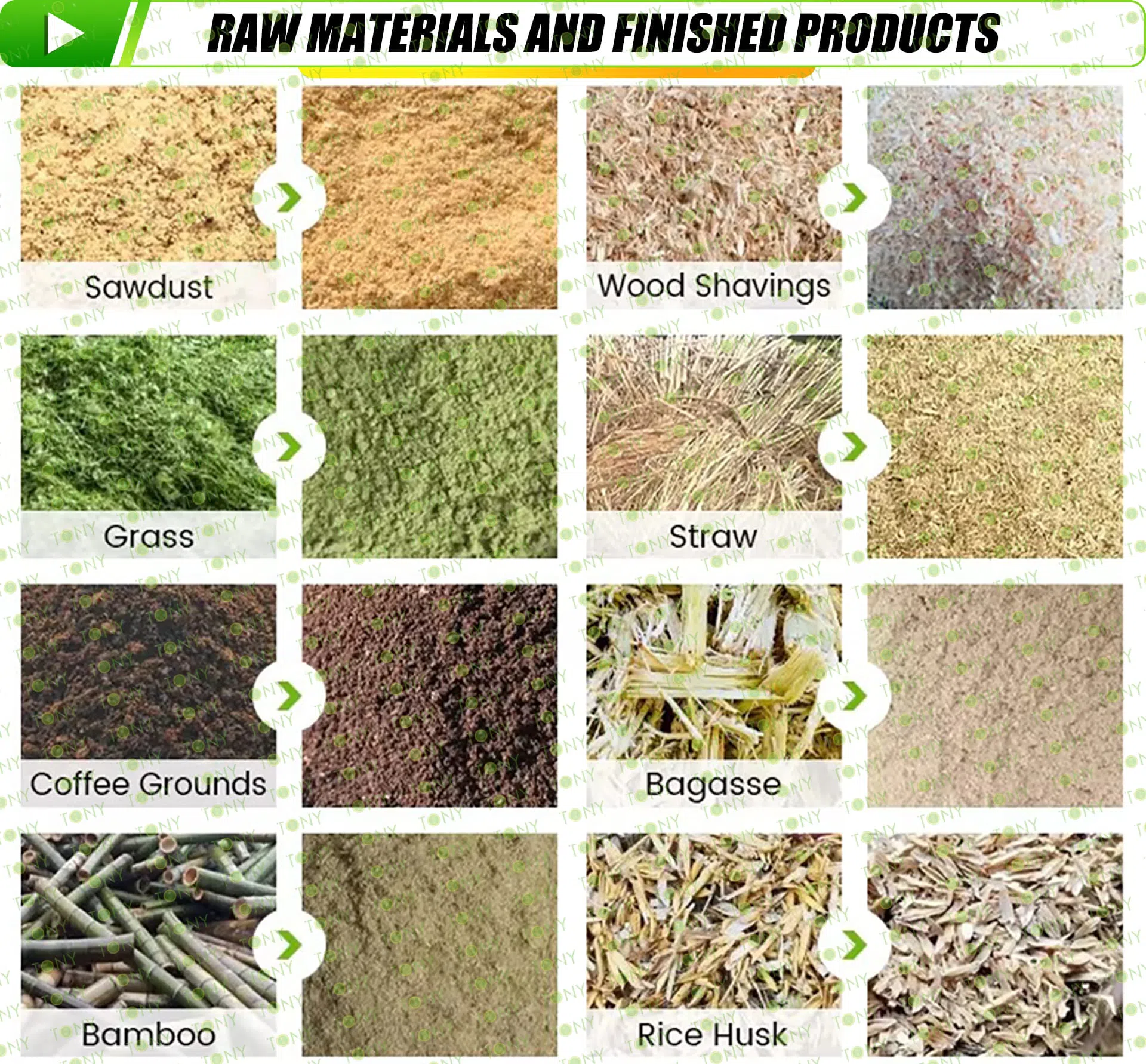
A drum dryer is a type of drying equipment that uses a rotating drum to fully contact the material with a heat medium, evaporating moisture. Due to its wide applicability and high efficiency, it is widely used in various industries. The following are the main raw material categories and specific examples that it can dry:
1.Agriculture and Agricultural Products
These raw materials often contain high natural moisture and require drying to extend storage time or facilitate further processing.
Grains: wheat, corn, rice, sorghum, etc. Drying prevents mold and protects grain quality.
Oil-bearing crops: rapeseed, peanuts, soybeans, etc. Reducing moisture content facilitates subsequent oil extraction.
Others: Forage grass, straw, etc., can be dried for feed or biomass fuel.
2.Minerals and Building Materials
Many minerals and building materials contain moisture after mining or processing and require drying to meet subsequent production or use requirements.
Ore: Iron ore powder, copper ore powder, manganese ore powder, lead and zinc ore powder, etc. Drying facilitates beneficiation and smelting. Non-metallic minerals: Quartz sand, limestone, dolomite, kaolin, bentonite, talc, etc., can improve product purity and stability and are used in building materials, ceramics, chemicals, and other fields.
Building materials: Sand, stone, cement clinker, fly ash, slag, etc., drying ensures the strength and performance of building materials.
3.Feed
In addition to agricultural products, a variety of materials in feed production also require drying.
Feed raw materials: Soybean meal, cottonseed meal, rapeseed meal, bran, fish meal, bone meal, etc., drying prevents feed spoilage and improves its nutritional value.
4.Other Special Materials
Sludge: Municipal and industrial sludge, etc., drying reduces volume for subsequent landfill, incineration, or resource recovery.
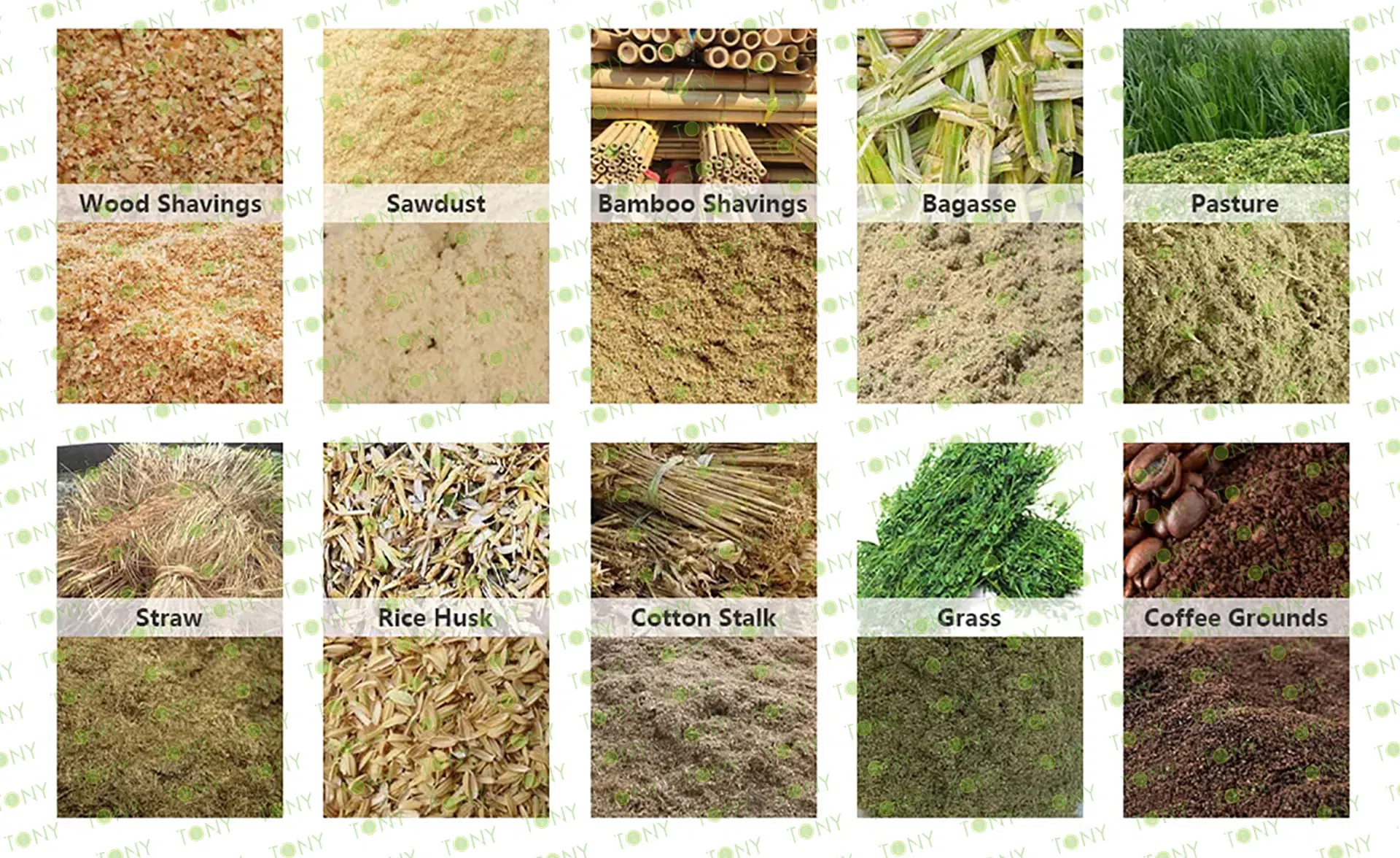
Biomass: Wood chips, bamboo chips, straw pellets, etc., dried and used as raw materials for biomass energy. It should be noted that although the drum dryer has a wide adaptability to materials, whether it can dry a certain raw material also needs to consider the properties of the material (such as moisture content, viscosity, heat sensitivity, etc.).
Drying Effect Display
What Are The Application Areas?
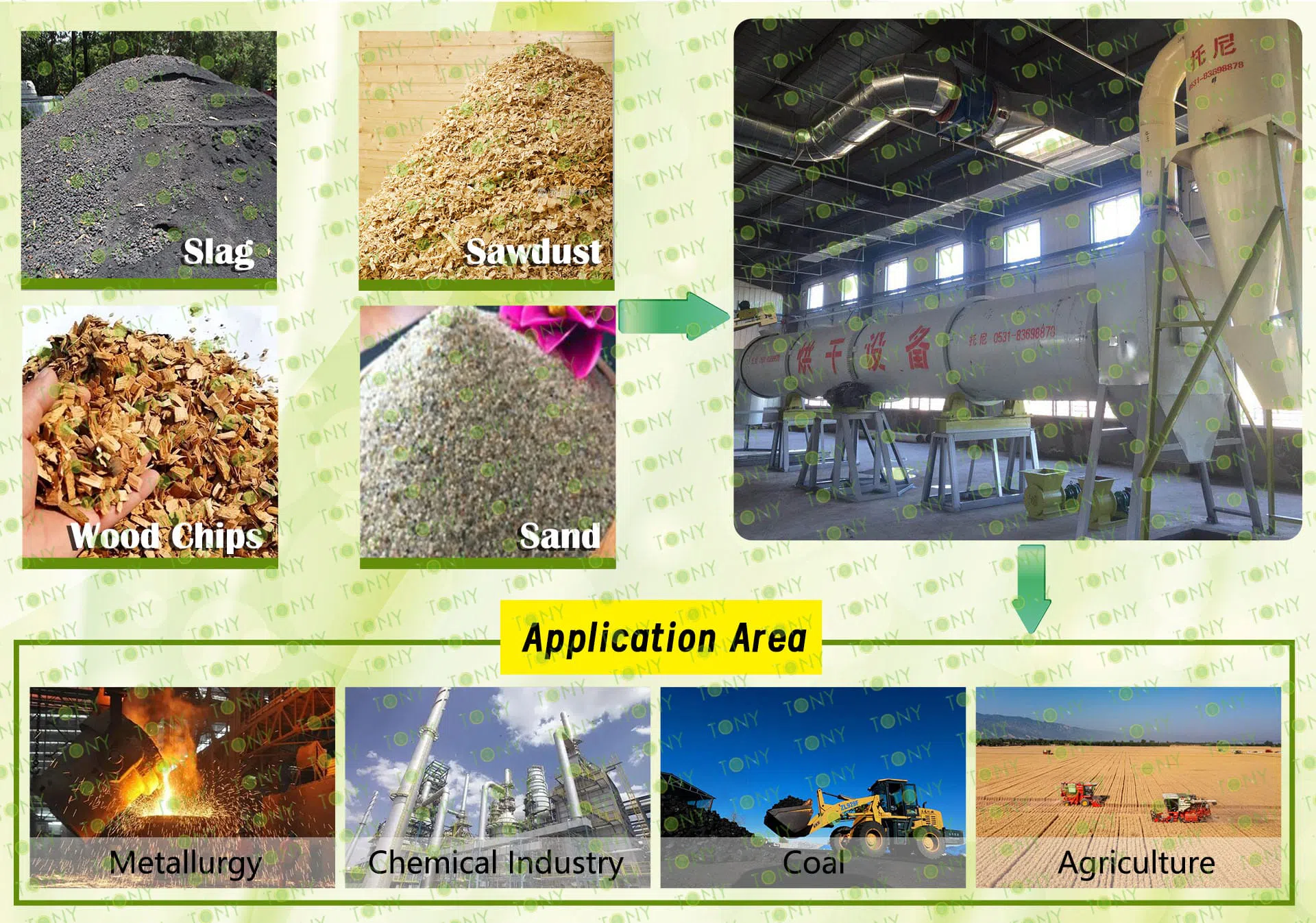
1. Biomass Pellet Fuel Industry: Drying sawdust to the optimal moisture content for the production of biomass pellets and briquettes; integrates with pellet mill production lines.
2. Machine-made Charcoal / Carbonization Industry: Drying sawdust and wood chips for use as carbonization feedstock; improves yield and quality of the finished charcoal.
3. Engineered Wood Panel Industry: Drying raw materials for particleboard, MDF, and fiberboard; ensures stability during the panel-forming process.
4. Organic Fertilizer Industry: Drying sawdust and wood dust for use as raw materials in organic composting and bio-organic fertilizers.
5. Livestock & Poultry Farming: Producing bedding material for fermentation beds; dry sawdust resists mold growth.
6. Horticultural Substrate Industry: Drying sawdust for use as a cultivation substrate (flowers, seedling raising) and soil conditioner.
7. Wood Processing Industry: Dehydrating and repurposing sawmill offcuts, wood shavings, and sawdust.
8. Activated Carbon Production: Drying wood chip feedstock for the manufacturing of activated carbon.
9. Tobacco & Food Smoking: Drying sawdust for use as smoking fuel.
Details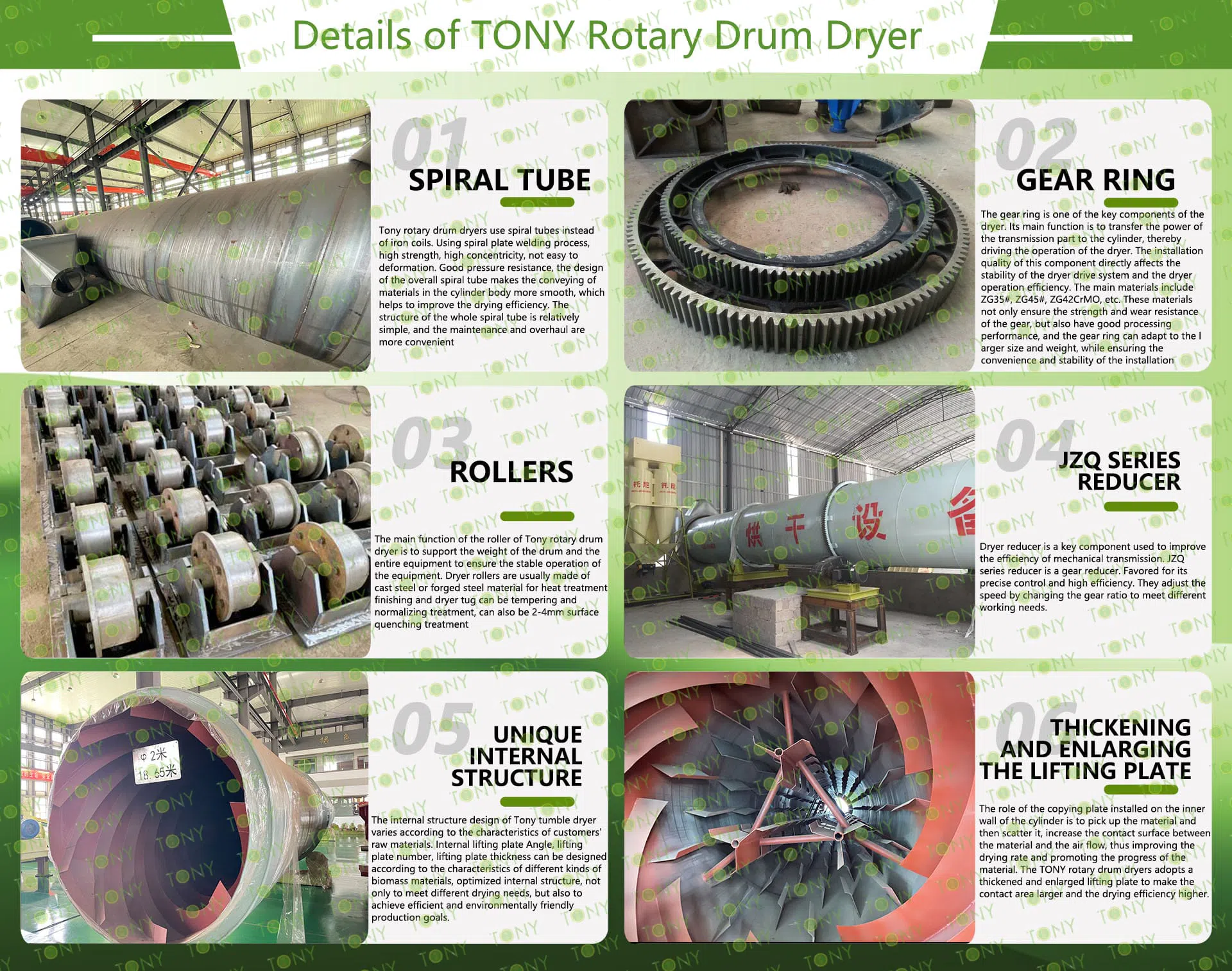
Unique Advantages
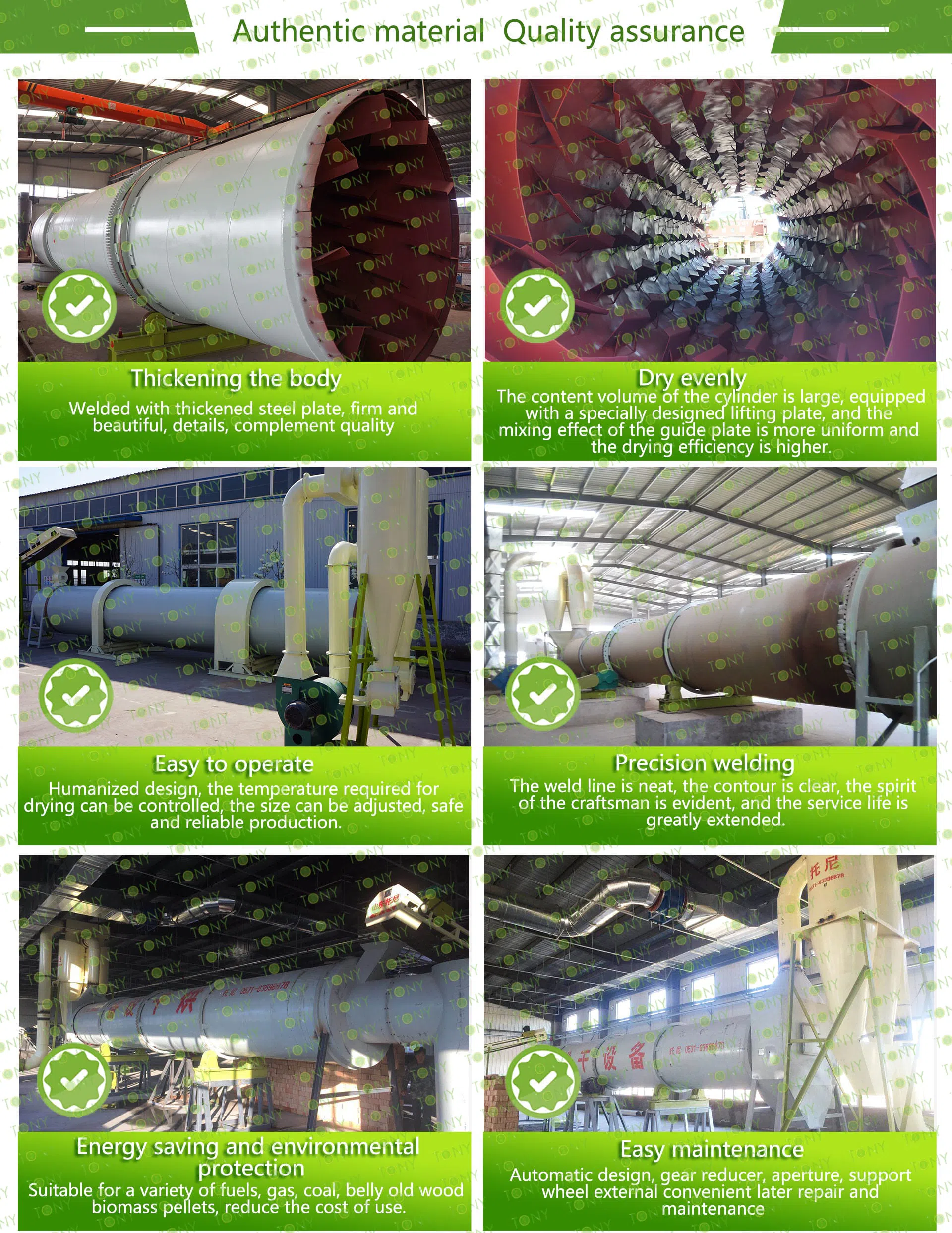
1. High Drying Efficiency:
The dryer typically uses a hot air co-current drying process. The material is fully exposed to the hot air within the dryer, resulting in a large contact area. This allows for rapid evaporation of moisture, shortening drying time and improving drying efficiency, quickly reducing the moisture content of the sawdust to the desired level.
2. High Processing Capacity:
The dryer can be customized to meet the user's actual production needs, with daily processing capacities ranging from tens to hundreds of tons, meeting the requirements of various production scales and adapting to large-scale sawdust drying operations.
3. Reasonable Structural Design:
The equipment features a simple structure, a small footprint, and is easy to construct and maintain. For example, the drum-type design offers stable operation, a low probability of failure, and long-term continuous operation, reducing operating and maintenance costs.
4. Good Environmental Performance:
Production lines are typically equipped with dust removal equipment to collect and purify dust and exhaust gas generated during the drying process, reducing environmental pollution and meeting environmental requirements.
5. Diverse Heat Source Options:
A wide range of fuels, including coal, natural gas, steam, biomass pellets, and fuel oil, are available as heat sources. Users can select the most suitable heat source based on their specific needs and cost considerations, offering high flexibility.
6. Wide Range of Applications:
In addition to sawdust, this unit can also be used to dry a variety of similar materials, including wood chips, bamboo shavings, bamboo powder, and wood chaff, demonstrating its versatility and adaptability.
In The Pellet Production Line
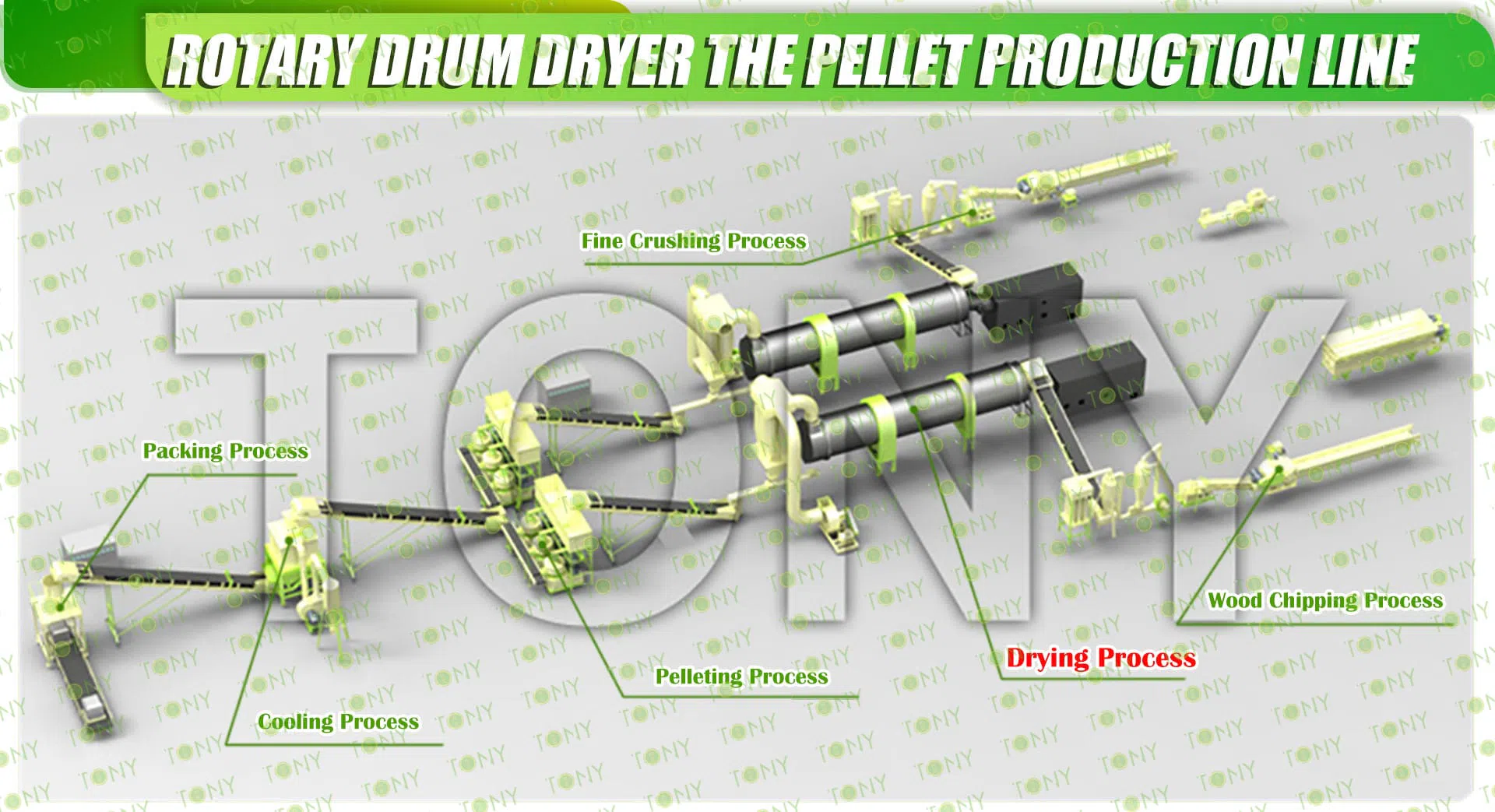
Wood is the most common raw material for wood pellet production.
So, how do you design a suitable wood pellet production line using wood as the raw material?
First, a drum wood chipper is used to shred the wood into 2.5-3.5 cm chips.
Then, a hammer mill is used to grind the chips into sawdust (6-12 mm).
Sometimes, a dryer is also required, as wood typically has a moisture content of approximately 30-50%. In this case, a dryer is necessary.
Then, a vertical ring die wood pellet machine is used to press the dried wood chips into high-quality wood pellets.
After cooling, the biomass pellets are packaged and stored to facilitate transport and sales.
The above outlines the basic process of wood pellet production. It is important to note that safety protocols must be observed during actual operations, and the relevant equipment requires regular maintenance to ensure production efficiency and product quality.
TONY Other Types Rotary Drum Dryer
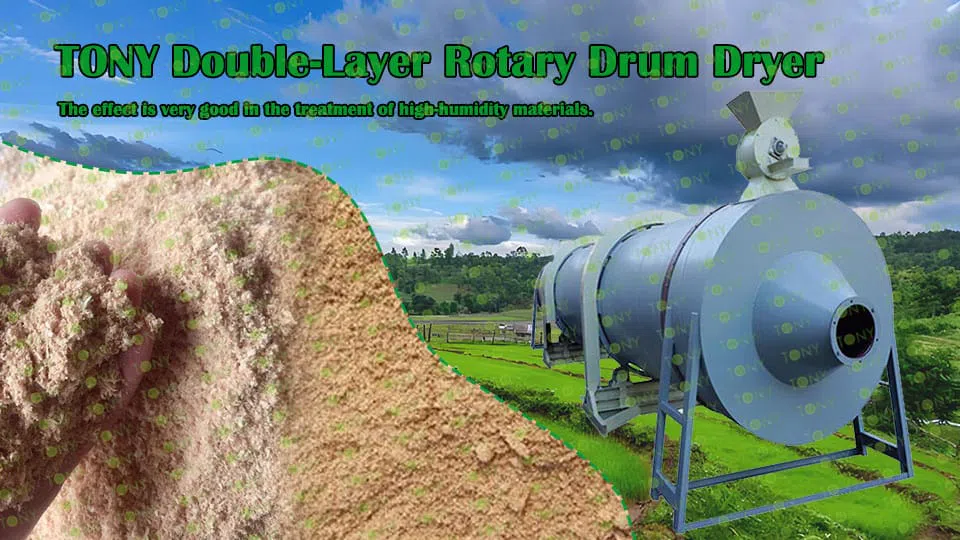 | 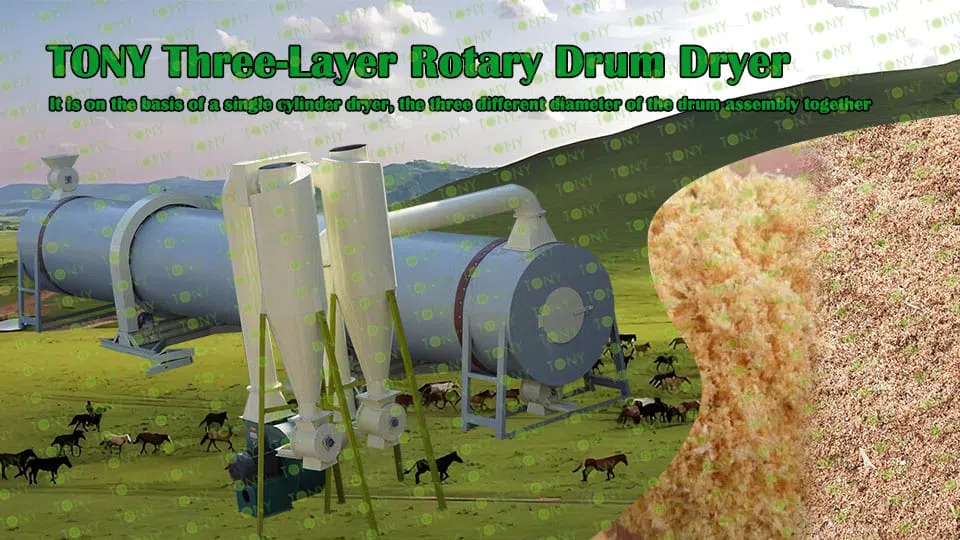 |
Advantages Double-shell structure with two-pass material heat exchange; higher thermal efficiency than single-shell designs. Simple structure with fewer internal flow reversals; less prone to bridging or clogging caused by long sawdust fibers. Easier internal inspection and cleaning; low maintenance costs. Smaller footprint than single-shell dryers for the same output; lower manufacturing cost than triple-shell models. Suitable for coarse sawdust and wood shavings with high moisture variability and high impurity content. Disadvantages Shorter heat exchange path; higher energy consumption compared to triple-shell models. Moderate drying uniformity; limited moisture removal in a single pass for high-moisture sawdust. Suitable Applications Small-to-medium-sized pellet plants; operations using mixed raw materials containing long wood fibers; projects with limited budgets; scenarios where clogging risk is a major concern. | Advantages Three-layer nested design with three-pass material heat exchange ensures maximum thermal efficiency and significant energy savings. Self-insulating structure minimizes surface heat loss and results in low exhaust gas temperatures, reducing the load on dust collection systems. Extended material residence time ensures consistent discharge moisture content, ideal for stable pellet production. Smallest footprint for a given production capacity, resulting in lower civil engineering costs. Disadvantages Numerous internal flow reversals make the system prone to bridging and clogging when processing long-fiber sawdust. Complex structure makes internal maintenance difficult. Higher initial equipment procurement cost. Suitable Applications Large-scale biomass pellet production lines; clean, uniformly sized raw materials; sites with limited space; long-term production where minimizing fuel costs is a priority. |
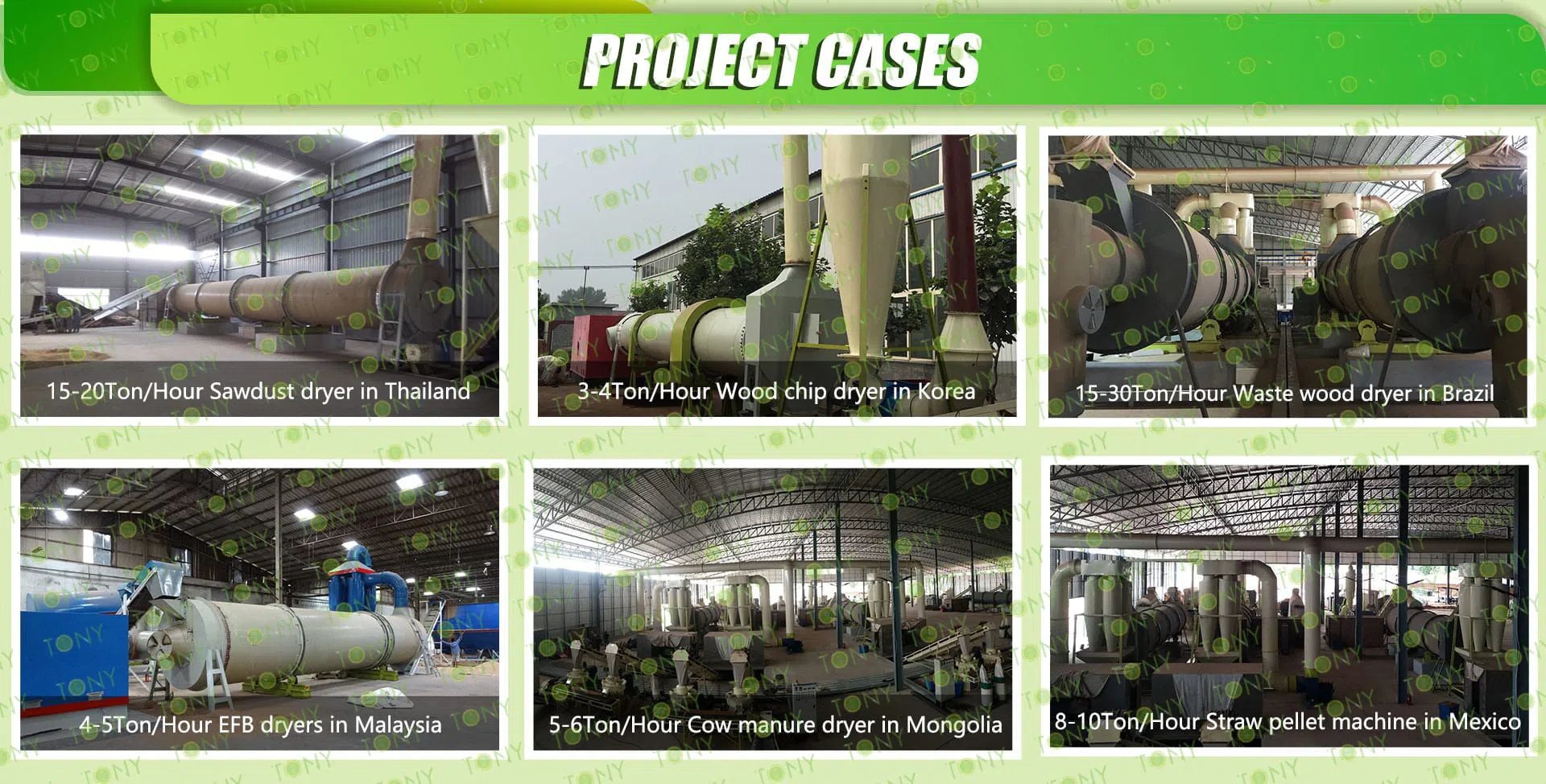
Customer Cases
TONY Shipments
FAQ
Q: What is a TONY Single-Layer Rotary Drum Dryer?
A: TONY Single-Layer Rotary Drum Dryer is used to dry wood chips, sawdust or other biomass from
moisture 55% to 10%.
Q: What kind of materials can be dried?
A: Materials such as wood wastes, saw dust, corn cobs/straw/stalks, straw, switch grass, other grasses, distillers grain, paper, etc. Basically, most Biomass materials that can be ground down to sawdust form can be dried.
Q:What capacity would your prefer?
A:We supply different capacity from 1T/Hour up to 50T/Hour
Q:Do you ship worldwide?
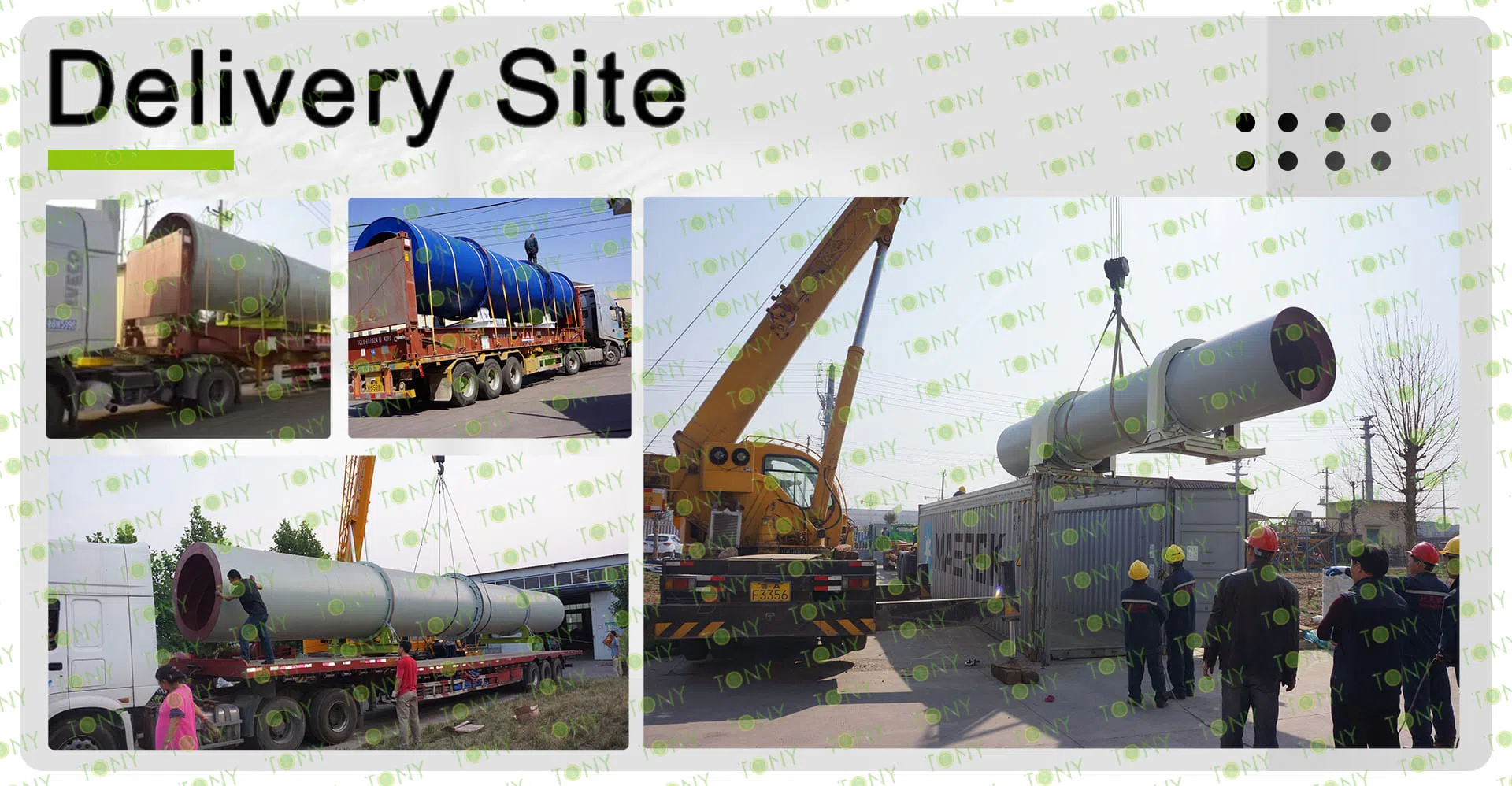
A: Yes. We have sent machines to Canada, Europe, Asia,Southeast Asia, Africa, South America and Australia.
Q: lf i purchase a TONY Single-Layer Rotary Drum Dryer, will you show me how to operation the
machine?
A: Yes, we do. We will instruct you how to use it via video or phone or engineer avaliable abroad if you need.


