

Brief Introduction
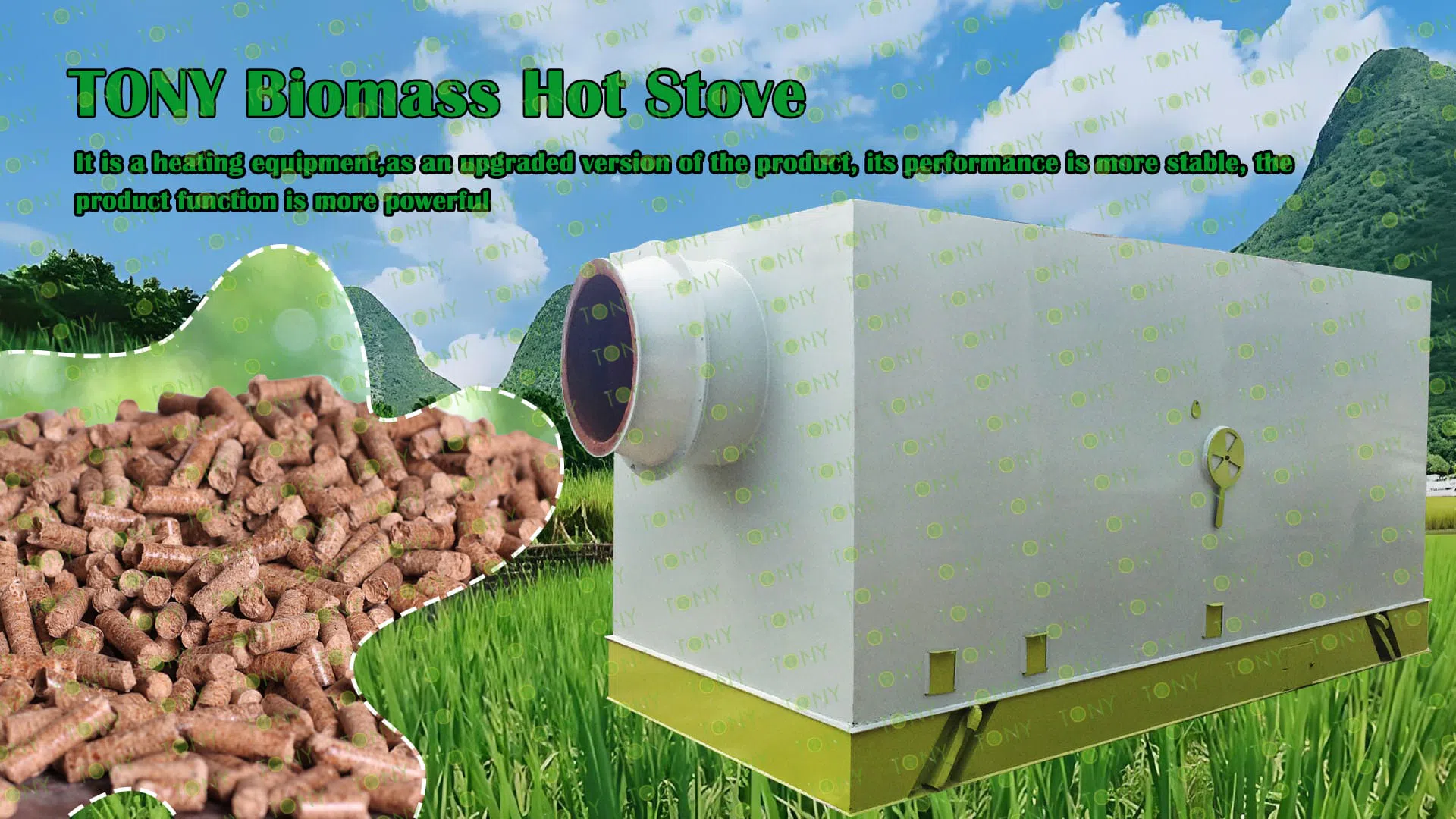
TONY Biomass Hot Stove is specialized thermal equipment designed to supply high-temperature hot air to rotary dryers for drying biomass feedstocks such as sawdust, wood chips, and straw. Classified as atmospheric-pressure equipment rather than a boiler, it does not require pressure vessel certification and is widely used in biomass pellet production lines.
These furnaces fall into two main categories based on their heat exchange method: direct-combustion and indirect heat exchange.
Direct-combustion type: Combustion flue gas mixes with air to generate hot air, which is fed directly into the dryer. This type offers high thermal efficiency and low costs; it can burn sawdust, wood shavings, and biomass pellets, making it the mainstream choice for sawdust drying lines. Its drawback is that the hot air contains trace amounts of soot or dust.
Indirect heat exchange type: Heat is transferred between flue gas and clean air through the walls of heat exchange tubes, keeping the flue gas and hot air completely isolated. The output hot air is clean and free of ash, ensuring the finished sawdust is not contaminated by soot; however, thermal efficiency is relatively lower, and the equipment cost is higher.
Working Principle
Biomass fuel (such as sawdust, wood shavings, or biomass pellets) undergoes full combustion within the furnace to release heat; cold air enters the furnace body, absorbs heat, and is converted into a steady stream of high-temperature hot air, which is then conveyed to the rotary dryer.
Biomass fuel is fed into the furnace by a loading mechanism and burns completely under negative pressure; primary air supports combustion, while secondary air is introduced to facilitate secondary combustion and reduce smoke and dust emissions. The high-temperature flue gas generated during combustion mixes with fresh cold air in a settling chamber to produce hot air at the temperature required for the process. This mixed hot air is conveyed to the rotary dryer to heat the material and evaporate moisture from the sawdust, while larger dust particles in the flue gas settle out within the chamber. A spark arrester is incorporated to trap sparks and prevent the material from igniting. An induced draft fan maintains negative pressure throughout the system, and a PLC automatically adjusts the fuel feed rate and airflow based on the hot air temperature.
Main Parts
1.Feeding System:
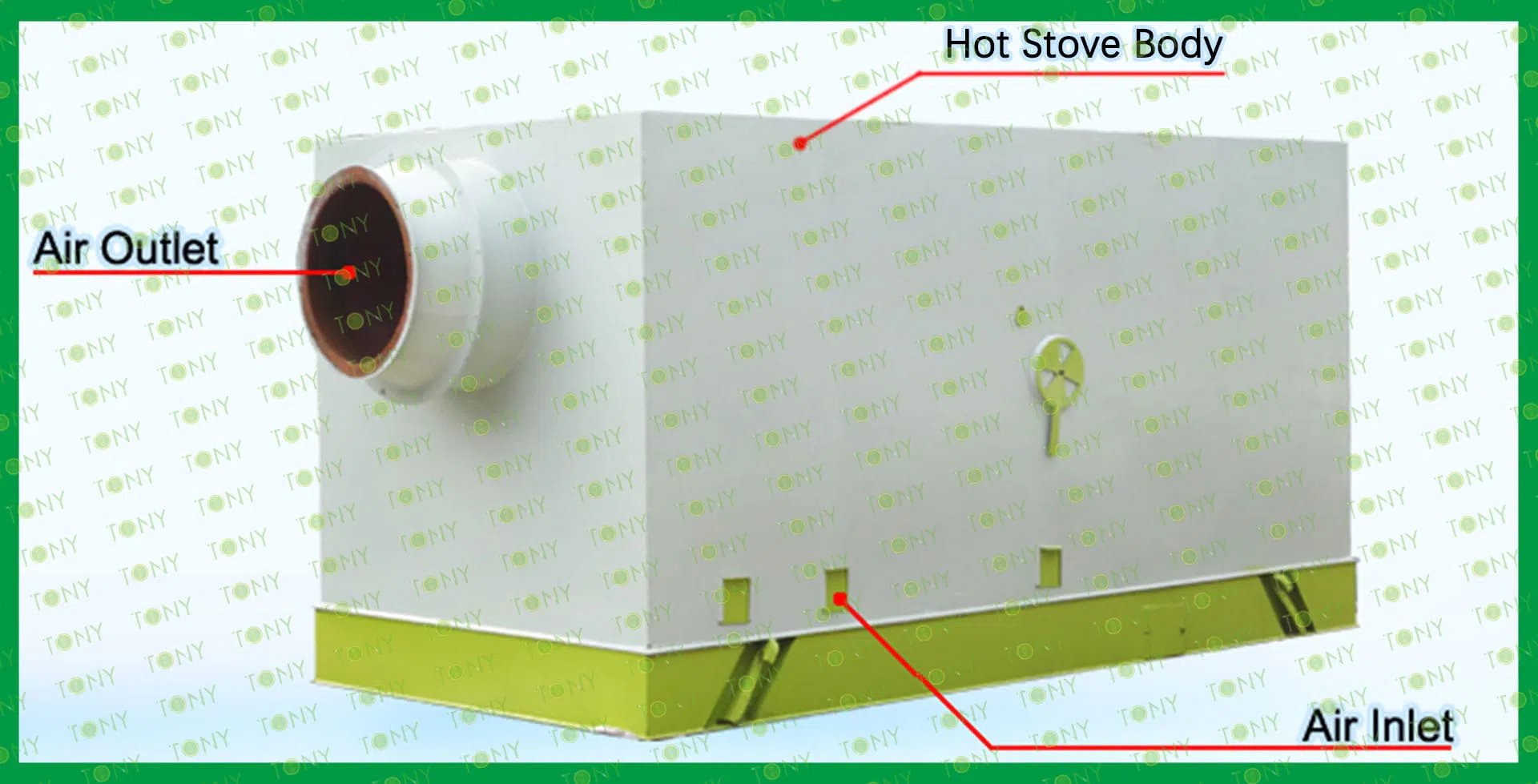
Storage hopper + screw feeder (optional automatic chain-grate feeder); variable frequency drive (VFD) controls fuel feed rate; capable of automatically feeding sawdust, wood chips, or pellets.
2.Combustion System (Furnace Chamber):
Lined with high-alumina refractory material; features primary and secondary air supply to facilitate secondary combustion and minimize black smoke; operates under negative pressure to prevent flashback or flame blowback.
3.Heat Exchange System:
Indirect type features a multi-pass heat exchanger tube bundle to maximize heat transfer surface area; direct-combustion type omits the tube bundle but includes a settling chamber to capture large ash particles.
4.Temperature & PLC Control System:
Thermocouples monitor hot air temperature in real-time, automatically adjusting fuel feed and fan airflow to maintain stable hot air temperature (±5°C); includes an over-temperature safety interlock for automatic shutdown.
5.Airflow System:
Includes combustion air fan, induced draft fan, and hot air delivery fan; total airflow is matched to the requirements of the rotary dryer.
6.Slag and Ash Removal System:
Automatic slag extractor and ash clean-out ports collect ash, reducing the need for manual cleaning.
7.Safety Accessories:
Explosion-proof pressure relief vent, observation port, maintenance access door, and spark arrester.
Suitable Fuel
1. Recommended fuels (Preferred; stable combustion; low risk of slagging)
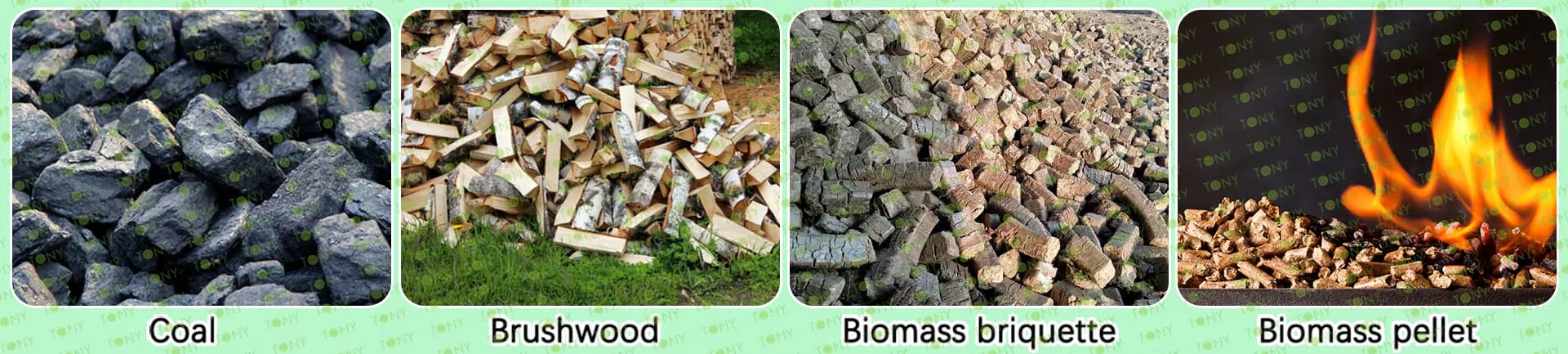
Sawdust, wood chips, and wood shavings: Waste generated by the drying production line; lowest cost; most commonly used.
Biomass pellets: Formed fuel; ensures uniform feeding and stable combustion; suitable for fully automatic furnaces.
Wood chips and shredded branches: Small wood pieces from crushed branches; high calorific value.
Peanut shells, rice husks, and fruit shells: Various agricultural shell-based materials; moderate calorific value.
Corn cobs: Good combustion performance when crushed; low ash content.
2. Usable fuels (Require pretreatment; monitor for slagging)
Crop stalks (corn stalks, wheat stalks): High potassium content; prone to slagging; mixing with wood fuel is recommended; prolonged burning on their own is not advised.
Palm fibers and sugarcane bagasse: High moisture content; require air-drying or mechanical drying before feeding into the furnace.
Tree bark: Relatively high ash content; best burned in a mixture with sawdust.
What Are The Application Areas?
Biomass hot stove generate high-temperature hot air through the combustion of biomass fuel. Primarily paired with various drying systems, they are widely used for drying operations in sectors such as agricultural and forestry waste processing, food production, and building materials:
1.Biomass Energy Industry
Pairs with rotary dryers for sawdust and wood chips to supply heat for the production lines of biomass pellets, briquettes, machine-made charcoal, and activated carbon, drying raw materials such as sawdust, wood shavings, and wood chips.
2.Wood-Based Panel Industry
Used in the production of MDF, particleboard, and fiberboard to dry wood chips and wood fibers, ensuring the raw materials meet moisture content standards.
3.Organic Fertilizer Industry
Dries raw materials such as sawdust, straw, and spent mushroom substrate for the production of organic and bio-bacterial fertilizers.
4.Agriculture and Horticulture
Dries agricultural by-products like corncobs, rice husks, and peanut shells; produces seedling substrates and sawdust bedding for livestock fermentation beds.
5.Food and Agricultural Product Processing
Dries grains, traditional Chinese medicinal herbs, dried fruits, and spent mushroom substrate (indirect heat exchange systems are typically selected to ensure product cleanliness).
6.Industrial Material Drying
Low-temperature drying of industrial materials such as mineral powder, foundry sand, and gypsum.
7.Other Applications
Greenhouse heating, workshop space heating, and heat supply for timber drying kilns.
Details

Operational Details:
Biomass fuel undergoes complete combustion within the furnace; high-temperature flue gas mixes with cold air in the settling chamber to produce hot air at the required temperature, which is then fed directly into the dryer.
1.Thermal efficiency: 92–98%
2.Hot air characteristics: Contains trace amounts of soot/dust
3.Temperature range: 60–280°C (120–180°C is commonly used for sawdust drying)
Equipment Selection Details (for pairing with a sawdust rotary dryer):
1. Due to the relatively high heat loss associated with the dryer, it is recommended to select a hot air furnace with a capacity one size larger than the baseline requirement; this provides a safety margin to handle fluctuations in raw material moisture content. A direct-combustion model is preferred.
2. If the initial moisture content of the raw material exceeds 50%, the thermal load is high, necessitating a higher thermal power rating.
3. Strict environmental compliance: Direct-combustion furnaces must be equipped with a bag-type dust collector.
Unique Advantages
Routine Maintenance Key Points
1. Inspect the furnace lining's refractory materials daily to prevent spalling or erosion. 2. Periodically clean accumulated ash from the heat exchange tubes of indirect-heating furnaces; ash buildup directly reduces heat transfer efficiency and increases fuel consumption. 3. Regularly inspect the induced draft fan and combustion air fan, and clear ash accumulation from the ducts. 4. Check temperature sensors to ensure accurate temperature control. 5. Discharge slag promptly to prevent coking within the furnace. 6. Operate the furnace without a load for a period before shutdown to cool the chamber, thereby preventing thermal shock cracking of the refractory materials. | 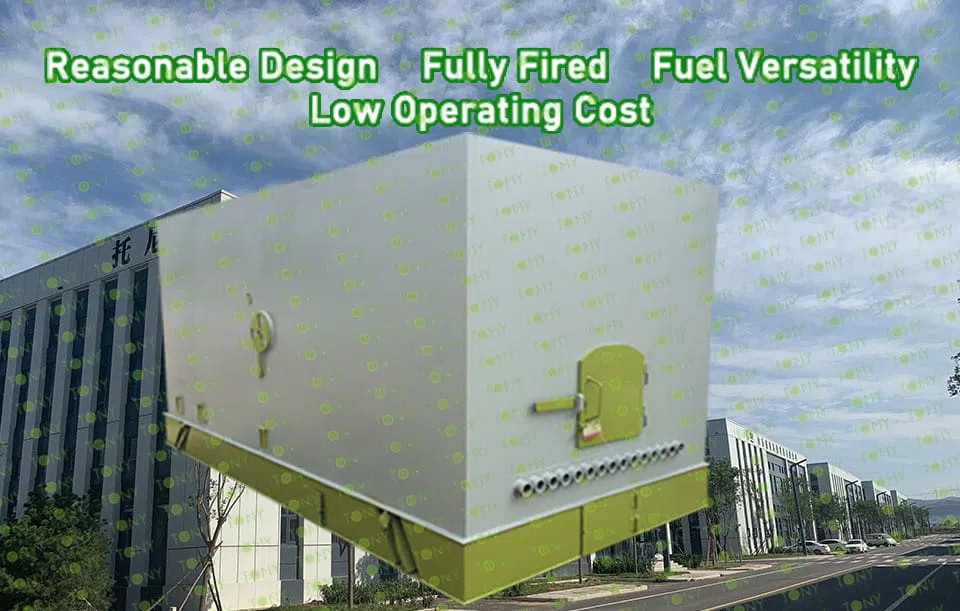 |
TONY Exhibition
TONY Customer Visiting

Company Profile
FAQ
1. What is TONY Biomass Hot Blast Stove?
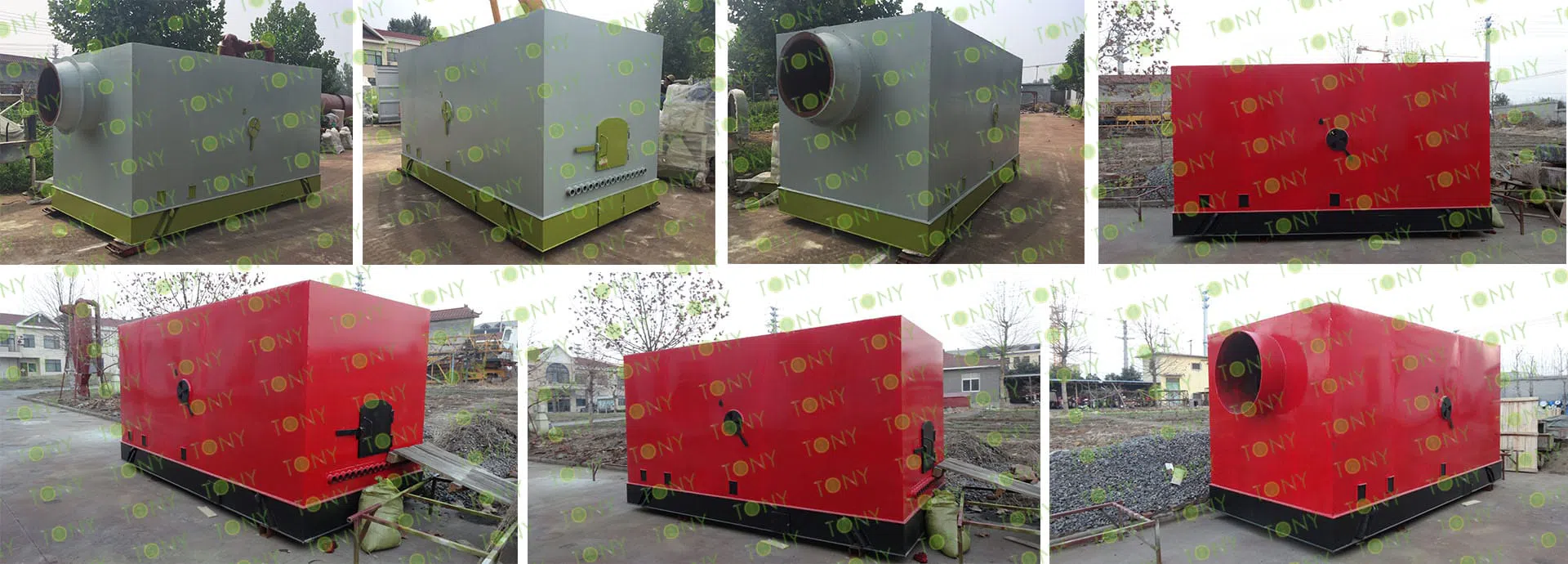
TONY Biomass hot blast stove is a heating device that produces dry and clean hot air by burning materials. And the hot air is transported to the drying equipment, TONY biomass hot blast stove using firebrick pot, three channels, fire insulation effect is good, weighing 18 tons. Dimensions 4.2 m * 2.5 m * 2.2 m
2. What are the models of TONY biomass hot blast stove?
TONY biomass hot blast stove is generally customized according to the output of the drying section in the customer's pellet production line. We will provide the drawings.
3. What fuel can TONY biomass hot blast stove burn?
TONY biomass hot blast stove can burn various fuels, such as coal, straw, bark, branches, biomass compactor, biomass pellet fuel and so on
4. How much is TONY biomass hot blast stove?
The price of biomass hot blast stove of different specifications is different, we need to give you a quotation according to your model
5. If I buy a TONY Biomass Hot Blast Stove, will you install it?
Because the hot blast stove is made of refractory materials, considering the transportation problem, it is usually provided by us to provide drawings, customers buy firebricks and other self-construction, we will guide.


