Brief Introduction
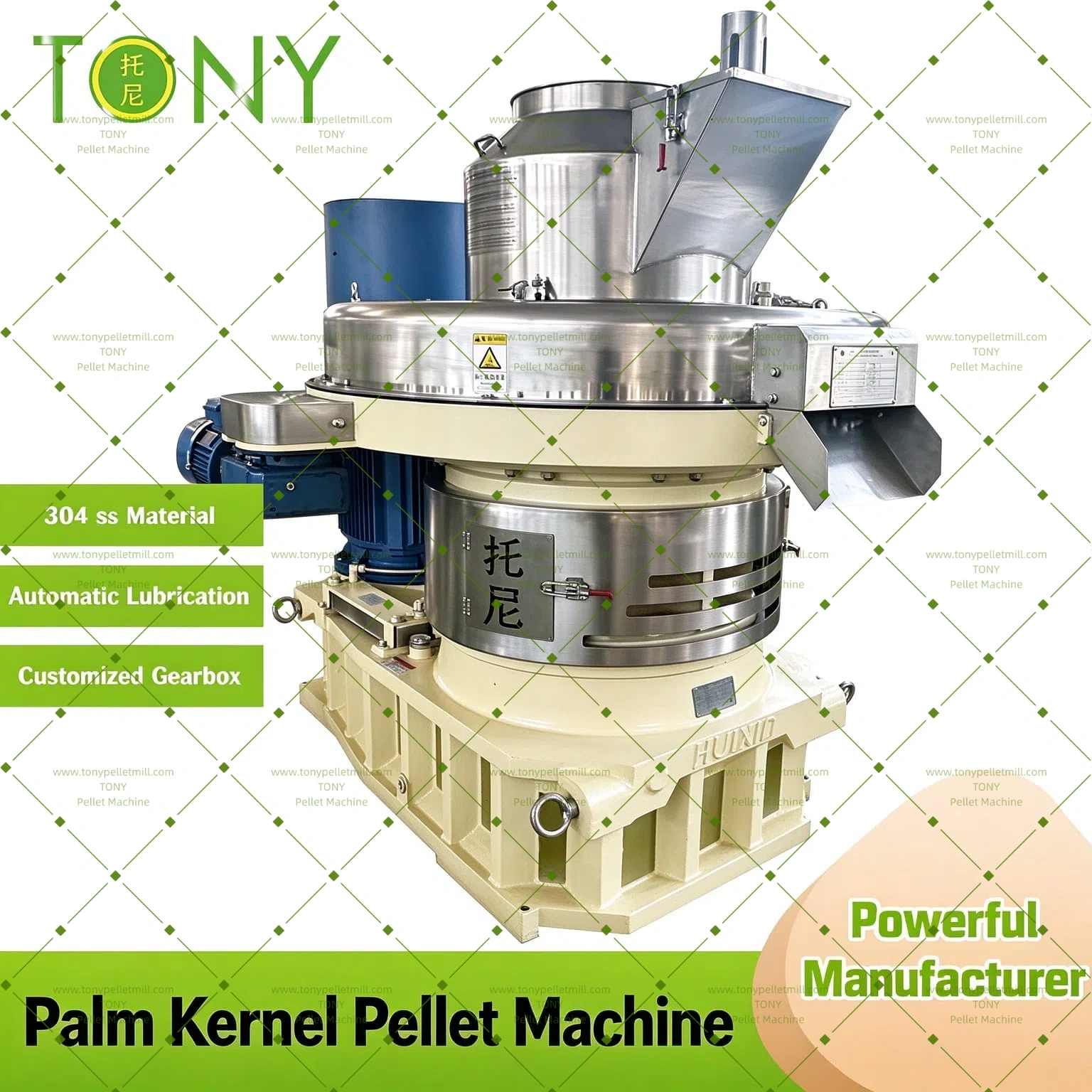
A Palm Kernel Pellet Making Machine is a molding equipment that uses agricultural and forestry waste such as palm kernel shells, palm fibers, palm filaments, palm fruit shells, hollow fruit bundle fibers, peanut shells, rice husks, sawdust, and straw as raw materials to process them into high-density biomass fuel pellets. The finished pellets can be used in industrial boilers, biomass power plants, cement kilns, drying ovens, and home heating, and are an important piece of equipment for the resource utilization of palm oil processing waste.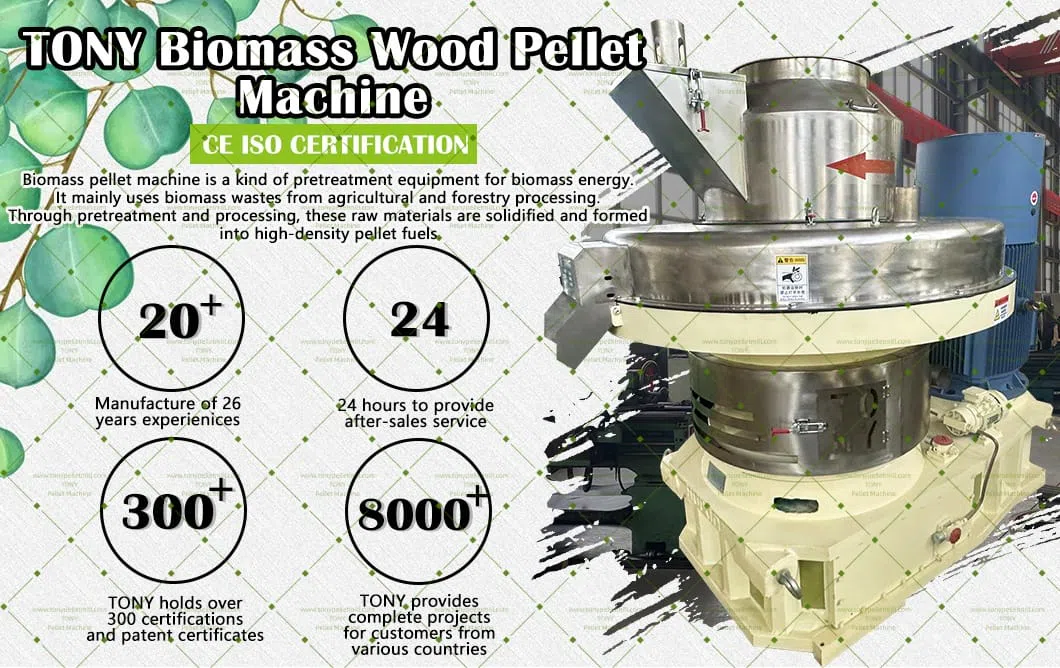
Processing Technology
Core Equipment Is Palm Kernel Pellet Machine
Palm kernel shells, palm fibers, and other raw materials typically cannot be directly pelletized and require a complete pelletizing production line. A typical process flow is as follows:
1. Raw Material Pretreatment: Remove impurities such as stones, metal, and sand. Large palm shells, palm fibers, and empty fruit bundles are first coarsely crushed.
2. Crushing: Crush the raw materials to approximately 3–8 mm using a hammer mill or twin-shaft crusher to improve material uniformity and pelletizing rate.
3. Drying and Conditioning: Palm shells and palm fibers have a high moisture content and typically need to be dried to around 10%–15%. Excessive moisture can clog the mold, while insufficient moisture makes pelletizing difficult.
4. Pelletizing: The dried material enters the pelleting chamber via a forced feeder and is extruded under high pressure by rollers and a ring die. The lignin softens upon heating, acting as a natural binder.
5. Cooling and Screening: The pellets are still hot when they emerge from the mold and need to be cooled and shaped using a counter-current cooler. Then, they are screened by a vibrating screen to remove powder and fragments. Unqualified materials can be recycled for further pelletizing.
6. Packaging and Warehousing: After being automatically weighed and packaged, the finished granules are stored in the warehouse. During storage, attention should be paid to moisture prevention to avoid the granules absorbing water and becoming loose.
Main Parts 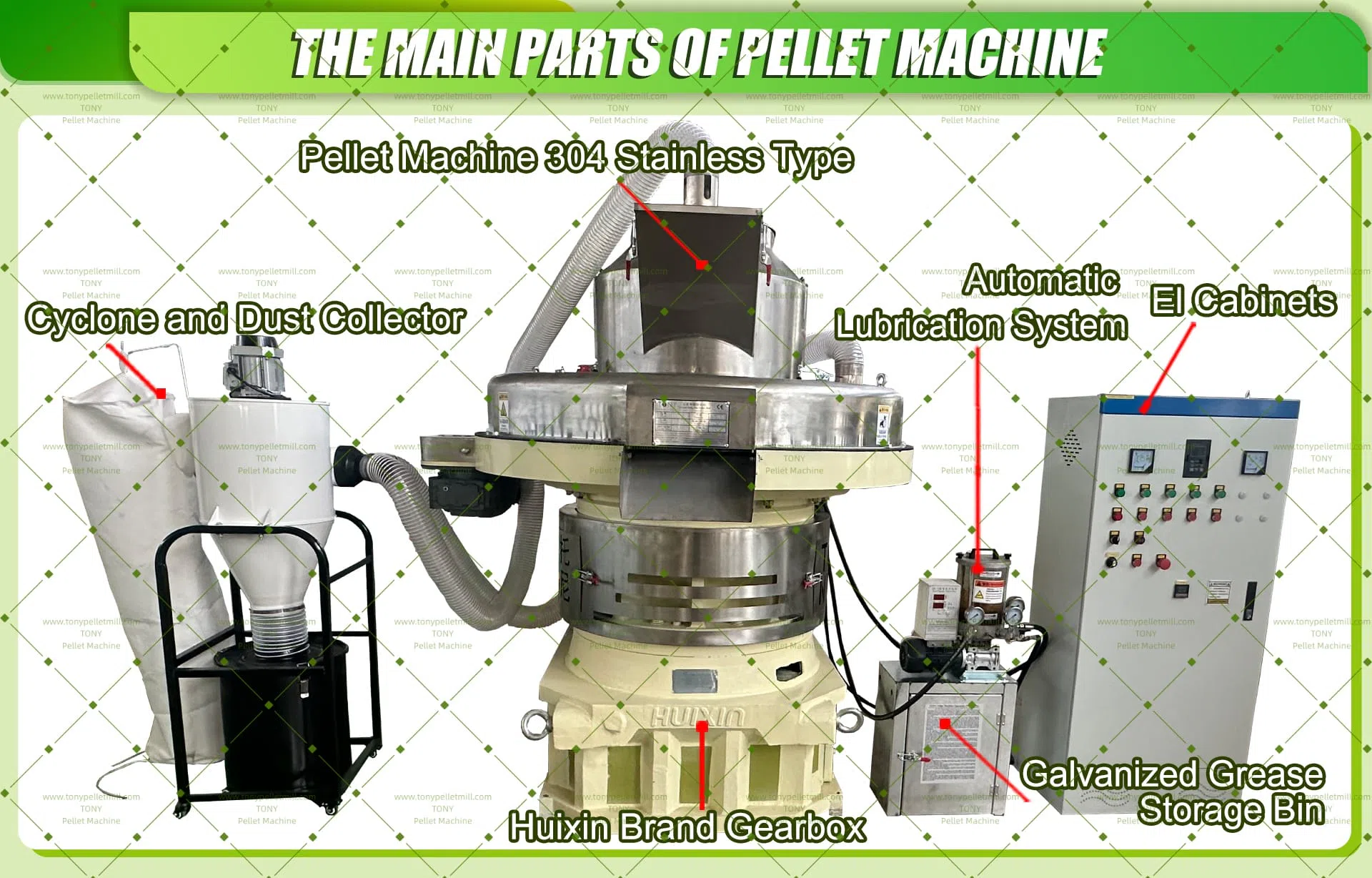
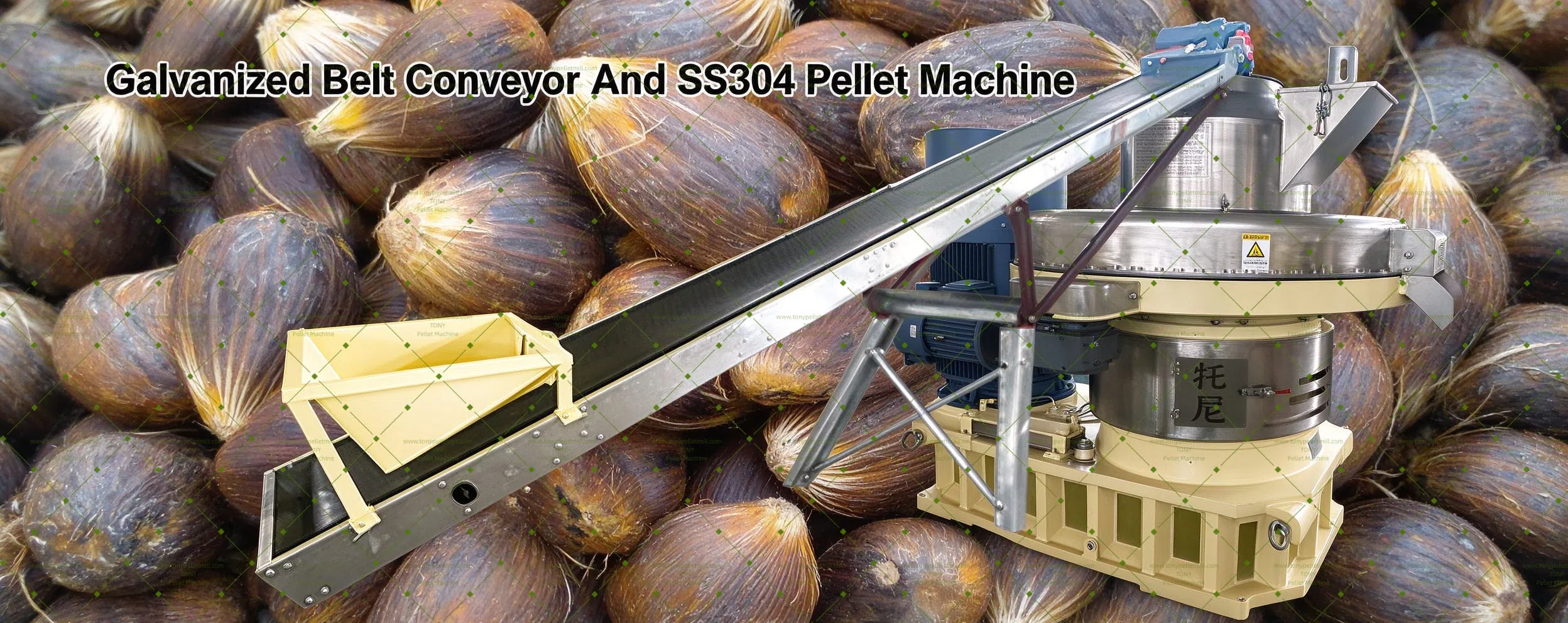
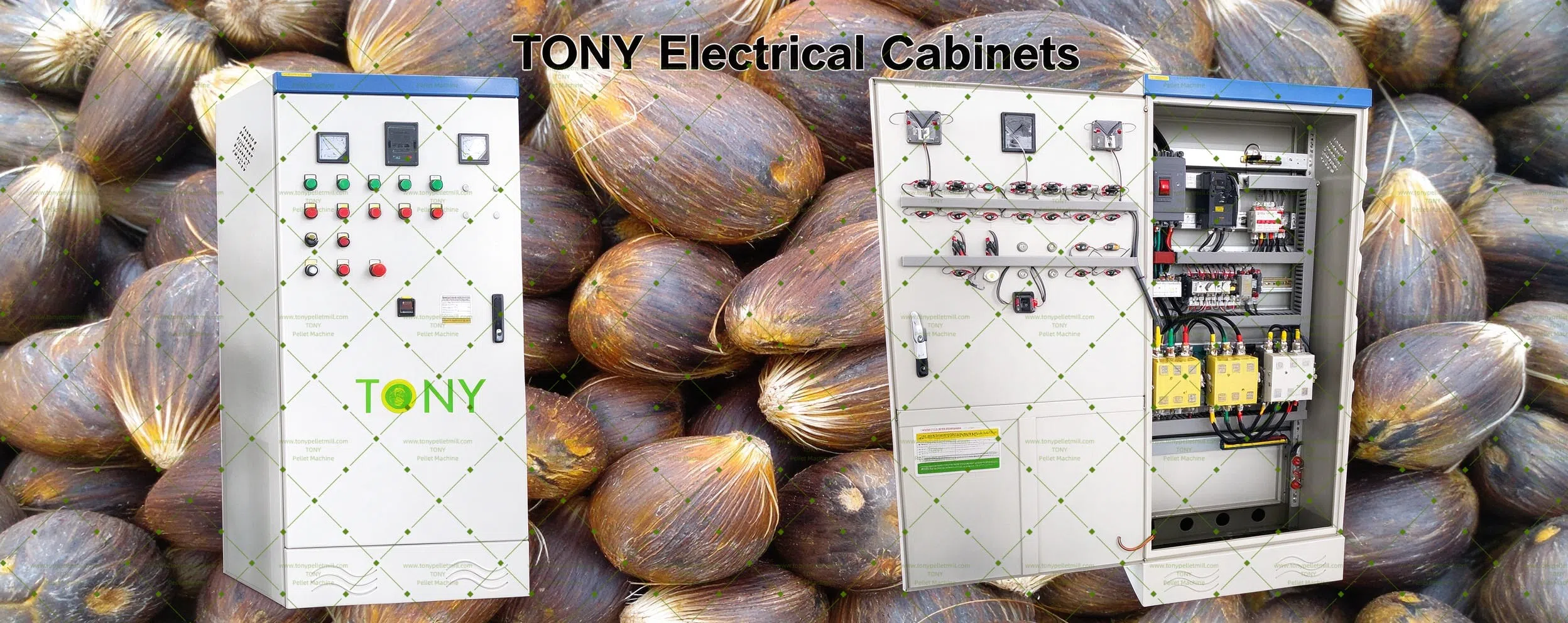
TONY's Palm Kernel Pellet Making Machine
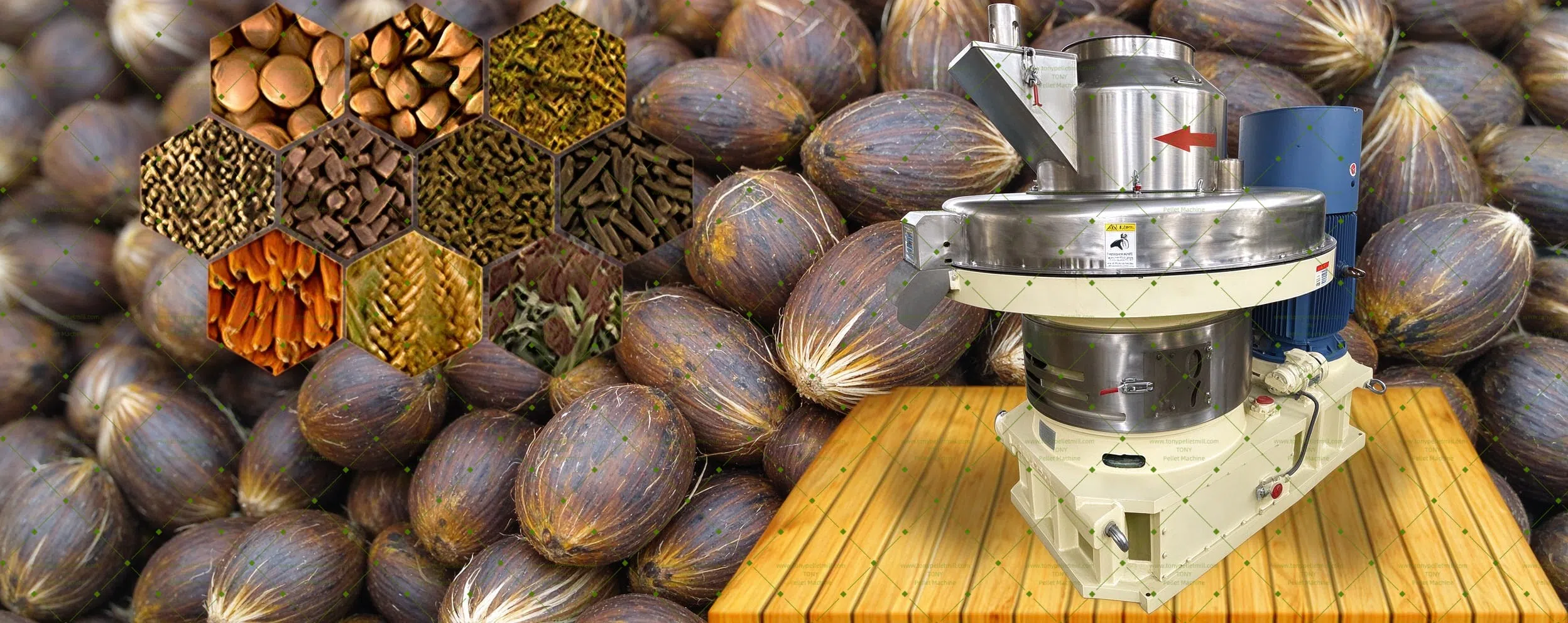 | 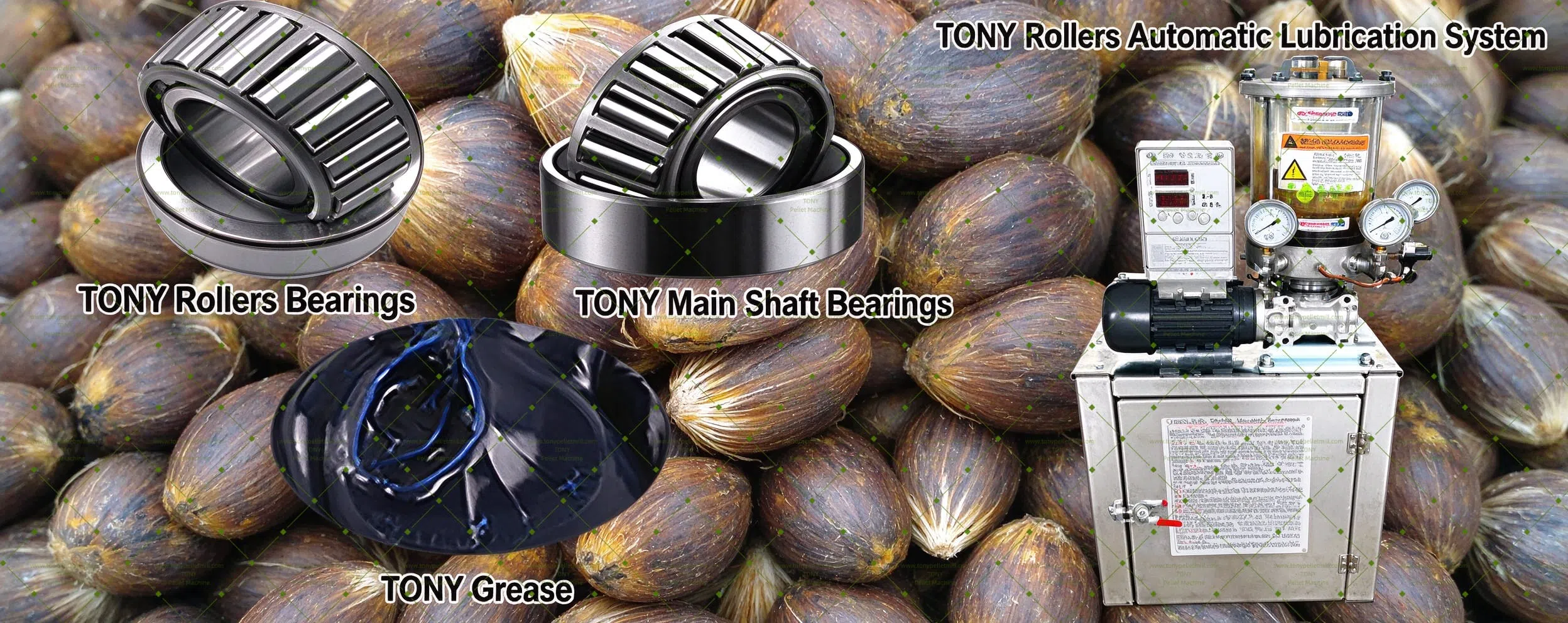 | 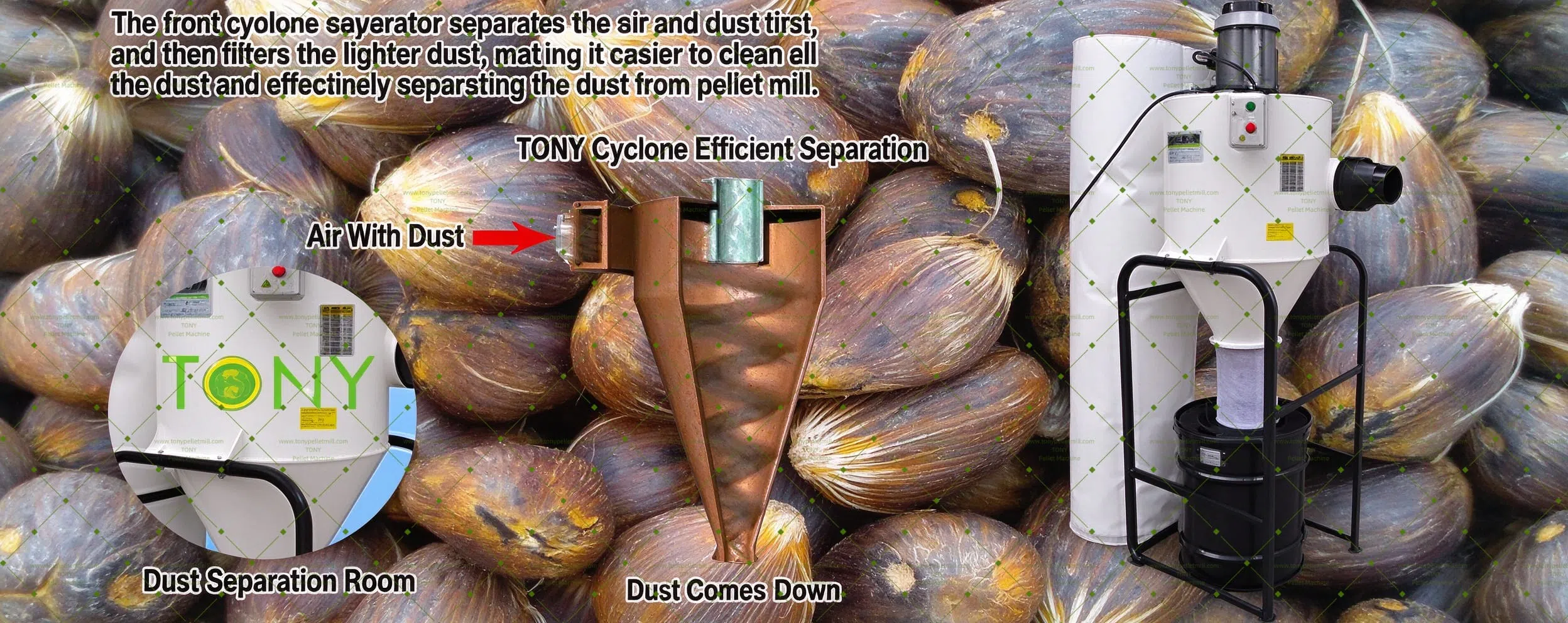 |
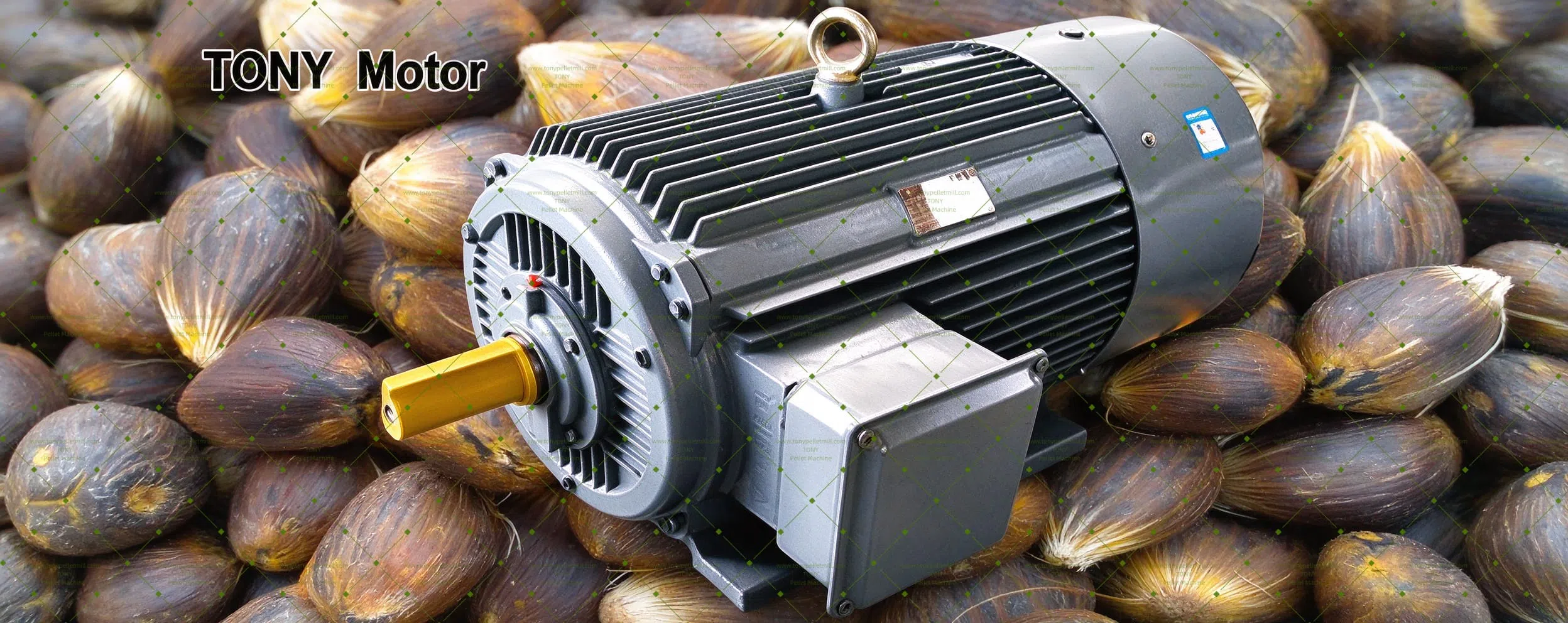 |  |  |
Main Spare Parts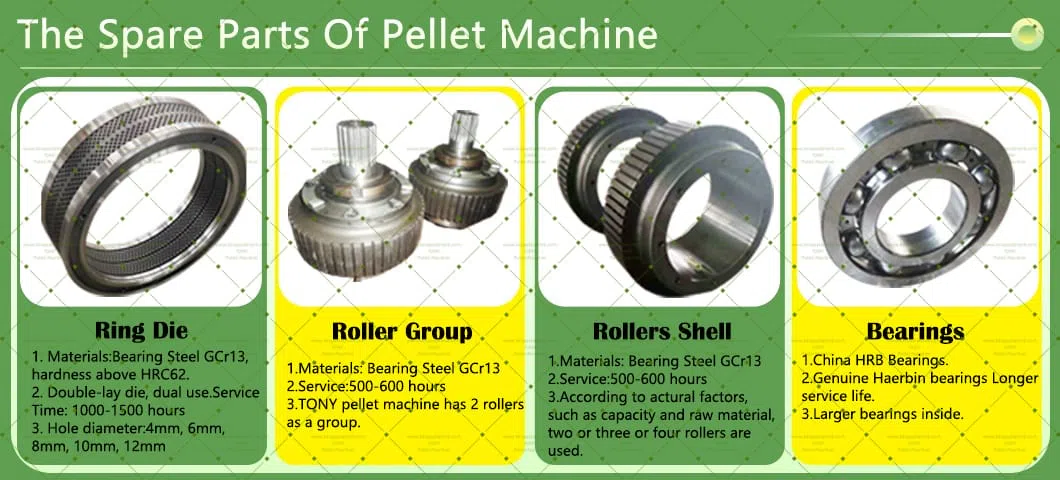
Parameter
TONY Vertical Ring Die Pellet Machine Type Model | |||||||||
NO | Model | Main Power | Lubrication Power | Dust Power | Capacity | Weight | Ring Die Inner Size | Machine Size | Remarks |
1 | TYJ551-III-90 | 90KW+3KW | 0.25KW | 0.95KW | 1-1.5TPH | 5.2T | 560MM | 2364*1550*1705MM | Same Model For Huixin Brand Gearbox Everthing the same,just motor different |
2 | TYJ551-III-110 | 110KW+3KW | 0.25KW | 0.95KW | 1.5-2TPH | 5.3T | 560MM | 2364*1550*1705MM | |
3 | TYJ551-III-132 | 132KW+3KW | 0.25KW | 0.95KW | 2-2.5TPH | 5.5T | 560MM | 2364*1550*1705MM | |
4 | TYJ760-III-160 | 160KW+4KW | 0.25KW | 0.95KW | 2.5-3TPH | 9T | 760MM | 2464*1750*2150MM | Huixin Brand Gearbox |
5 | TYJ760-III-185 | 185KW+4KW | 0.25KW | 0.95KW | 2.8-3.3TPH | 9.2T | 760MM | 2564*1850*2150MM | Bigger Model Huixin Brand Gearbox |
6 | TYJ760-III-200 | 200KW+4KW | 0.25KW | 0.95KW | 3-3.5TPH | 9.3T | 760MM | 2564*1850*2150MM | Bigger Model Huixin Brand Gearbox |
7 | TYJ860-III-220 | 220KW+4KW | 0.25KW | 0.95KW | 3-4TPH | 11T | 860MM | 2664*1950*2150MM | Huixin Brand Gearbox |
8 | TYJ860-III-250 | 250KW+4KW | 0.25KW | 0.95KW | 3.5-4.5TPH | 12T | 860MM | 2864*2150*2150MM | Bigger Model for Huixin Brand Gearbox |
9 | TYJ860-III-280 | 280KW+4KW | 0.25KW | 0.95KW | 4-5TPH | 13T | 860MM | 2864*2150*2150MM | Bigger Model for Huixin Brand Gearbox |
10 | TYJ860-III-315 | 315KW+4KW | 0.25KW | 0.95KW | 4.5-5TPH | 14T | 860MM | 2864*2150*2200MM | Bigger Model for Huixin Brand Gearbox |
Suitable Raw Materials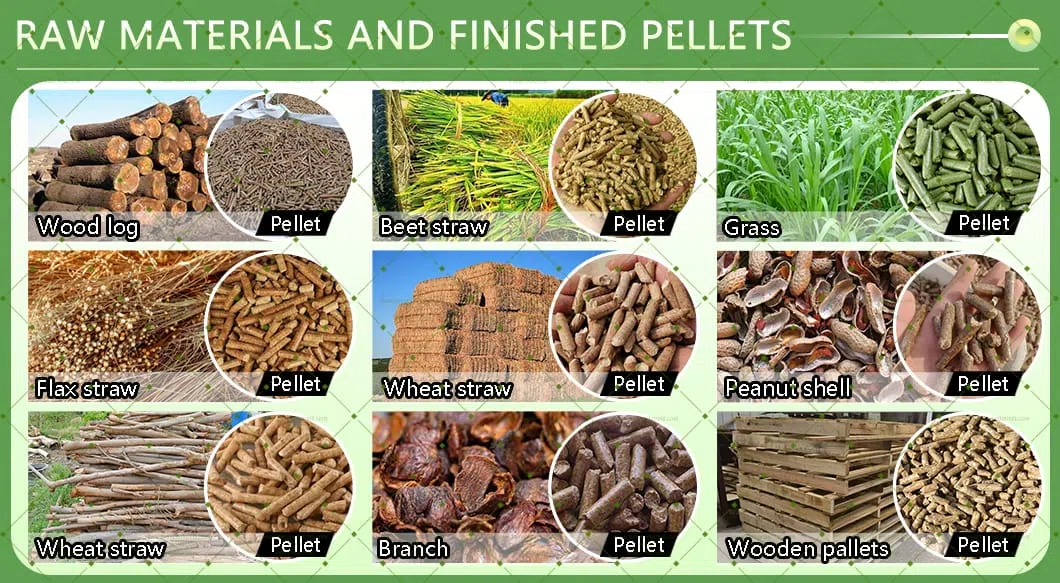
Palm kernel pellet mills can process various palm oil processing byproducts and agricultural and forestry wastes, mainly including:
1. Palm kernel shells, palm shells
2. Palm fiber, palm silk, hollow fruit bundle fiber
3. Palm leaves, palm branches, palm fruit shells
4. Peanut shells, rice husks, coconut shells
5. Wood chips, sawdust, shavings, branch fragments
6. Corn stalks, wheat straw, rice straw, and other straw-based raw materials.
Among these, palm kernel shells and palm fiber have a high calorific value, making them suitable as fuel for industrial boilers and biomass power generation; however, for straw, rice husks, and other raw materials, it is crucial to control the particle size and moisture content during grinding.
Application Areas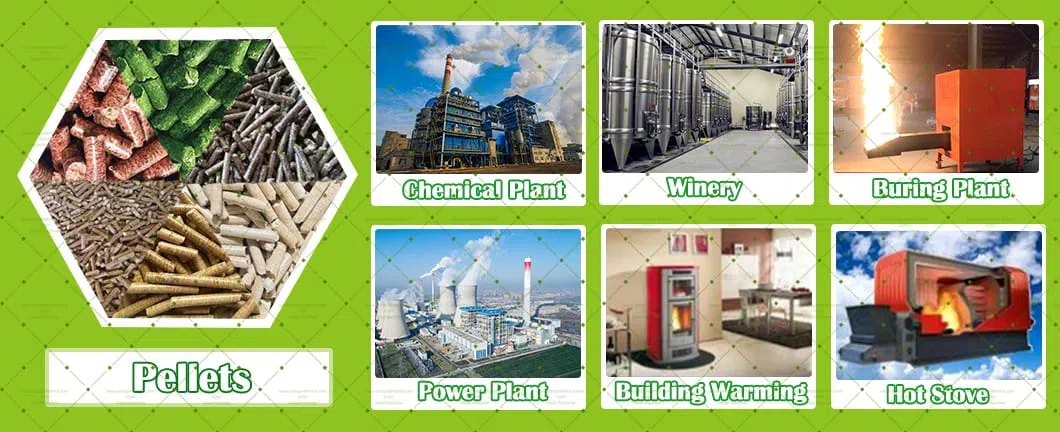
1. Energy and Fuel Sector
This is the primary application scenario. Processed pellet fuel (called "biomass pellet fuel") can replace coal and natural gas for use in industrial boilers (e.g., heating in food factories and chemical plants), residential fireplaces (for home heating), and biomass power plants (for power generation and grid connection).
Advantages: High combustion efficiency (calorific value approximately 4000-4800 kcal/kg, close to medium-quality coal), low pollutant emissions (sulfur dioxide emissions are only one-tenth that of coal).
2. Agriculture and Livestock
Aquaculture Bedding: The pellets have strong water absorption (2-3 kg of water per kilogram), a soft texture, and are commonly used as bedding in chicken coops, pigsties, and pet cages, reducing ammonia emissions and improving the farming environment.
Organic Fertilizer Raw Material: After being crushed, the pellets can be mixed with livestock and poultry manure for fermentation to produce organic pellet fertilizer, which can be used in farmland and orchards to improve soil fertility.
Details
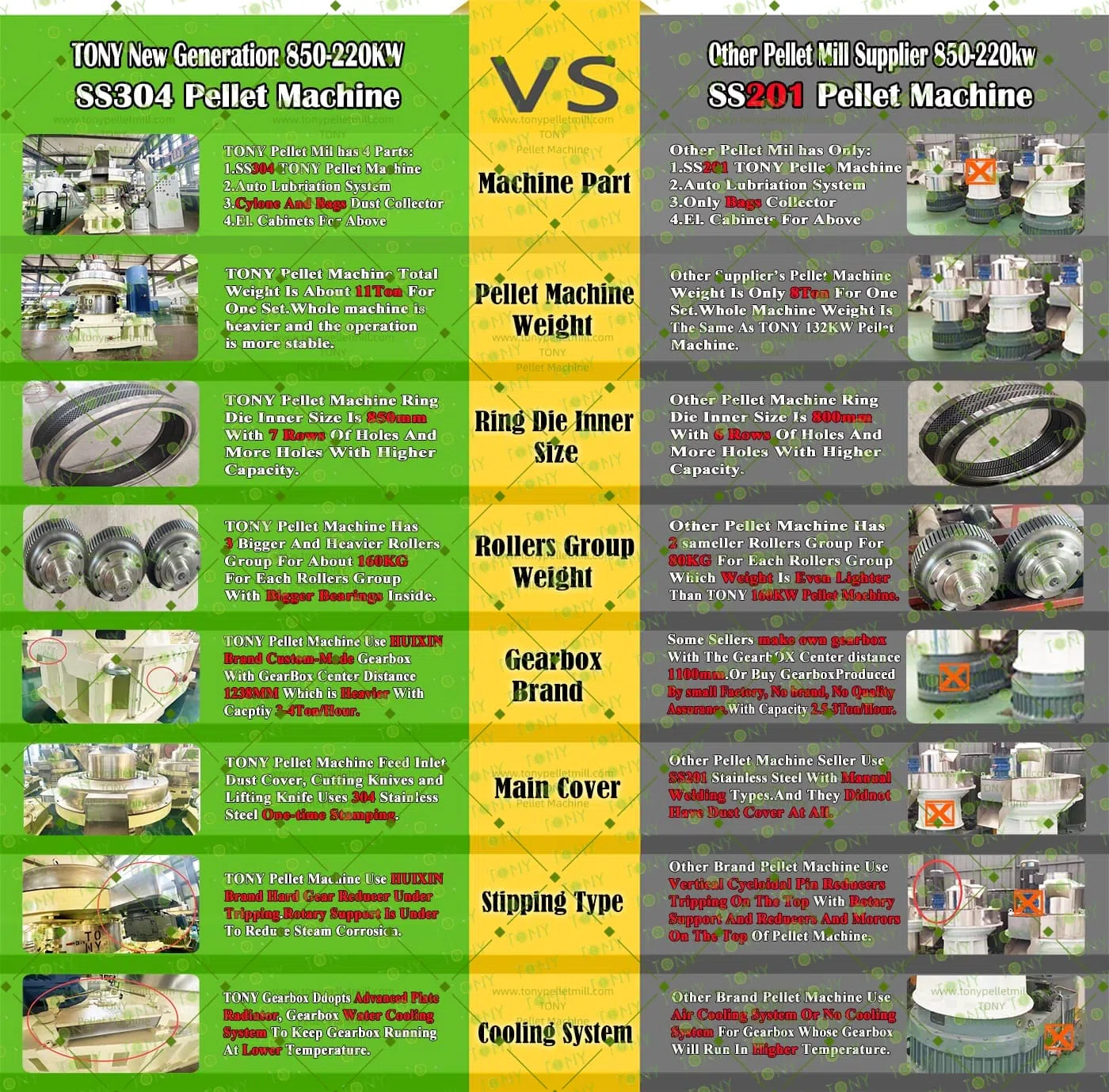
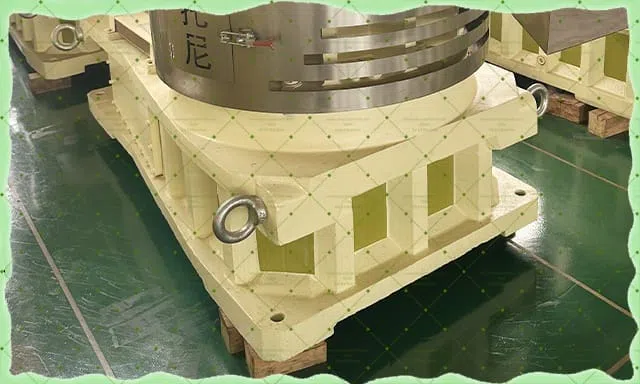
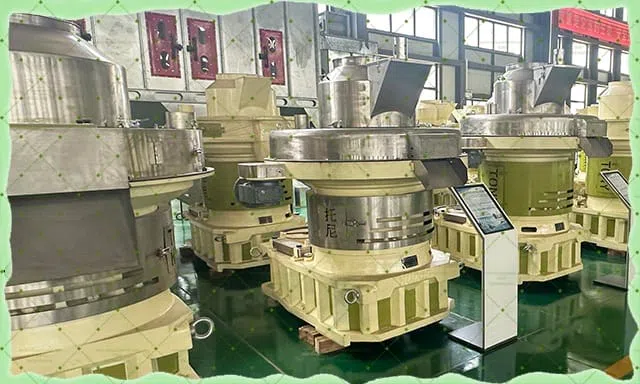
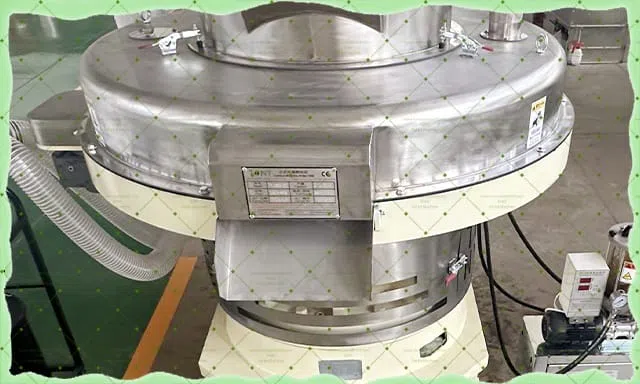
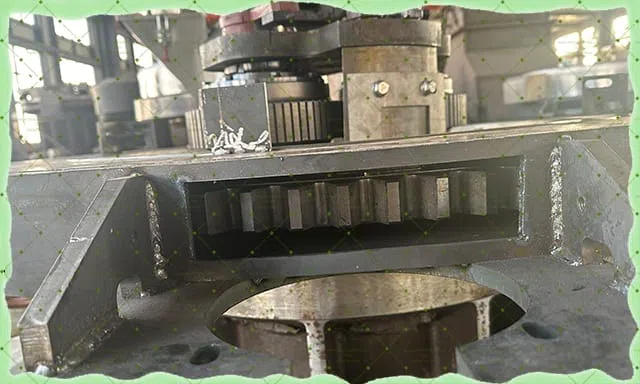
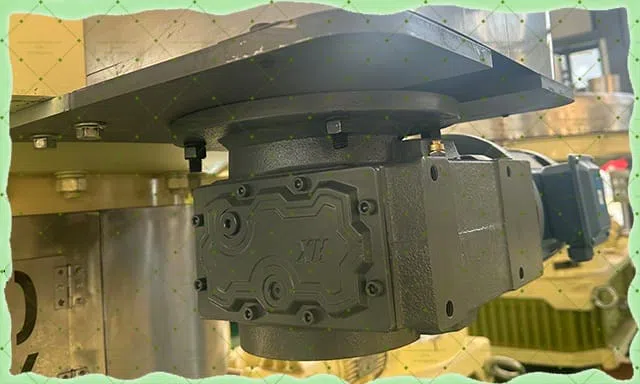
1.The main components of a TONY pellet mill set consist of four parts (main unit, automatic oiler, cyclone separator, and bag filter).
2.The Huixin brand features a custom-designed, enlarged gearbox, a well-known brand known for its stability and high capacity.
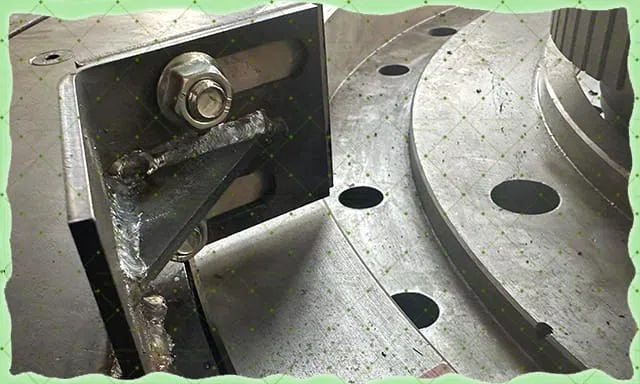
3.The discharge shell is made of stainless steel, with the rotating support located below to prevent corrosion.
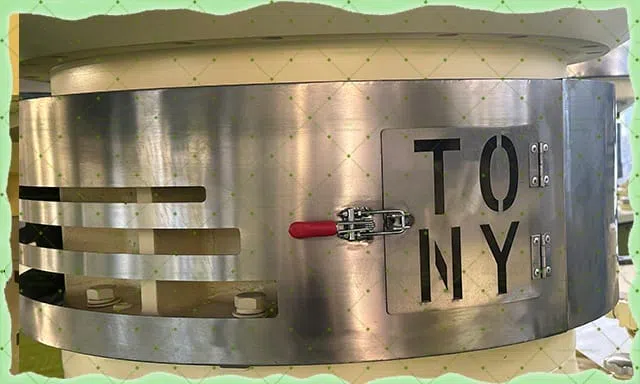
4.A 304 stainless steel protective cover houses the reducer for easy maintenance.
5.The internal lifting blades are made of durable stainless steel and are adjustable for precise control of pellet length.
 |  |  |  |
 |  |  |  |
Unique Advantages
1. Most pellet mills on the market use ordinary carbon steel for their material contact chambers. When processing high-humidity, slightly acidic, or saline raw materials, the inner walls are prone to oxidation and rust. Rust particles mix into the finished product, damaging the equipment chamber and reducing pellet quality.
2. Tony's new stainless steel pellet mill uses 304 stainless steel for all material contact areas, unlike competitors who only paint the outer shell while keeping the interior carbon steel. The chamber, feed cylinder, pressure roller cover, and discharge channel are all integrally stainless steel, resistant to moisture and weak acid corrosion. It is less prone to rust and peeling when handling high-humidity straw, palm fiber, and fermented materials. The inner cavity is mirror-polished, minimizing material residue and reducing clumping.
3. While retaining the original heavy-duty transmission, the upgraded materials balance high-strength pelleting with material cleanliness, making it suitable for producing fuel pellets, feed pellets, and organic fertilizer pellets. It addresses the industry pain point of rust and impurities contaminating the finished product at the source.