
Brief Introduction
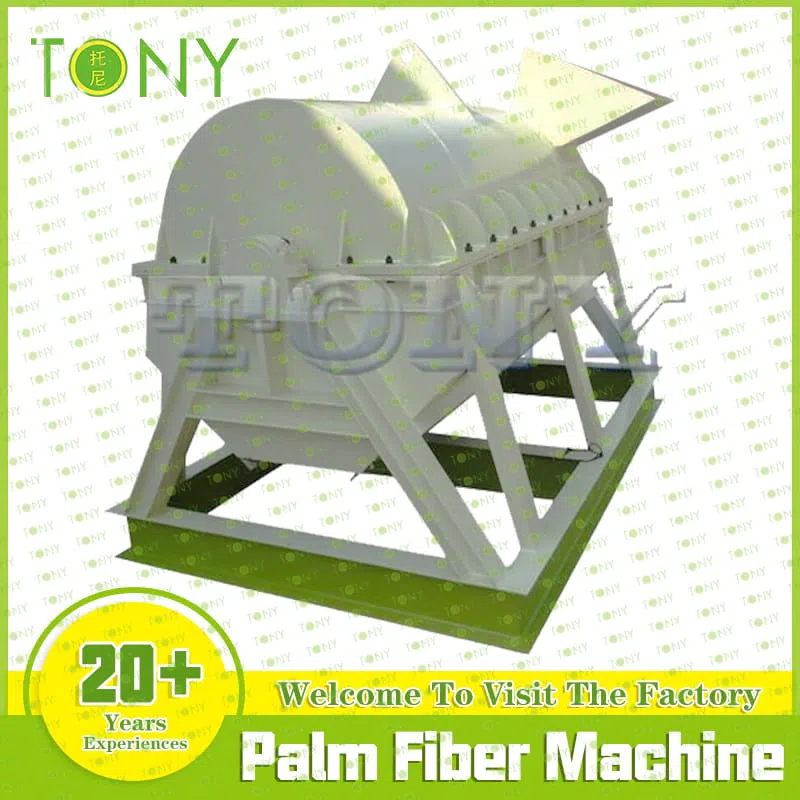
EFB stands for Empty Fruit Bunch—a Fiberous waste product with high moisture content generated after palm oil extraction, serving as a key feedstock for biomass projects in Southeast Asia. The TONY Palm Fiber Defibering Machine (also known as an EFB shredder or palm silk machine) is specialized equipment designed specifically for the pre-treatment, shredding, and defibering of EFB; it differs significantly from standard wood crushers.
Fresh EFB has a moisture content of 60–70% and consists of long, tough, and highly tangle-prone fibers, making it difficult for conventional shredders to process directly. By utilizing high-speed tearing and kneading actions from a blade roller, this machine breaks apart, defibers, and separates whole EFB bunches into fluffy palm fibers, serving as the essential primary preparation equipment for production lines manufacturing EFB pellets, organic fertilizer, and biomass fuel.
Working Principle
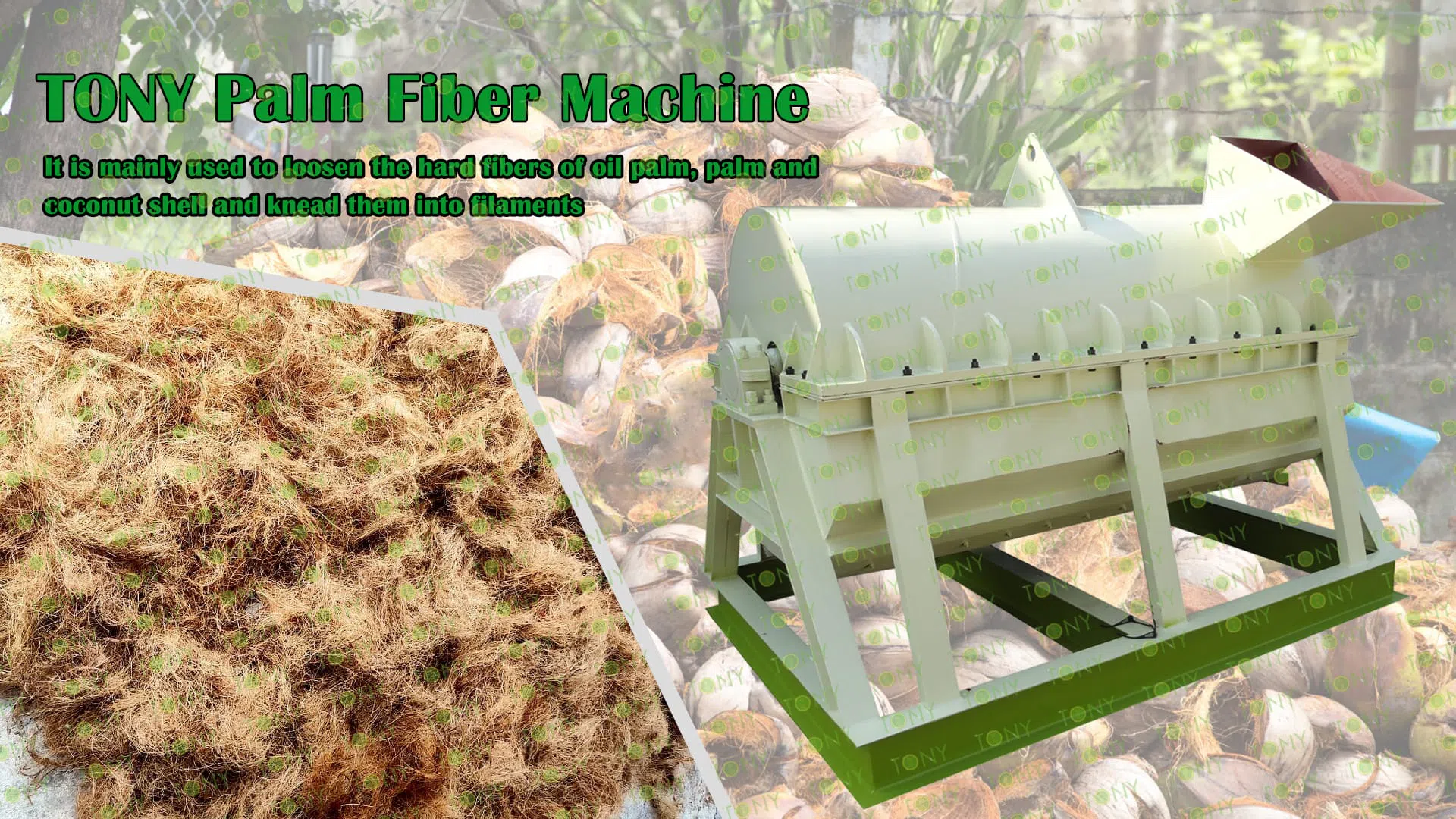
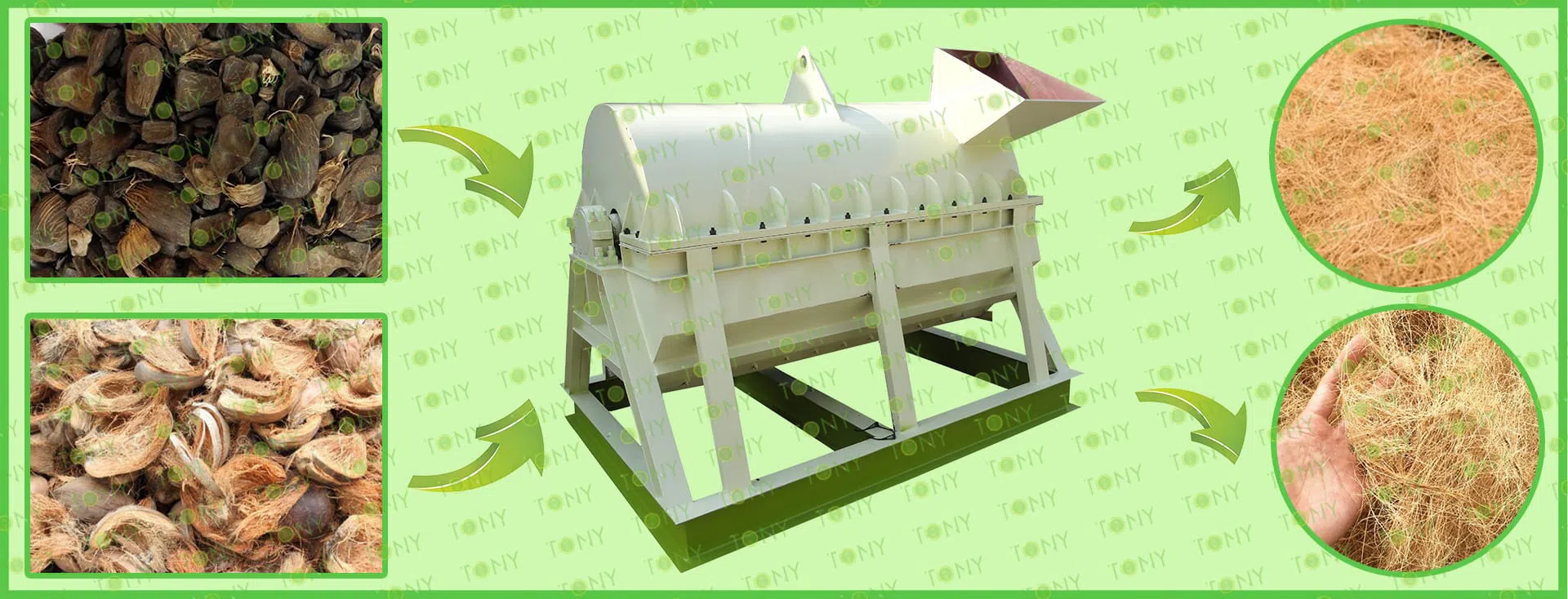
EFB Palm Fiber Making Machine Workflow: Whole EFB bunches are fed via belt conveyor into the crushing and deFiberating chamber. Inside, alloy flying blades and stationary bottom blades perform a shearing and kneading action to tear the bunches into fibers. A screen classifies the material, discharging qualified fibers while separating and ejecting hard impurities and fruit kernel fragments from the bottom. The system can be equipped with a hydraulic forced-feeding mechanism to overcome feeding difficulties caused by the material's bulkiness or slippage when wet EFB Palm Fiber Making Machine utilizes an integrated process combining shearing, kneading, and internal circulating screening, enabling the direct processing of fresh, high-moisture, and highly tough EFB bunches. Material is forcibly fed into the machine via a conveyor; high-speed rotating flying blades and stationary bottom blades form a precision shearing interface that cuts and breaks apart the whole bunches. | 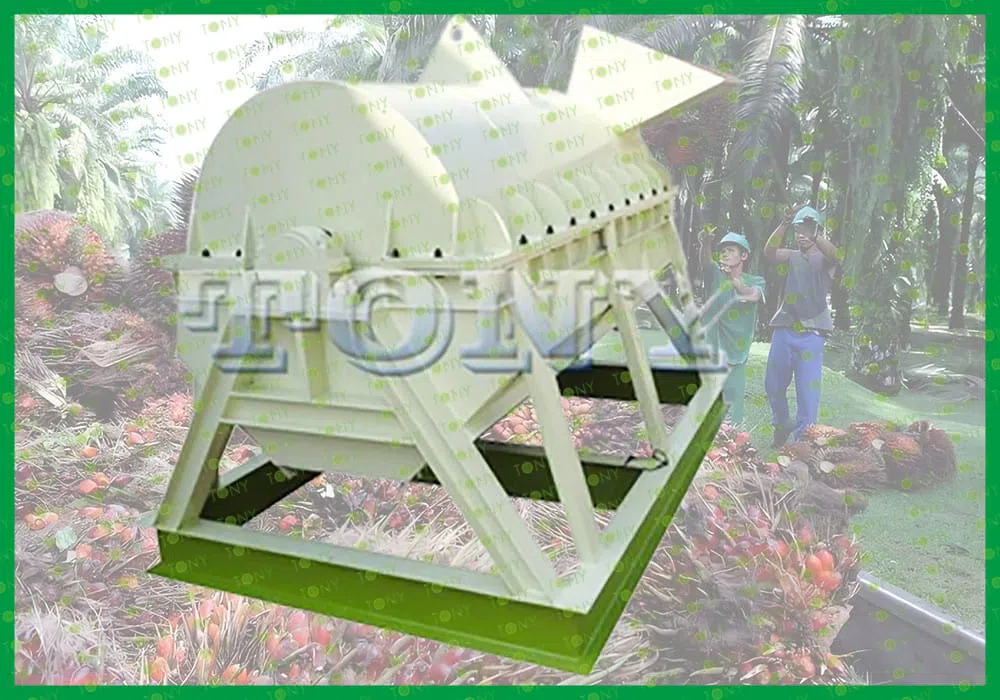 |
Continuous kneading and stripping within the chamber then fully separate the Fiberous material from the hard fruit stalks. Qualified fibers are discharged through the bottom screen, while oversized material circulates within the chamber for further processing. The process preserves fiber integrity without breakage and prevents clogging, consistently producing high-quality palm fiber strands of uniform length.
Main Parts
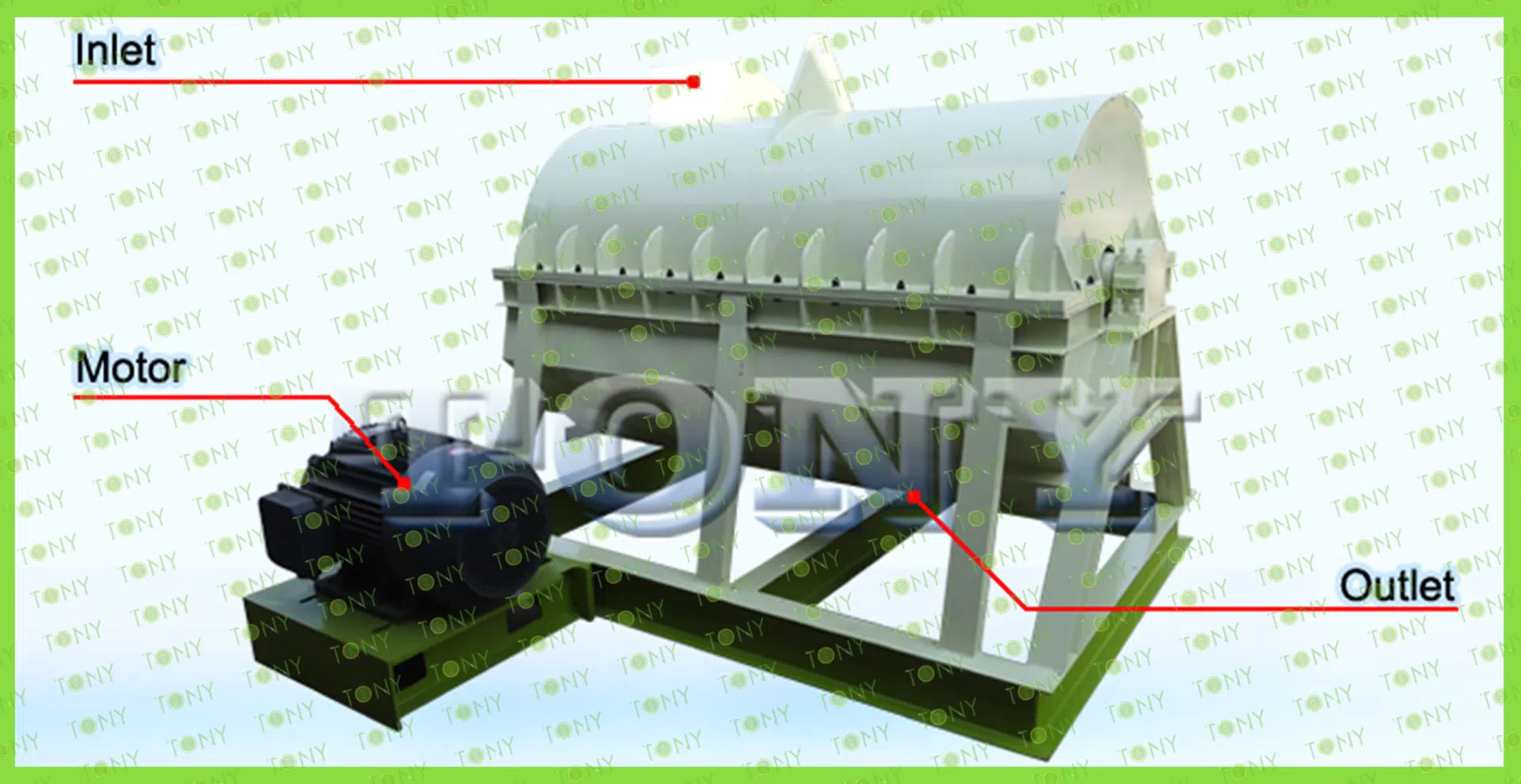
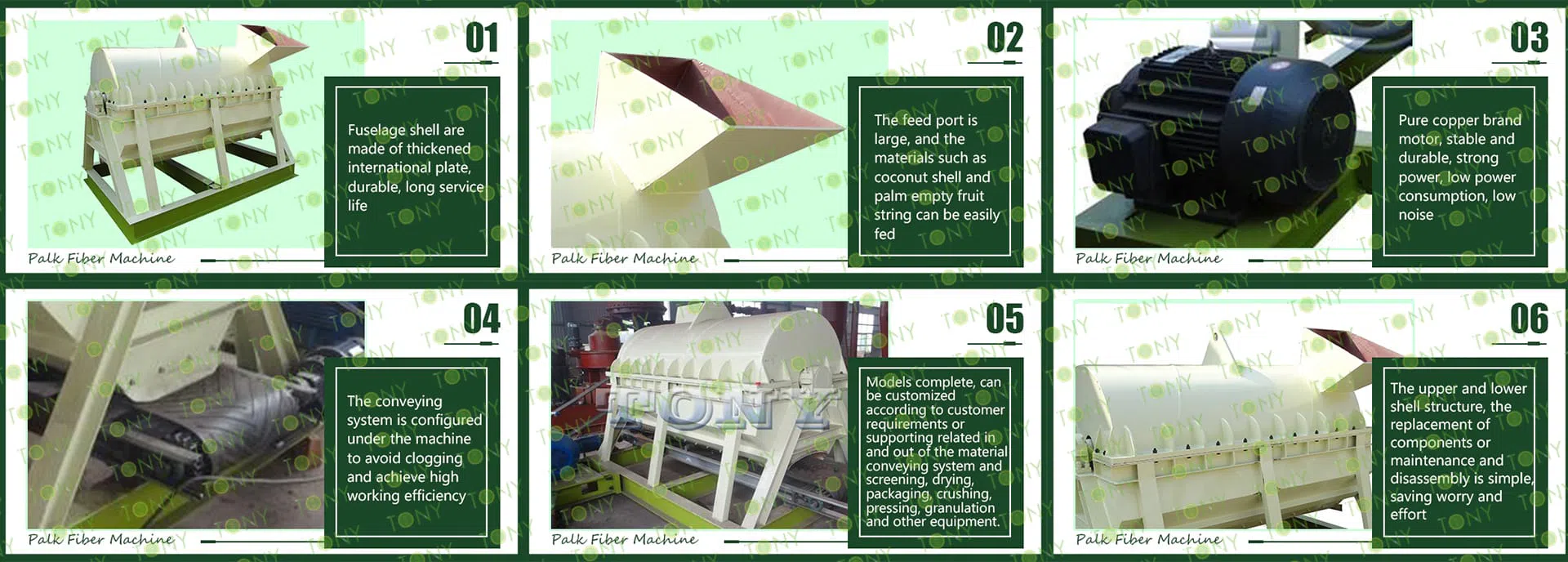
TONY Palm Fiber Machine features a heavy-duty modular design, comprising a base frame, a forced-feeding mechanism, a fiber-opening and crushing chamber, a rotor blade assembly, a stationary bottom blade, a screening and discharge mechanism, a drive system, and an electronic control safety system.
The machine frame is constructed from welded, heavy-gauge steel plate, ensuring structural stability, vibration resistance, and corrosion resistance—making it suitable for the high-humidity, harsh operating environments typical of palm processing plants.
The core rotor undergoes precision dynamic balancing and is equipped with adjustable alloy blade assemblies; it achieves efficient EFB fiber opening through a shearing and kneading action.
The unit utilizes replaceable screens to facilitate material recirculation and discharge, and incorporates multiple safety features such as overload protection and automatic power-off upon opening the access door. With its compact structure, low failure rate, and ease of maintenance, the machine enables continuous and stable fiber-opening pretreatment of palm empty fruit bunches.
Parameter
TONY Palm Fiber Machine Type Model | |||||
Model | Capacity | Drum Dia | Power | Weight | Cutting Tool |
(T/H) | (MM) | (Kw) | (T) | ||
TPKS 1.2*1.5 | 1-2 | 1200 | 37 | 3.4 | Alloy Steel, |
TPKS 1.6*1.8 | 2-4 | 1600 | 45 | 4.7 | |
TPKS 2*2.2 | 4-7 | 2000 | 75 | 5.4 | |
Suitable Raw Materials
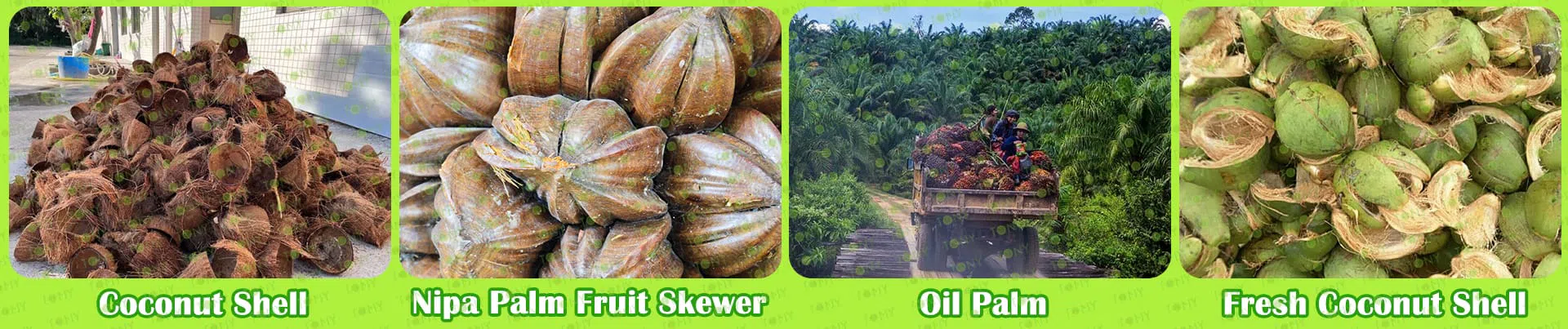
Core Feedstock (Primary recommendation; optimal equipment compatibility)
Feedstock for which the equipment was originally designed: fresh, high-moisture EFB (moisture content 45–65%). It accepts whole bunches directly without pre-shredding or pre-drying, shearing and kneading them to separate empty fruit bunches, stalks, and fiber bundles into uniform, long palm fibers.
Associated palm waste: Oil palm fronds (OPF), palm trunk offcuts, and palm fruit pulp fibers.
Compatible/Extended Feedstock (Multi-purpose capability)
1.Coconut-based materials: Coconut shells and coir (coconut husk fiber); capable of loosening and separating coir fibers while removing coir pith impurities.
2.Sugarcane bagasse: Fresh or air-dried bagasse; breaks it down into Fiberous strands.
3.Other long-fiber biomass: Tough, long-fiber agricultural and forestry waste such as reeds, crop stalks, banana trunks, sisal, and jute.
Crushing Effect Display
What Are The Application Areas?
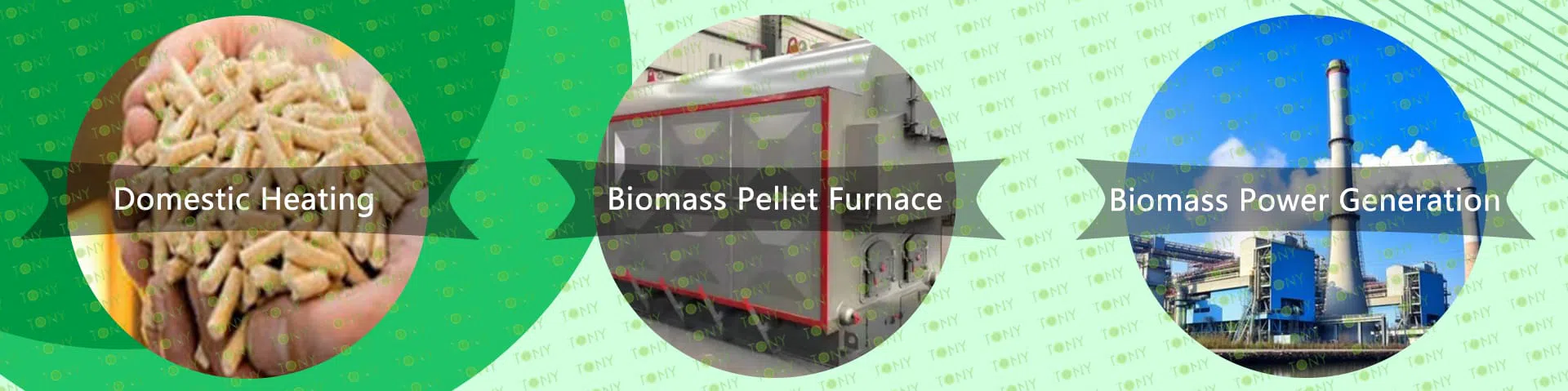
The long palm fibers produced by the EFB (Empty Fruit Bunch) fiber-opening machine serve as a key raw material for biomass resource utilization. They are widely used in industries such as solid waste management for palm oil mills, new energy, organic fertilizers, advanced materials, and livestock bedding.
Biomass Pellet Fuel Industry
Opening EFB fibers allows them to be dried and pelletized into biomass fuel for boilers, thermal power plants, and industrial furnaces—a primary application in Southeast Asia's palm-producing regions. The opened fibers are fluffy, which improves pellet formation rates and reduces wear on pelletizing machinery.
Palm Oil Mill Solid Waste Valorization
Palm oil mills generate large quantities of EFB as a byproduct/waste stream. This machine processes whole EFB bunches on-site, reducing their volume to facilitate transport, composting, or further processing, thereby solving issues related to waste accumulation and environmental disposal.
Organic Fertilizer & Bio-substrate Industry
With high organic matter content, EFB fibers can serve as a primary feedstock for organic fertilizer fermentation. They can also be processed into horticultural or seedling-raising substrates—offering excellent water retention and breathability—for use in flower and greenhouse fruit/vegetable cultivation.
Livestock Bedding
Processed palm fibers are clean, absorbent, and odor-neutralizing, making them an ideal alternative to straw bedding for cattle, sheep, and poultry. Used bedding can subsequently be fermented into fertilizer, enabling a circular economy.
Biomass Power Generation & Heating Fuel
Compared to raw EFB bunches, opened fibers are easier to transport and burn more stably as direct-combustion fuel. They enhance boiler combustion efficiency and are suitable for biomass power plants and on-site industrial heating boilers.
Advanced Fiber Materials
Long palm fibers can be used to manufacture fiber mats, horticultural mulch blankets, slope-stabilizing geotextiles, packaging filler materials, and more.
Details
Unique Advantages
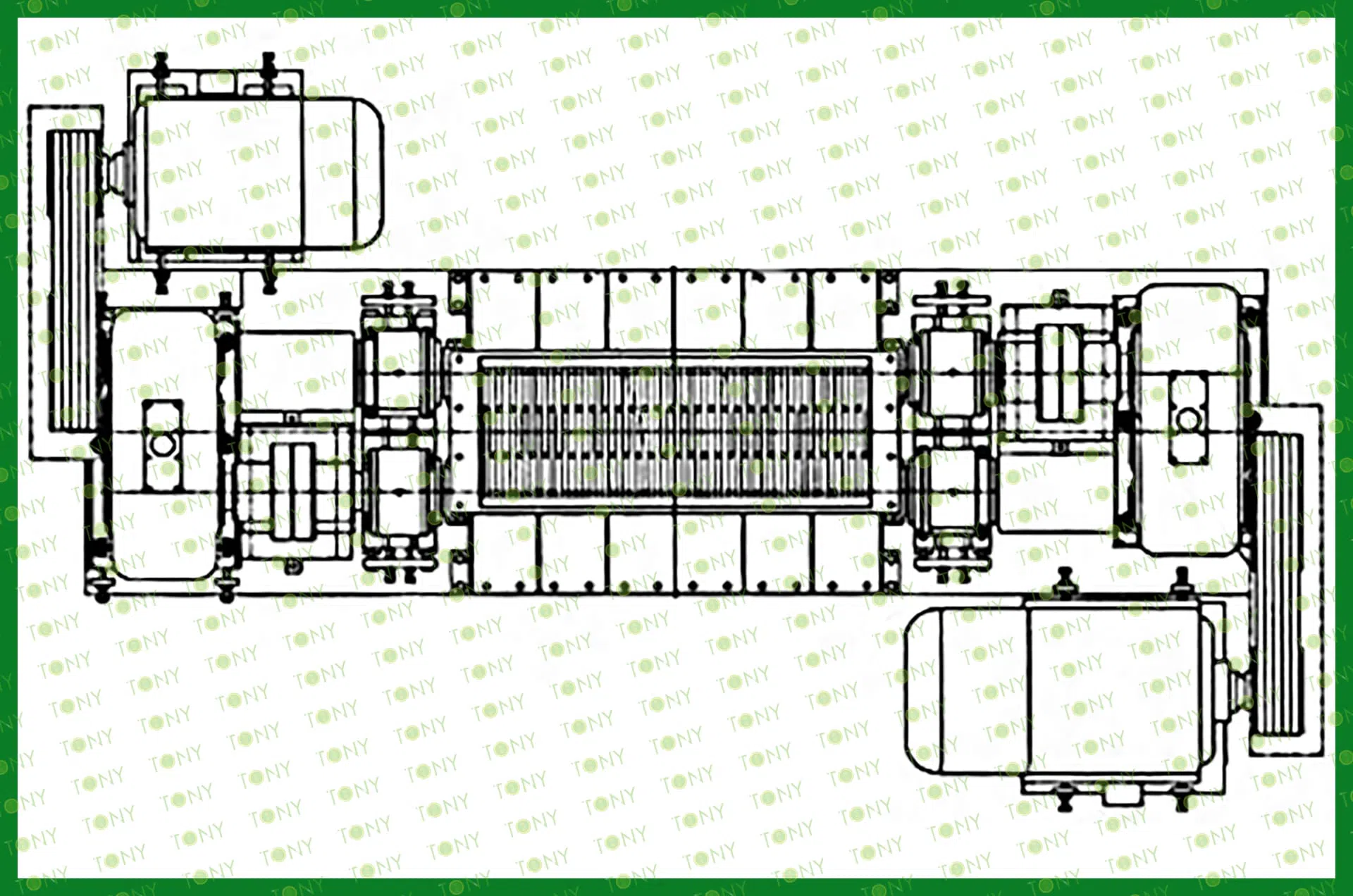
1. Direct feeding of whole EFB bunches; no pre-cutting required
Fresh Empty Fruit Bunches (EFB) can be fed directly into the machine, eliminating manual pre-disassembly and pre-crushing steps, thereby significantly reducing upfront labor costs.
2. Anti-tangling and clog-resistant design for high-moisture, tough EFB
The specialized cutter roll and chamber structure are designed for wet EFB with 60%–70% moisture content. This solves common issues like long-fiber tangling and material sticking/clogging, ensuring continuous, stable production.
3. Integrated crushing and fiber opening; produces fluffy, uniform fibers
Shearing and kneading occur simultaneously rather than simple chopping; the output consists of fluffy palm fibers with controllable lengths (10–50mm), resulting in lower downstream drying energy consumption and higher pelletizing yields.
4. Wide capacity range; suitable for various production line scales
Processing capacities range from 2 to 15 tons per hour, accommodating everything from small pilot lines to large-scale palm oil mill production lines; supports both standalone units and complete pre-treatment lines.
5. Wear-resistant cutters and durable machine structure; low maintenance costs
Features wear- and impact-resistant alloy steel flying cutters and a robust heavy-gauge steel body; wear parts are easy to replace, minimizing downtime for maintenance.
6. Optional hydraulic forced feeding and PLC automatic control
Hydraulic feeding prevents wet material slippage; PLC-based load linkage automatically adjusts feed speed and includes overload protection and emergency stop functions, ensuring safe and stable production.
7. Versatile application with strong raw material adaptability
In addition to EFB, the machine can process other tough biomass fibers such as palm fronds, palm trunks, coconut coir, and banana stalks, meeting the needs of multi-material production.
Display
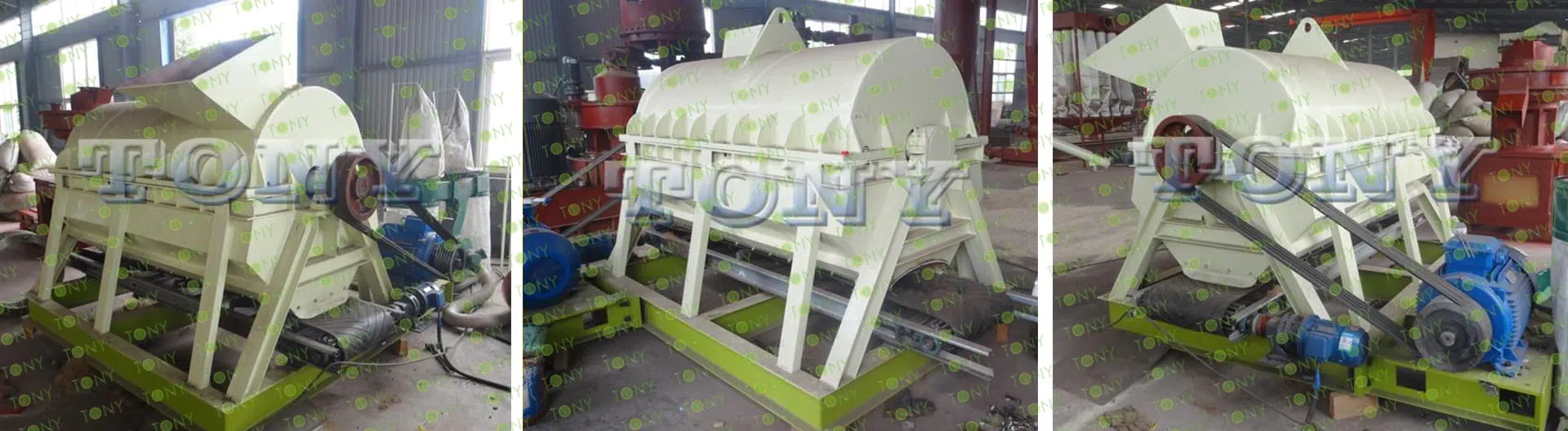
Customer Visiting
Service
1.Service Tenet: Rapid, decisive, accurate, attentive, and thorough. 2.Service Goal: To win customer satisfaction through service quality. 3.Service Efficiency: Should a malfunction occur—whether within or outside the warranty period—the supplier will arrive at the user's site as quickly as possible after receiving notification to diagnose and resolve the issue. 4.Service Principles: The product warranty period is twelve months (excluding wear-and-tear parts). During this period, the supplier will repair or replace parts damaged due to quality issues free of charge. For damage occurring outside the warranty period, replacement parts are provided at cost. For equipment damage caused by human factors (user error), repairs and replacement parts are charged at cost price. 5.Installation and Commissioning: On-site service is provided during the warranty period. Engineers oversee the on-site installation and commissioning of the equipment. Technical personnel will only leave the site after successful commissioning and with the user's consent. 6.The company's maintenance center operates a 24-hour telephone service staffed by dedicated engineers, ensuring users receive timely technical support during equipment operation. |  |
FAQ
1.Are you a manufacturer or an agent?
We are a manufacturer with our own factory.
2.Where is your factory located? How do I get there?
Our factory is located in Zhangqiu City, Shandong Province, China.
You can fly to Jinan Airport and we'll pick you up (a 40-minute drive).
3. How is your factory's quality control?
Quality is our top priority. We prioritize quality from start to finish. We control quality from beginning to end. Our factory is CE certified.
4.How do you install the machine?
For single machines or simple equipment, we provide basic drawings, installation instructions, or video guides. For large machines and complex production lines, we can send engineers to install them on-site.
5.What is the warranty period for your machines?
Our equipment warranty period is 12 months. If you have any questions, we also provide 24-hour online support.
Global Market