Brief Introduction
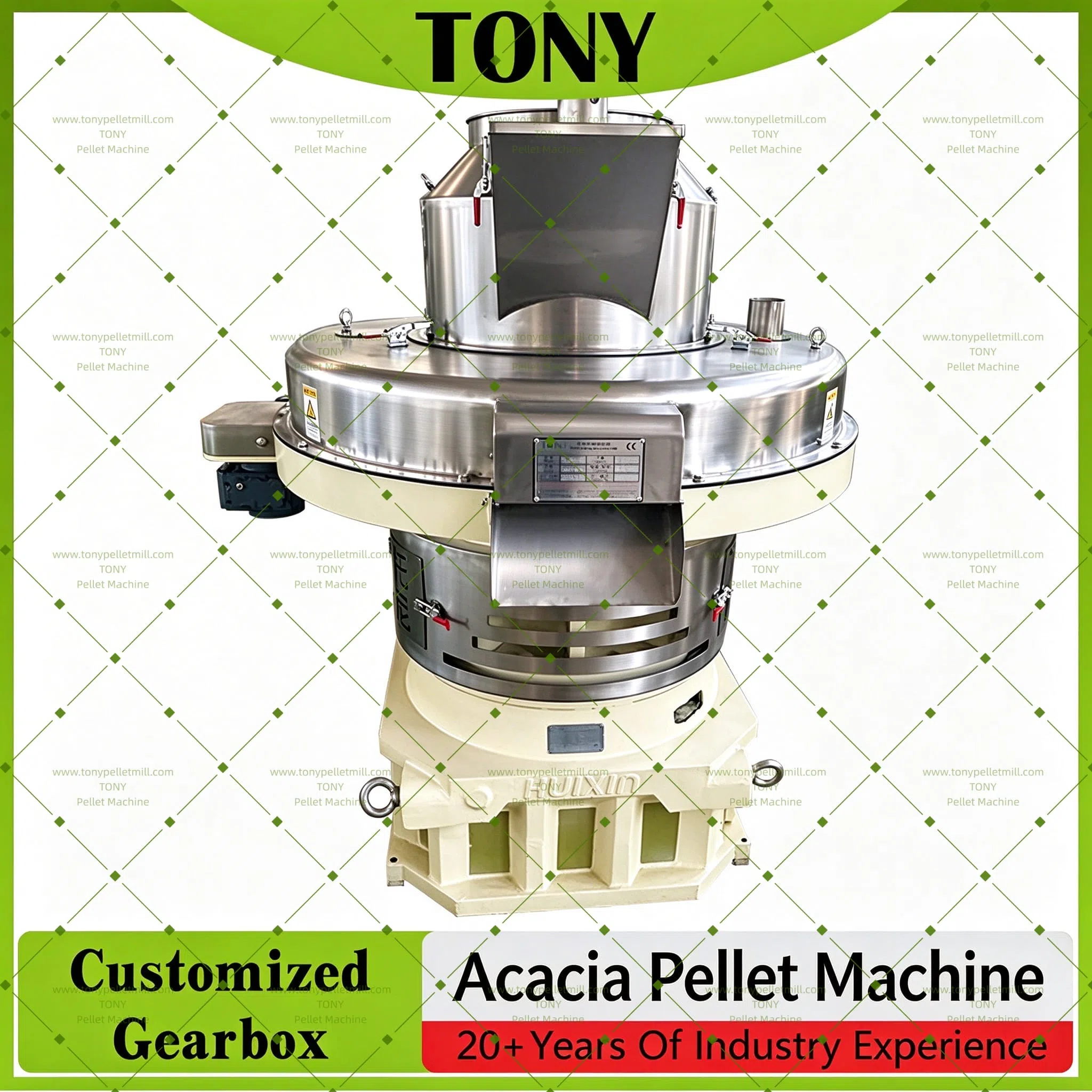
The Acacia Pellet Making Machine is a vertical ring die biomass pelletizing equipment developed specifically for the characteristics of acacia wood. It is designed to extrude acacia wood chips, sawdust, and branches into high-density biomass fuel pellets. Acacia wood has a high lignin content and inherent binding properties. The acacia pellet mill relies on physical high-pressure extrusion molding, eliminating the need for additional binders. The resulting acacia pellets have high hardness and high calorific value, making them widely used in biomass boilers, heating systems, and industrial combustion. The machine has a robust structure, adaptable to small- to large-scale pellet production lines, and can operate continuously and stably for extended periods. In addition to processing acacia raw materials, it can also pelletize various agricultural and forestry biomass materials, enabling the resource recycling of agricultural and forestry waste.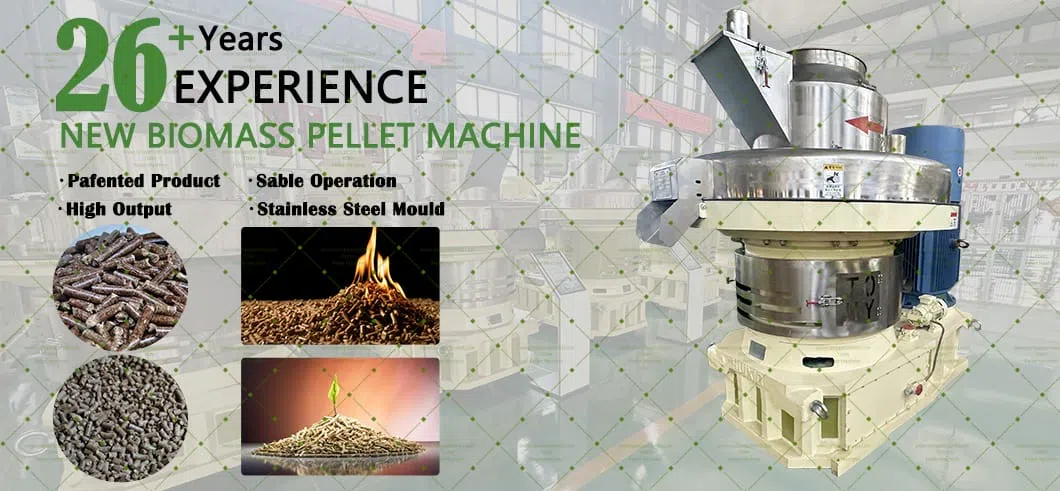
Processing Technology
Core Equipment Is Acacia Pellet Making Machine
The complete process for producing acacia pellets using an acacia pellet mill is as follows: Raw material crushing → Material drying → Feeding → High-pressure pelletizing in the acacia pellet mill → Pellet cooling and screening → Finished product storage and packaging.
1.Crushing Process: Acacia logs and branches are processed by a crusher into fine wood chips of 3-5mm to meet pelletizing particle size requirements.
2.Drying Process: The moisture content of the raw materials is adjusted to 10-15%. Moisture content is crucial for acacia pellet formation; too high a moisture content leads to looseness, while too low a moisture content increases the difficulty of pelletizing.
3.Feeding and Pelletizing: Qualified wood chips are fed into the acacia pellet mill's feed hopper and fall vertically into the pelletizing chamber. The rotating pressure rollers compress the material through the ring die holes, forming cylindrical pellets.
4.Cooling and Screening: The freshly produced high-temperature pellets are conveyed to a cooler for cooling, and powder and debris are screened off to obtain finished acacia fuel pellets, which are then packaged and stored.
Main Parts 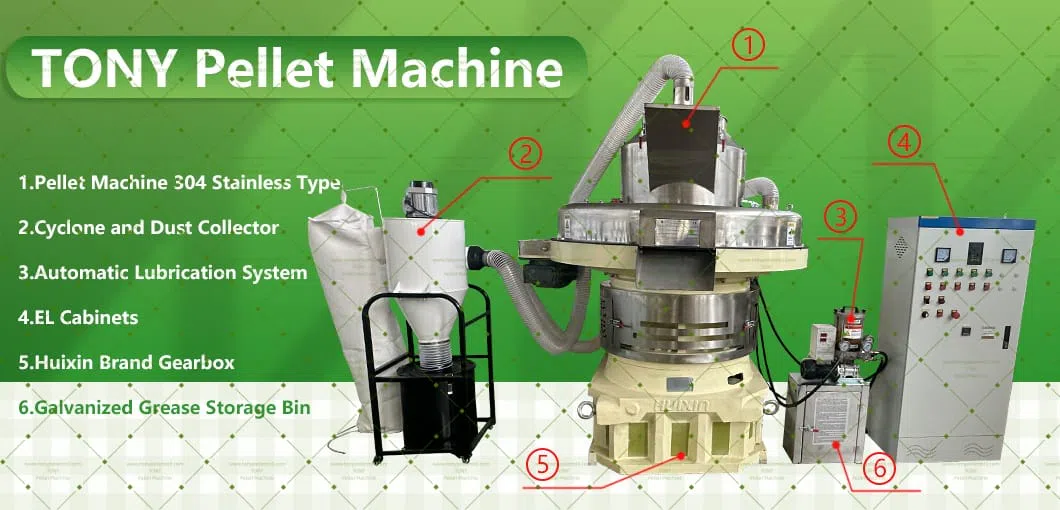
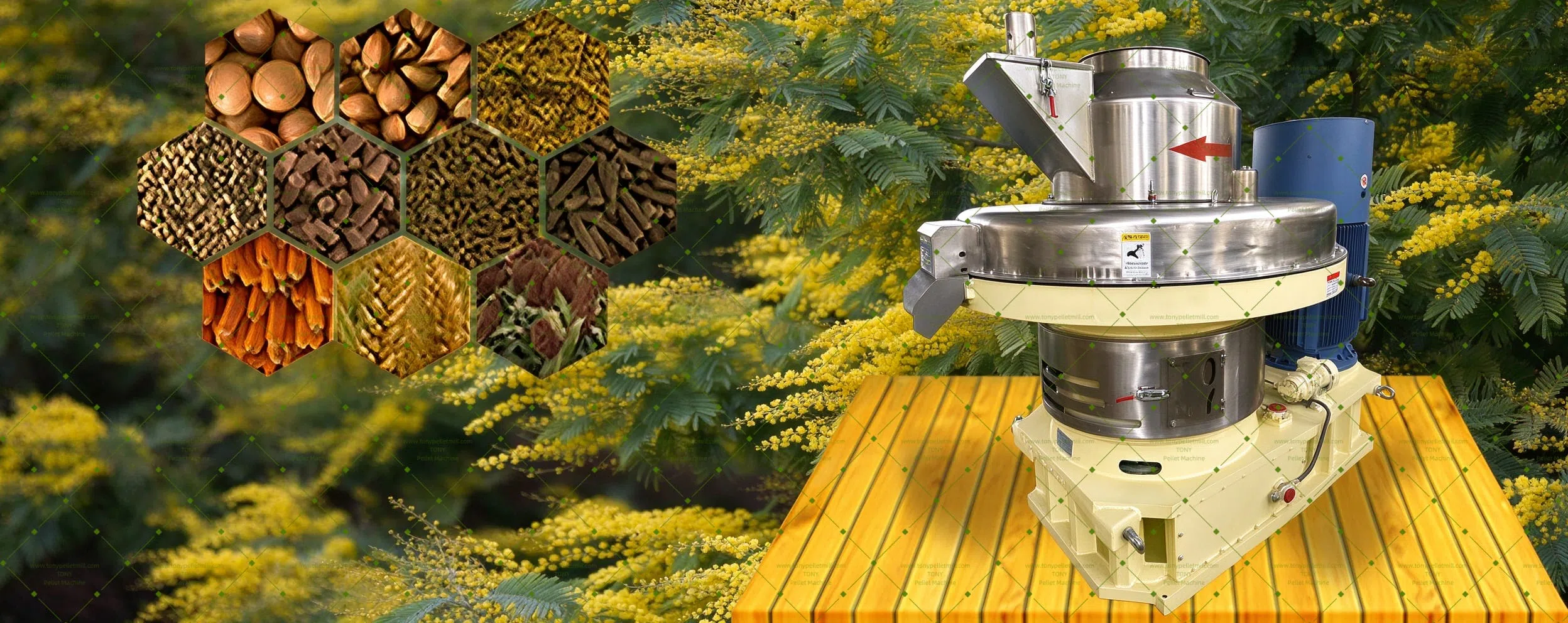
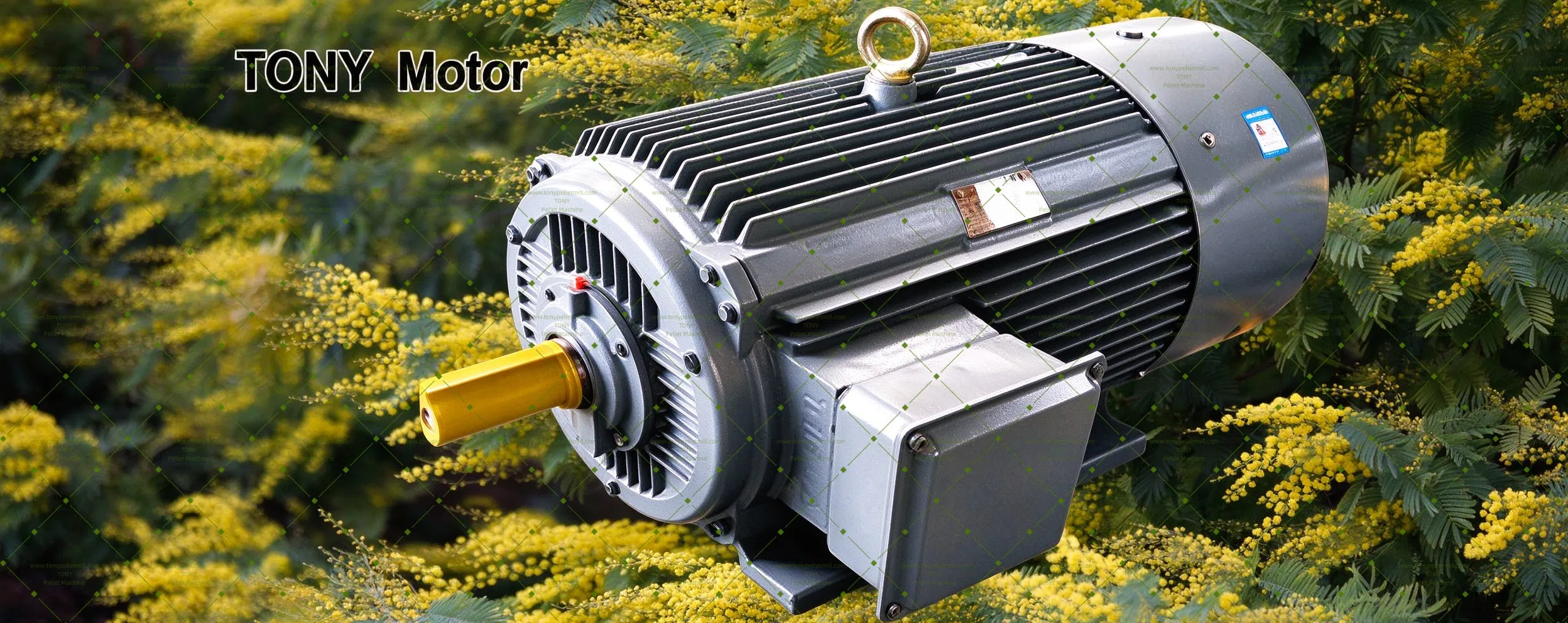
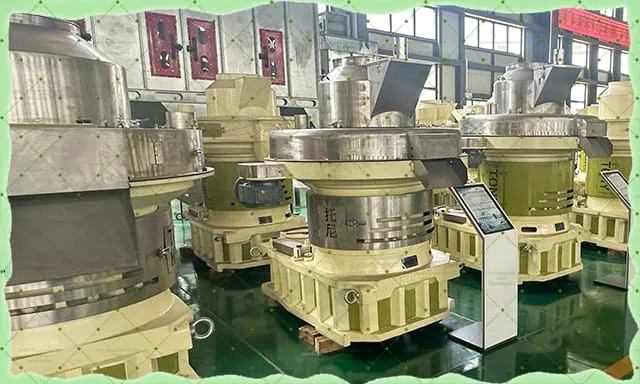
TONY's Acacia Pellet Making Machine
 |  |  |
 |  |  |
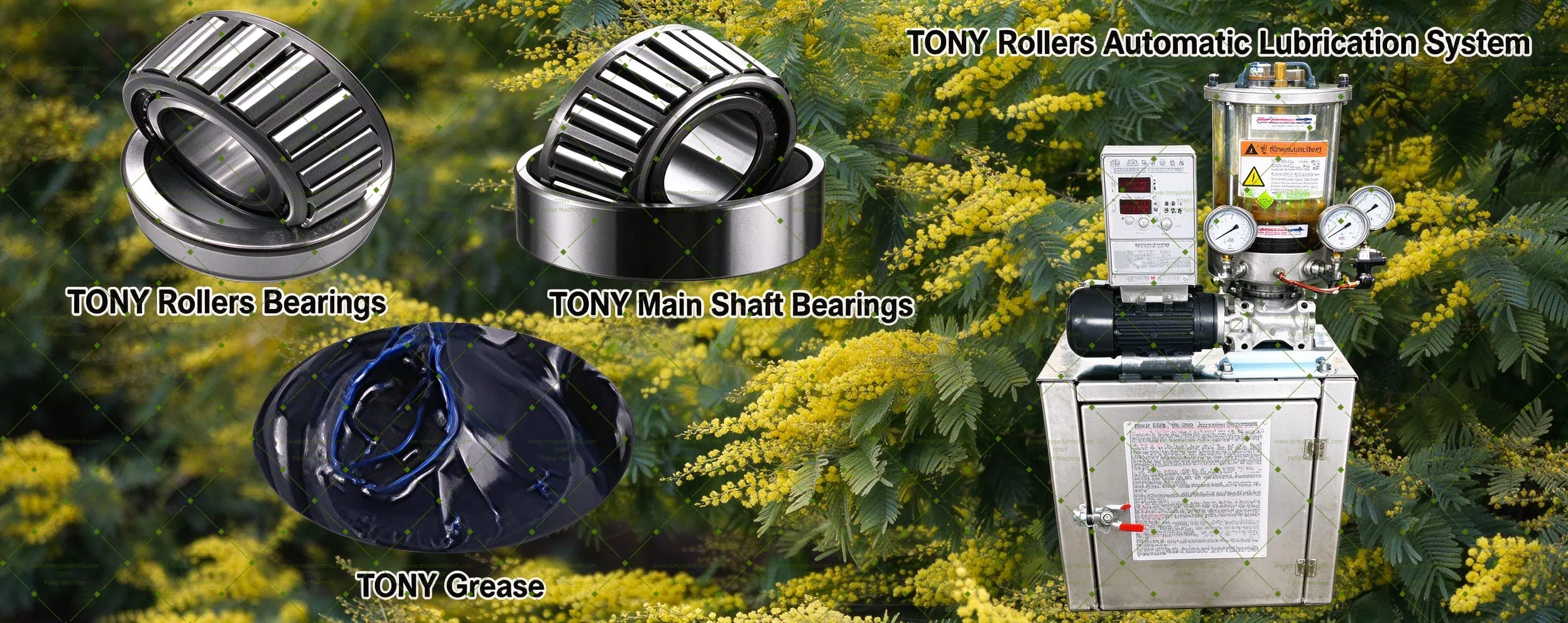
Main Spare Parts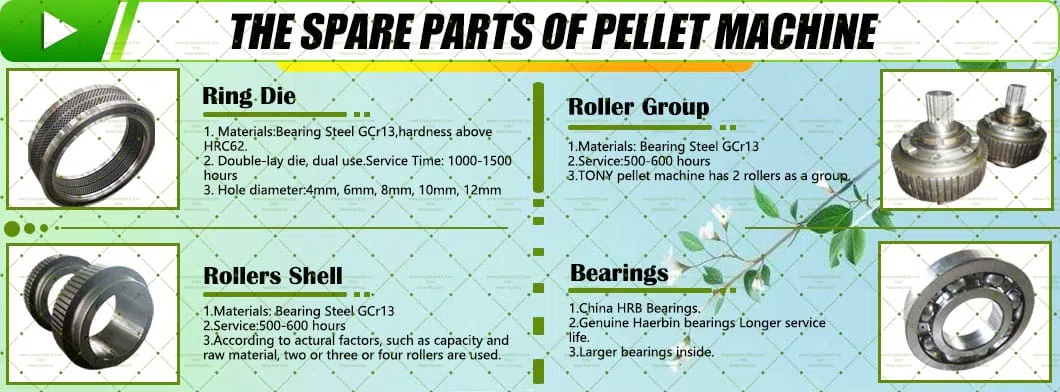
Parameter
TONY Vertical Ring Die Pellet Machine Type Model | |||||||||
NO | Model | Main Power | Lubrication Power | Dust Power | Capacity | Weight | Ring Die Inner Size | Machine Size | Remarks |
1 | TYJ551-III-90 | 90KW+3KW | 0.25KW | 0.95KW | 1-1.5TPH | 5.2T | 560MM | 2364*1550*1705MM | Same Model For Huixin Brand Gearbox Everthing the same,just motor different |
2 | TYJ551-III-110 | 110KW+3KW | 0.25KW | 0.95KW | 1.5-2TPH | 5.3T | 560MM | 2364*1550*1705MM | |
3 | TYJ551-III-132 | 132KW+3KW | 0.25KW | 0.95KW | 2-2.5TPH | 5.5T | 560MM | 2364*1550*1705MM | |
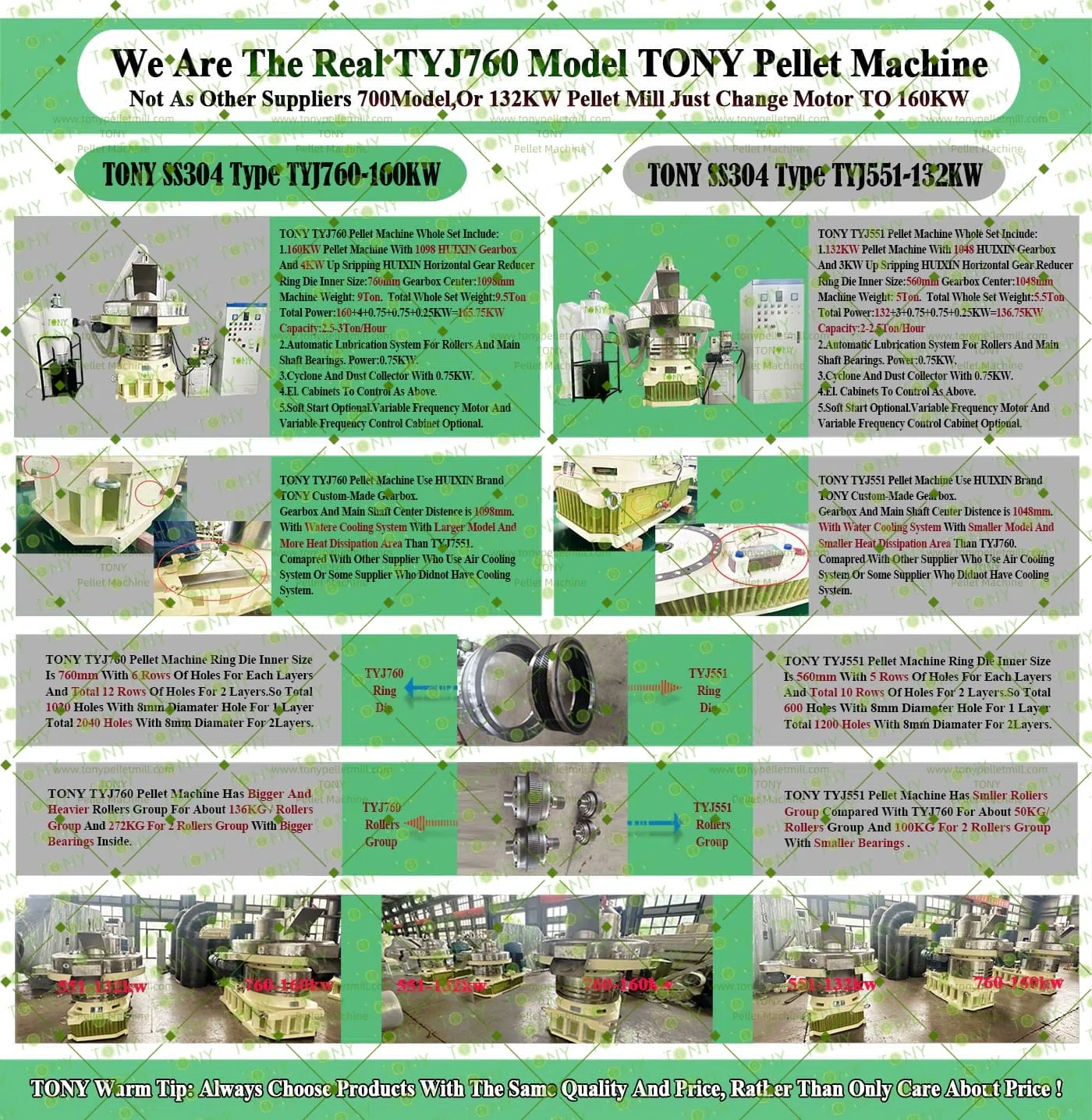
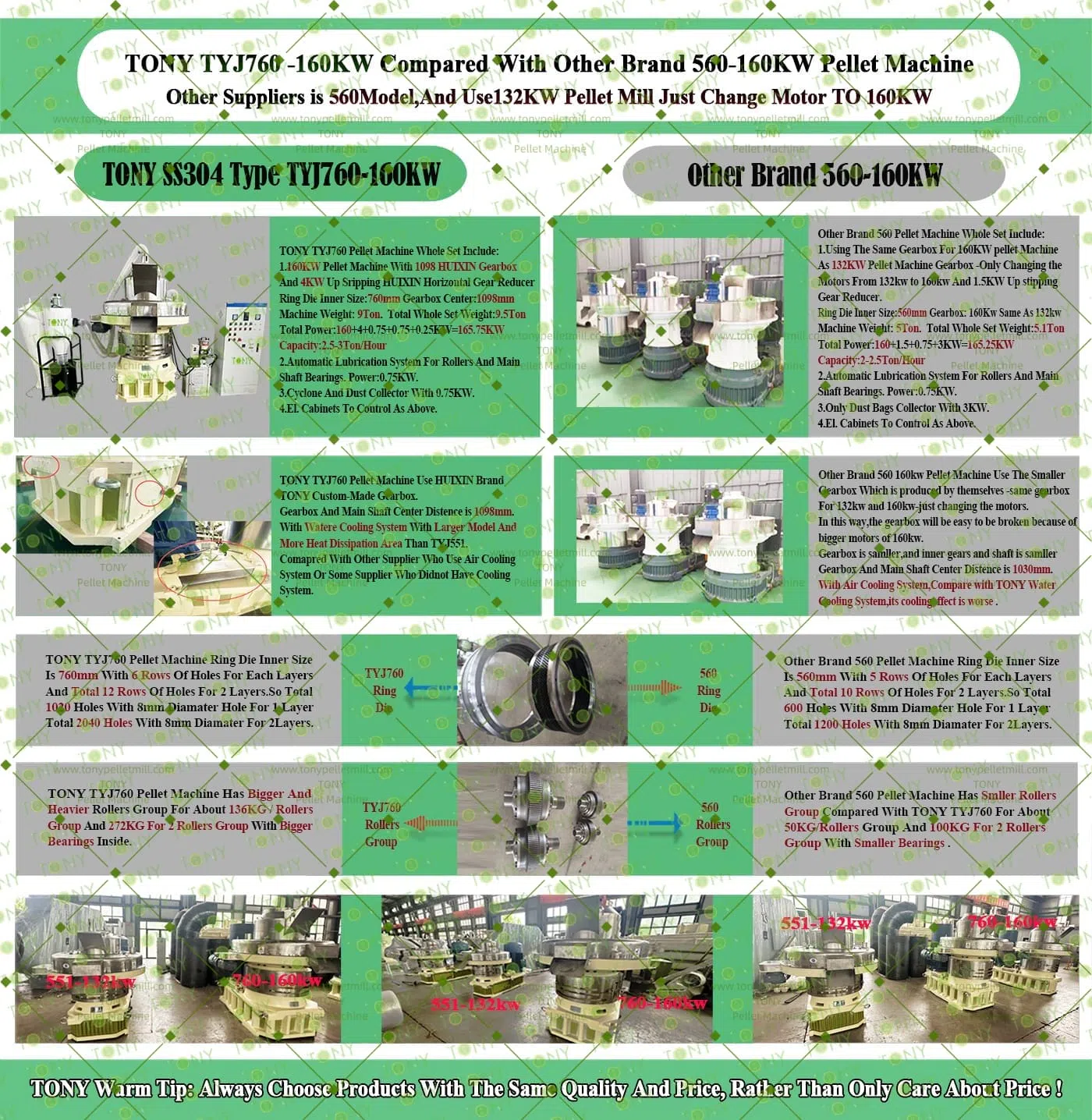
4 | TYJ760-III-160 | 160KW+4KW | 0.25KW | 0.95KW | 2.5-3TPH | 9T | 760MM | 2464*1750*2150MM | Huixin Brand Gearbox |
5 | TYJ760-III-185 | 185KW+4KW | 0.25KW | 0.95KW | 2.8-3.3TPH | 9.2T | 760MM | 2564*1850*2150MM | Bigger Model Huixin Brand Gearbox |
6 | TYJ760-III-200 | 200KW+4KW | 0.25KW | 0.95KW | 3-3.5TPH | 9.3T | 760MM | 2564*1850*2150MM | Bigger Model Huixin Brand Gearbox |
7 | TYJ860-III-220 | 220KW+4KW | 0.25KW | 0.95KW | 3-4TPH | 11T | 860MM | 2664*1950*2150MM | Huixin Brand Gearbox |
8 | TYJ860-III-250 | 250KW+4KW | 0.25KW | 0.95KW | 3.5-4.5TPH | 12T | 860MM | 2864*2150*2150MM | Bigger Model for Huixin Brand Gearbox |
9 | TYJ860-III-280 | 280KW+4KW | 0.25KW | 0.95KW | 4-5TPH | 13T | 860MM | 2864*2150*2150MM | Bigger Model for Huixin Brand Gearbox |
10 | TYJ860-III-315 | 315KW+4KW | 0.25KW | 0.95KW | 4.5-5TPH | 14T | 860MM | 2864*2150*2200MM | Bigger Model for Huixin Brand Gearbox |
Suitable Raw Materials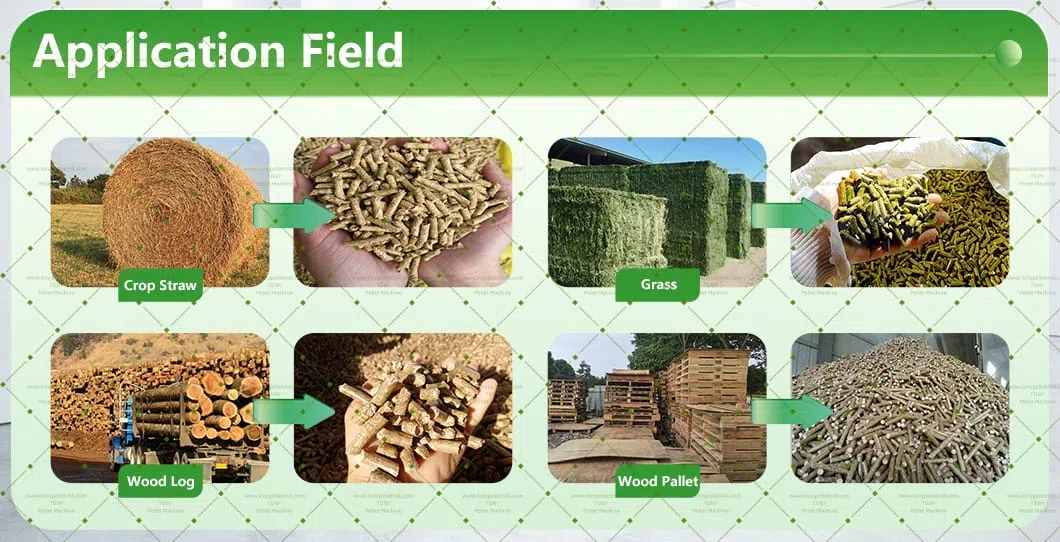
Core raw materials: Acacia wood chips, acacia wood scraps, acacia branches, acacia offcuts, acacia sawdust, and other acacia wood materials.
Compatible raw materials: Various mixed hardwood chips, bamboo chips, branches, bark, straw, rice husks, peanut shells, fruit shells, and other agricultural and forestry waste biomass raw materials. Single-material pelleting is possible, as is pelleting of multiple materials.
Raw material requirements: Particle size 3-5mm, moisture content controlled at 10-15%. Large pieces of material require pre-crushing.
Application Areas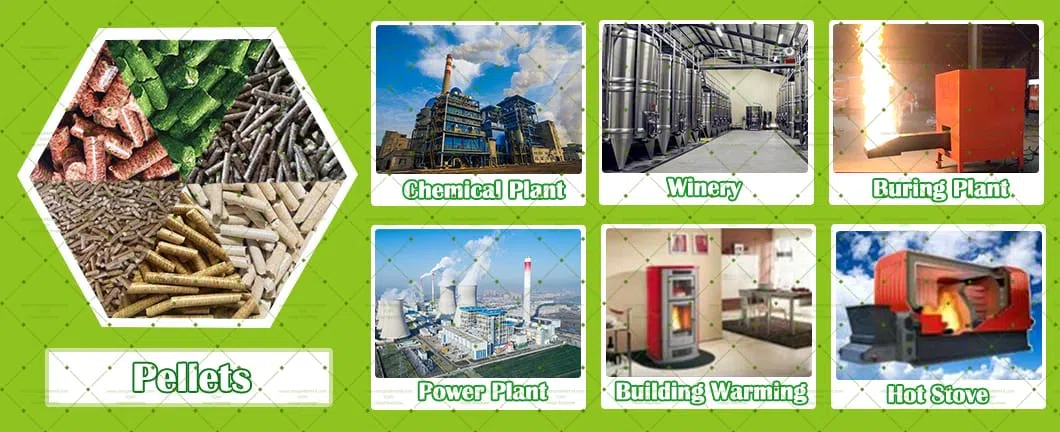
Domestic Heating & Household Energy: Suitable for home fireplaces and stoves to replace coal and firewood. Features high combustion efficiency, low pollution and easy storage.
Industrial Biomass Boilers: Used as main boiler fuel to replace coal, reducing SO₂, NOₓ and particulate emissions for clean production and environmental compliance.
Power Generation: Applied in thermal power plants. Renewable and carbon-neutral, cutting carbon emissions and reducing fossil fuel dependence.
Household Pellet Manufacturing: The equipment accurately controls pellet size and hardness to match small domestic heating burners; its fine processing performance shapes the final user experience.
Environmental Protection & Waste Recycling: Converts sludge, kitchen waste and other organic refuse into fuel pellets at waste treatment plants for resource reuse. Anti-corrosion and anti-clogging designs are key for stable operation.
Details
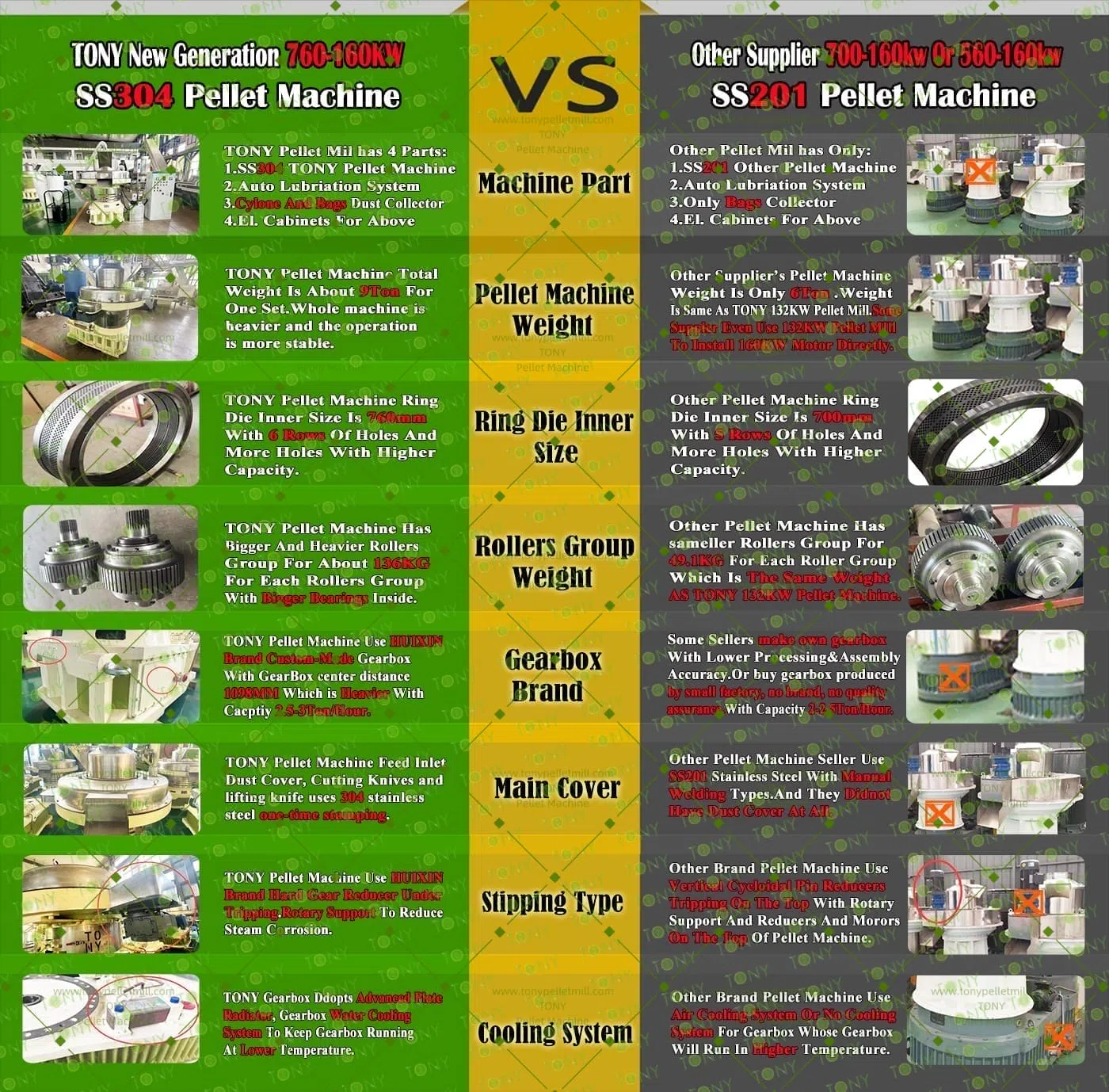
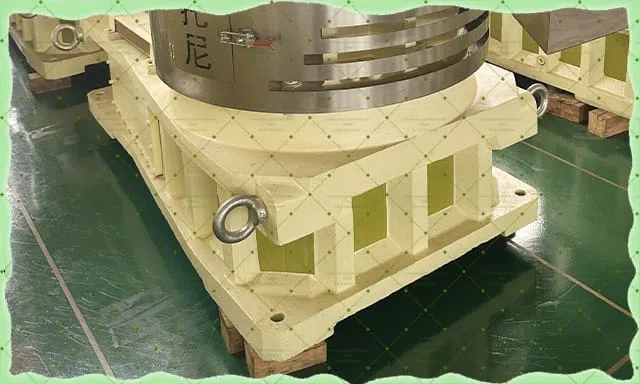
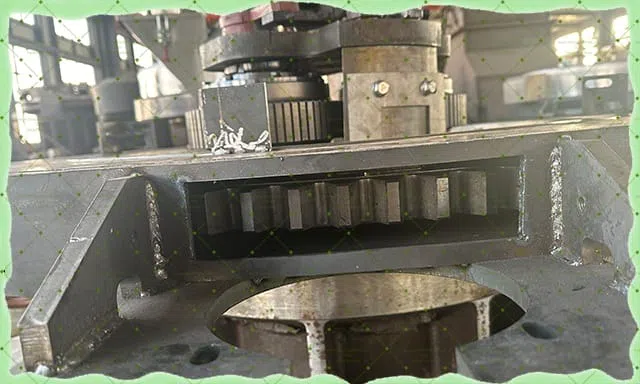
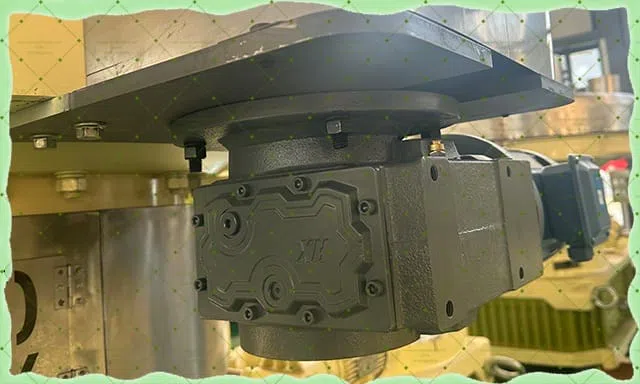
1. The real differences in pellet mills often lie in the internal machining and assembly details. Many manufacturers, in an effort to cut costs, use gearboxes with small center distances and ordinary forged spindles, resulting in low machining precision, large coaxiality deviations, high vibrations under full load, and premature bearing failure.
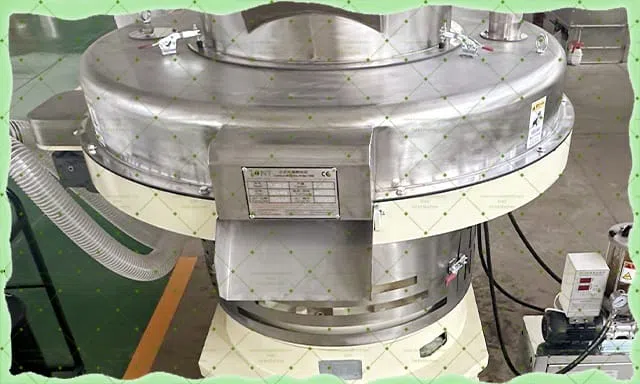
2. Tony pellet mill gearboxes utilize gear assemblies with enlarged center distances and hardened gear surfaces, with gears undergoing grinding and shaping. The spindle is integrally tempered and forged, CNC precision-machined to strictly control coaxial tolerances. A multi-layer composite sealing structure combined with independent thin oil circulation cooling and lubrication distinguishes it from ordinary models with simple oil seals and single-point grease filling.
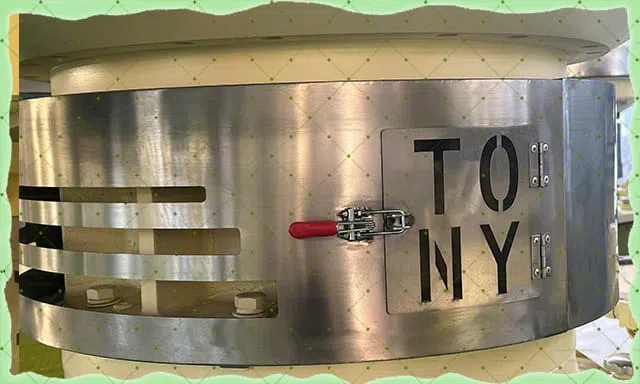
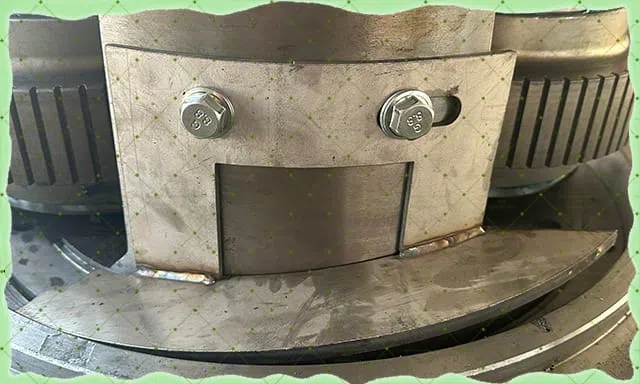
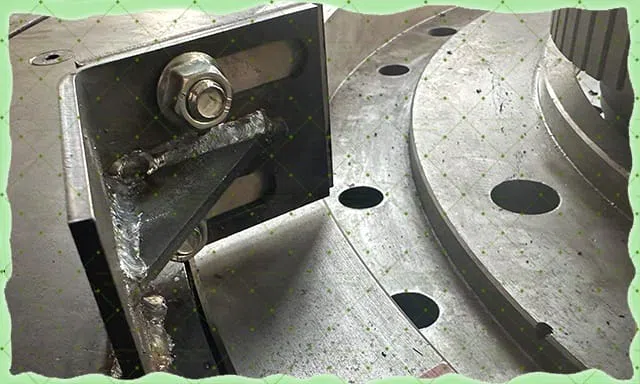
3. The ring die is made of double-layer, bidirectional wear-resistant alloy steel, and the pressure rollers undergo surface strengthening treatment. The base is made of thickened HT250 cast iron, and a load-bearing test is performed after the entire machine is assembled. From gears, spindles, seals, lubrication to die pressure rollers, every detail is standardized to control potential malfunctions before shipment, achieving long-term continuous and stable pelletizing.
 |  |  |  |
 |  |  |  |
Unique Advantages
1. The core differences in biomass pellet mills often lie hidden in the unseen transmission system. Many competitors, in an effort to reduce costs, use smaller gearboxes and ordinary cast iron housings. Under long-term full-load production, this easily leads to gear fatigue wear, overheating, seal failure, and oil leaks, directly disrupting factory production.
2. Tony pellet mills upgrade from the ground up, using a large-center-pitch, hardened-tooth-surface gear transmission assembly. The entire machine base is made of HT250 thickened cast iron in a single piece, providing sufficient weight to suppress resonance caused by high-speed production. An independent, forced-circulation lubrication system continuously cools and lubricates gears and bearings, significantly reducing the risk of high-temperature wear compared to traditional manual single-point lubrication.
3. Key rotating parts use multiple composite dustproof oil seals to prevent sawdust and dust from entering the cavity. Double-layer, reversible ring dies further extend the service life of vulnerable parts. Facing various materials such as sawdust, bamboo shavings, straw, and nutshells, the machine has stronger impact resistance, reducing the probability of failure upfront and ensuring long-term stable operation of the production line.