Brief Introduction
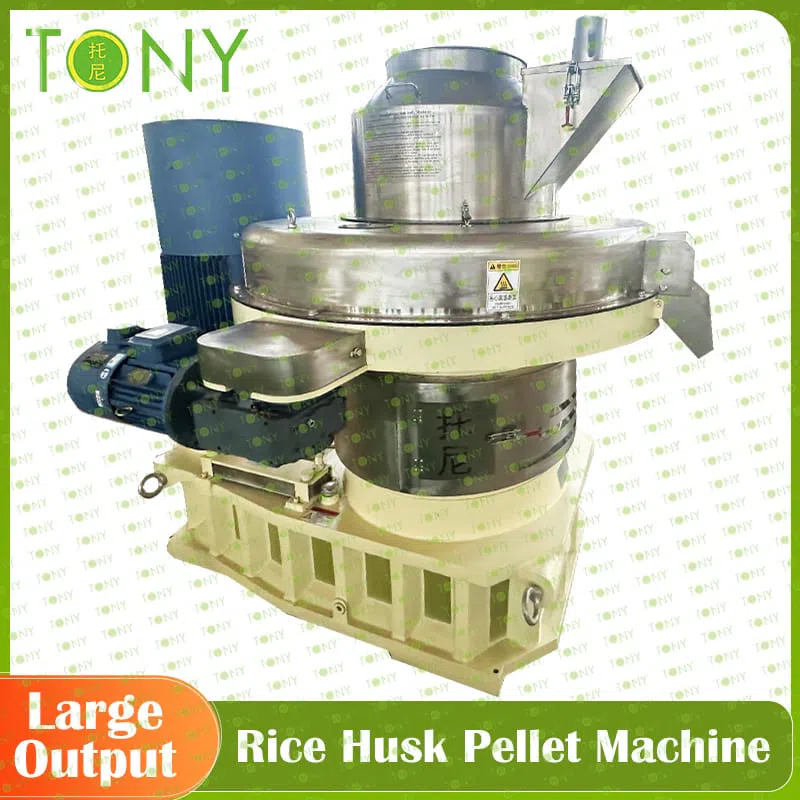
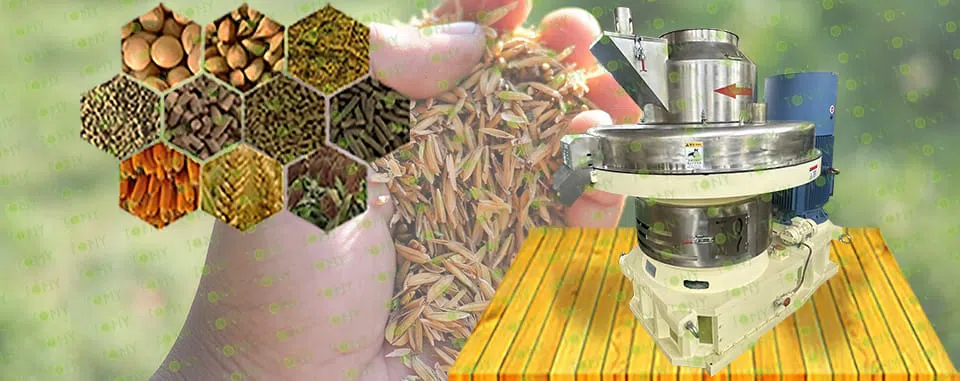
TONY biomass pellet machine converts agricultural and forestry waste (such as rice husks, straw, wood chips, corn stalks, wheat straw, cotton straw, peanut shells, corn cobs, branches, leaves, and sawdust) into pelletized fuel through a physical extrusion process. Biomass pellets are a clean, efficient, safe, and sustainable new fuel with broad applications, including heating, industrial boilers, and biomass power generation.
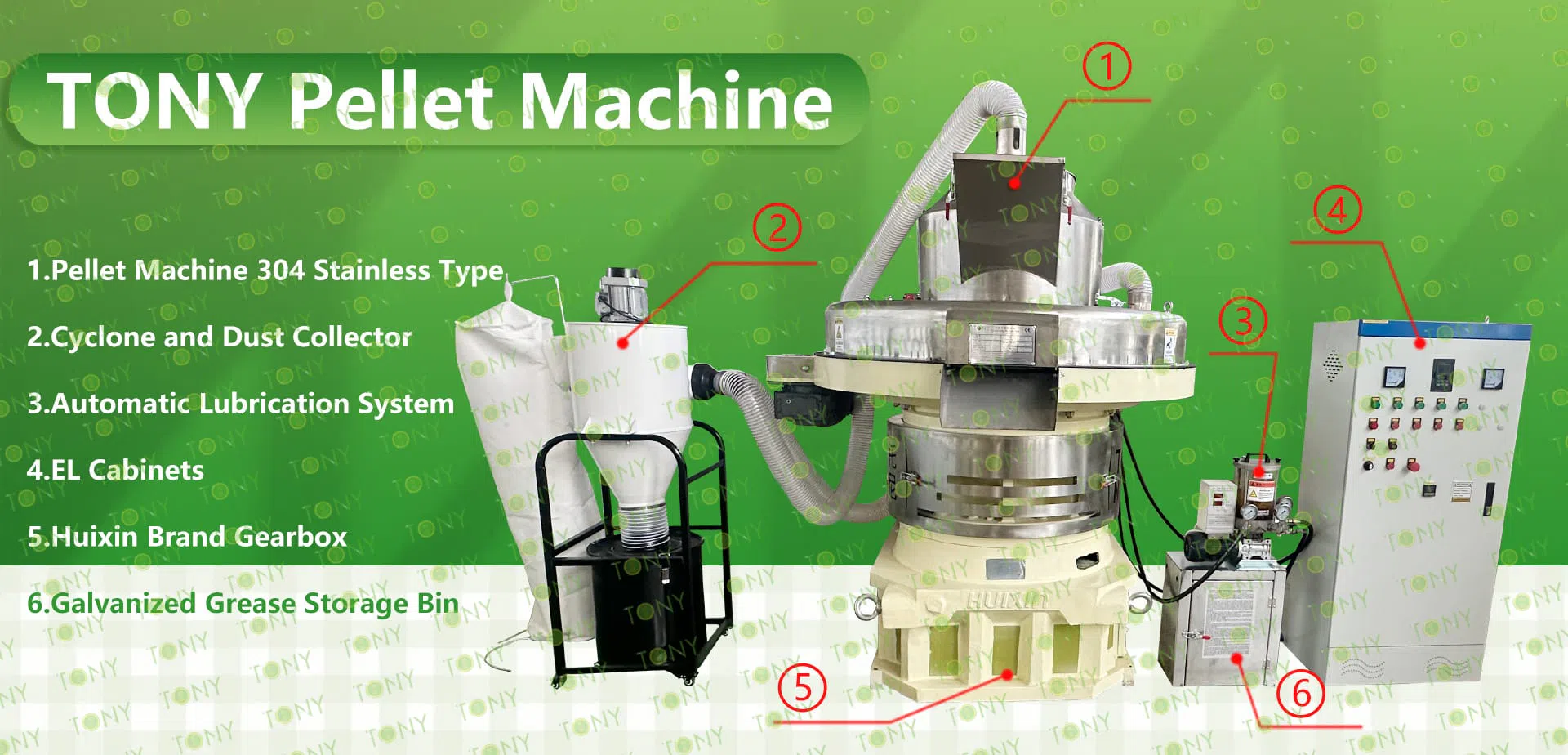
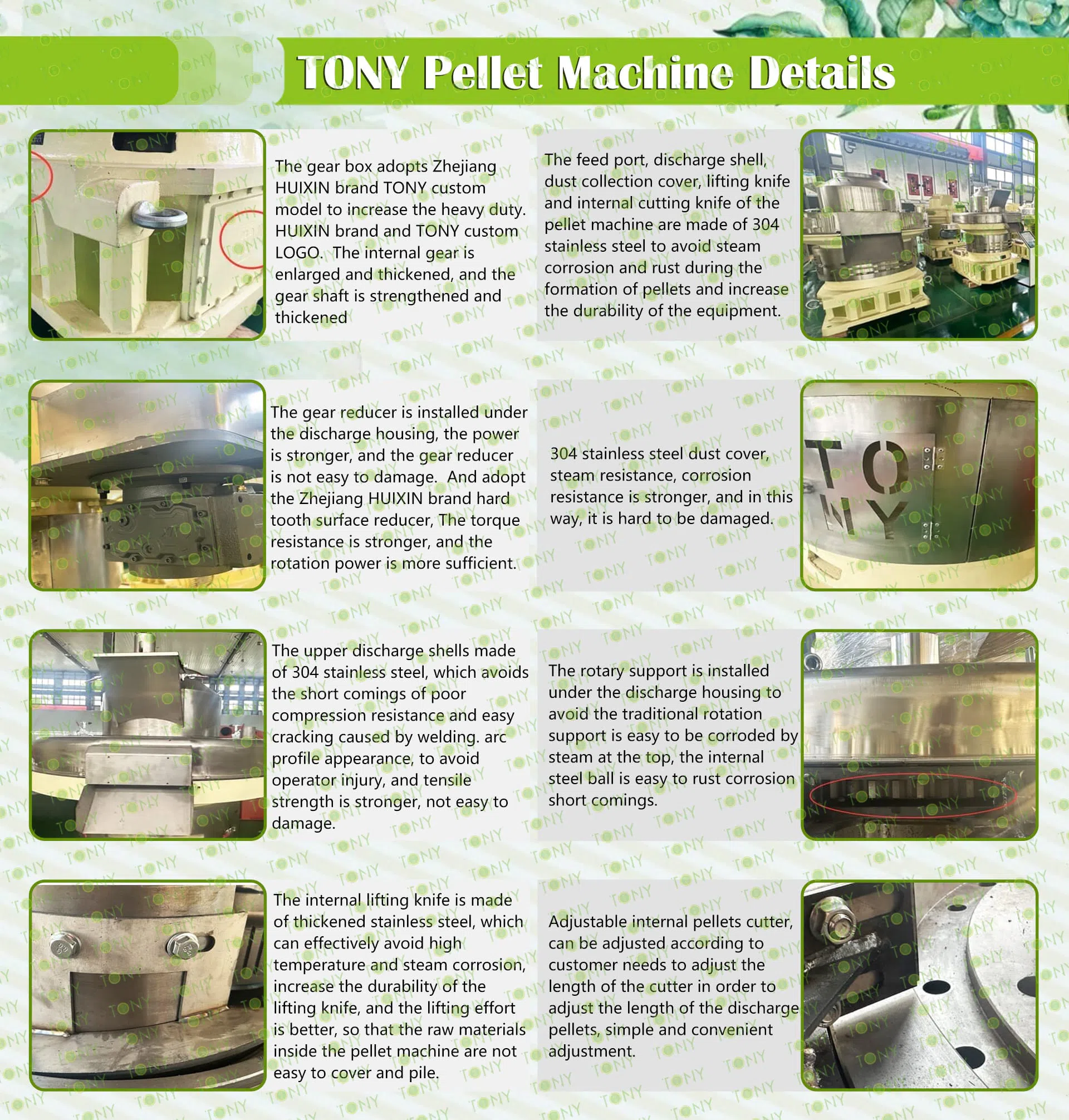
The bearing cavity is made of forged, tempered, and wear-resistant material for durability. The gearbox offers high output, low power consumption, greater stability, and reduced maintenance.
Working Principle
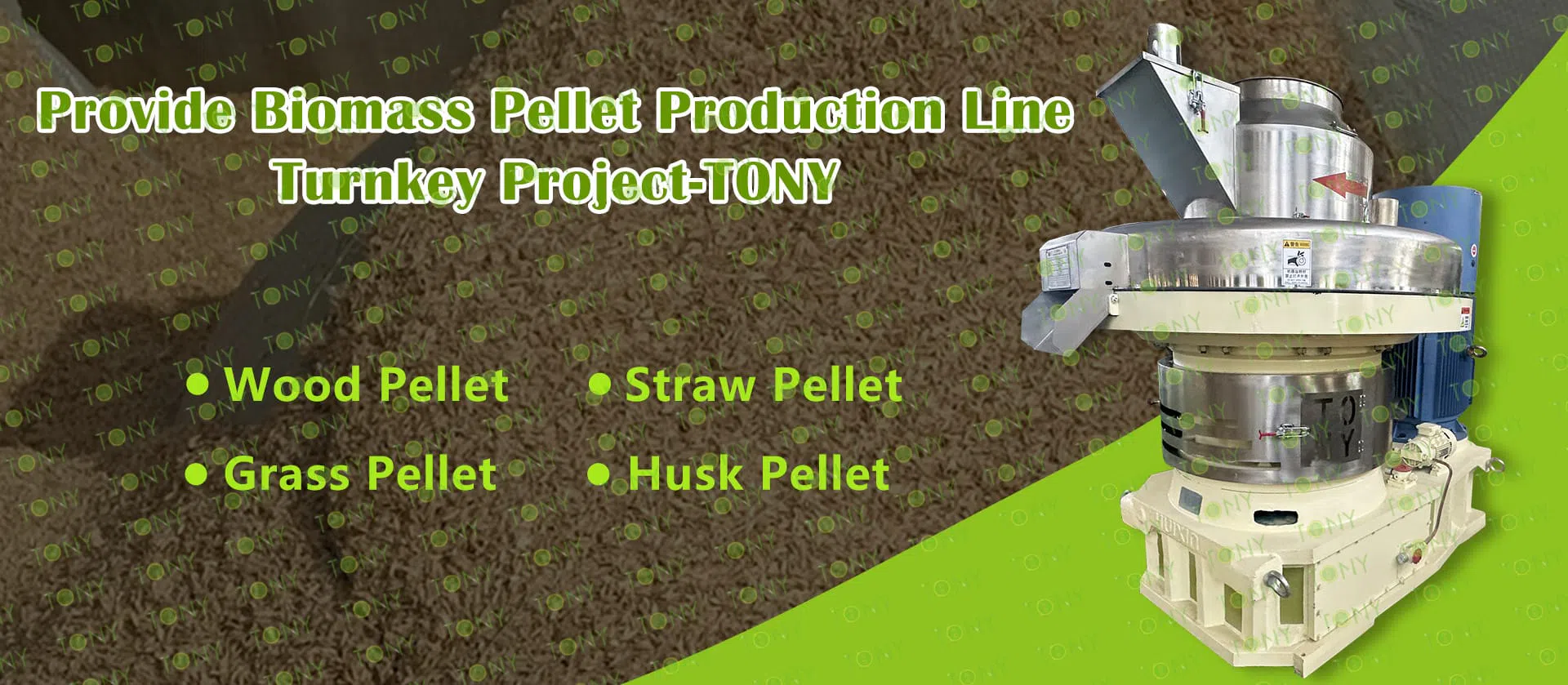
Pelletizing relies on mechanical energy: friction between rollers and the die pushes powdered feedstock through die apertures under high pressure.
The process requires no binders or additives. Wood chips, straw and other biomass contain inherent cellulose and lignin. Lignin, a phenylpropane polymer, strengthens cell walls and binds cellulose. It is amorphous, insoluble in most solvents at room temperature and lacks a melting point, but possesses a softening point. Once the temperature rises sufficiently, softened lignin develops strong bonding properties. With pressure applied, cellulose molecules undergo dislocation and deformation. Adjacent biomass particles interweave and recombine to form finished pellets.
Main Parts
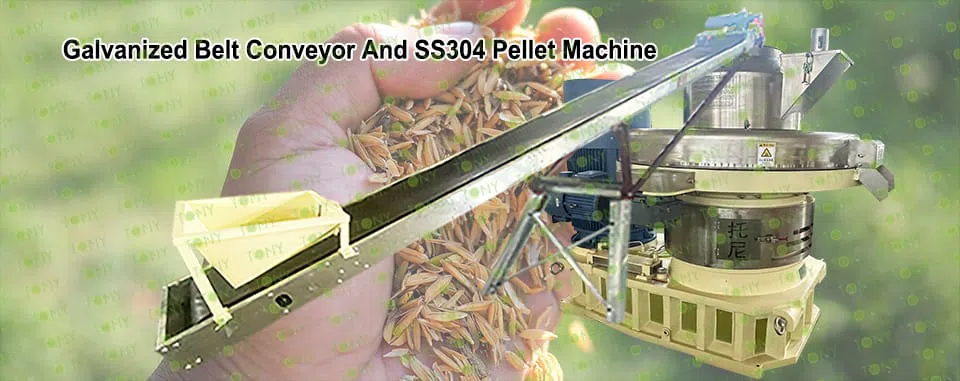
TONY's Rice Husk Pellet Machine
 |  |
 |  |
 |  |
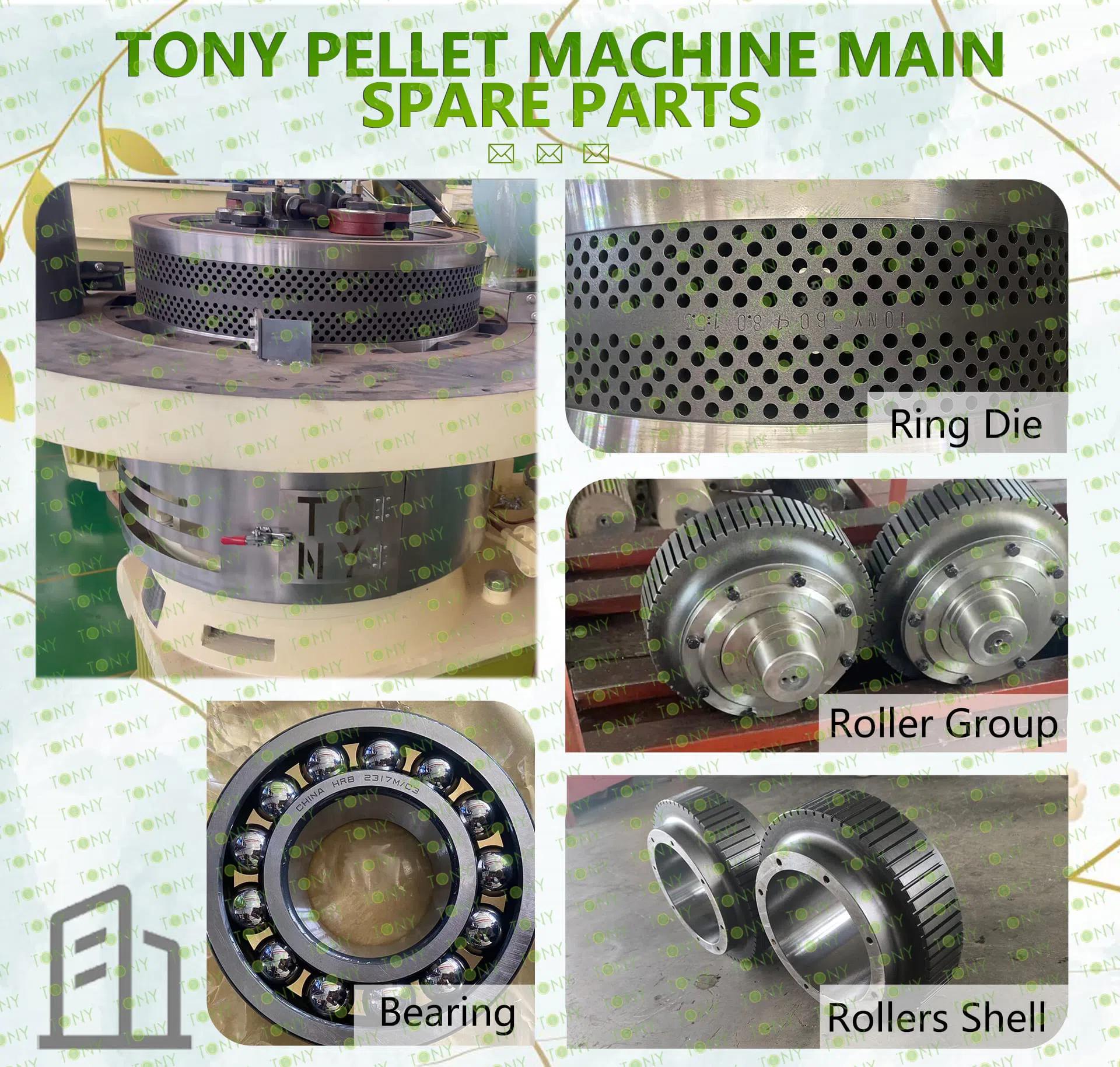
Main Spare Parts
Parameter
TONY Wood Pellet MachineType Model | |||||||||
NO | Model | Main Power | Lubrication Power | Dust Power | Capacity | Weight | Ring Die Inner Size | Machine Size | Remarks |
1 | TYJ551-III-90 | 90KW+3KW | 0.25KW | 0.95KW | 1-1.5TPH | 5.2T | 560MM | 2364*1550*1705MM | Same Model For Huixin Brand Gearbox Everthing the same,just motor different |
2 | TYJ551-III-110 | 110KW+3KW | 0.25KW | 0.95KW | 1.5-2TPH | 5.3T | 560MM | 2364*1550*1705MM | |
3 | TYJ551-III-132 | 132KW+3KW | 0.25KW | 0.95KW | 2-2.5TPH | 5.5T | 560MM | 2364*1550*1705MM | |
4 | TYJ760-III-160 | 160KW+4KW | 0.25KW | 0.95KW | 2.5-3TPH | 9T | 760MM | 2464*1750*2150MM | Huixin Brand Gearbox |
5 | TYJ760-III-185 | 185KW+4KW | 0.25KW | 0.95KW | 2.8-3.3TPH | 9.2T | 760MM | 2564*1850*2150MM | Bigger Model Huixin Brand Gearbox |
6 | TYJ760-III-200 | 200KW+4KW | 0.25KW | 0.95KW | 3-3.5TPH | 9.3T | 760MM | 2564*1850*2150MM | Bigger Model Huixin Brand Gearbox |
7 | TYJ860-III-220 | 220KW+4KW | 0.25KW | 0.95KW | 3-4TPH | 11T | 860MM | 2664*1950*2150MM | Huixin Brand Gearbox |
8 | TYJ860-III-250 | 250KW+4KW | 0.25KW | 0.95KW | 3.5-4.5TPH | 12T | 860MM | 2864*2150*2150MM | Bigger Model for Huixin Brand Gearbox |
9 | TYJ860-III-280 | 280KW+4KW | 0.25KW | 0.95KW | 4-5TPH | 13T | 860MM | 2864*2150*2150MM | Bigger Model for Huixin Brand Gearbox |
10 | TYJ860-III-315 | 315KW+4KW | 0.25KW | 0.95KW | 4.5-5TPH | 14T | 860MM | 2864*2150*2200MM | Bigger Model for Huixin Brand Gearbox |
Raw Materials
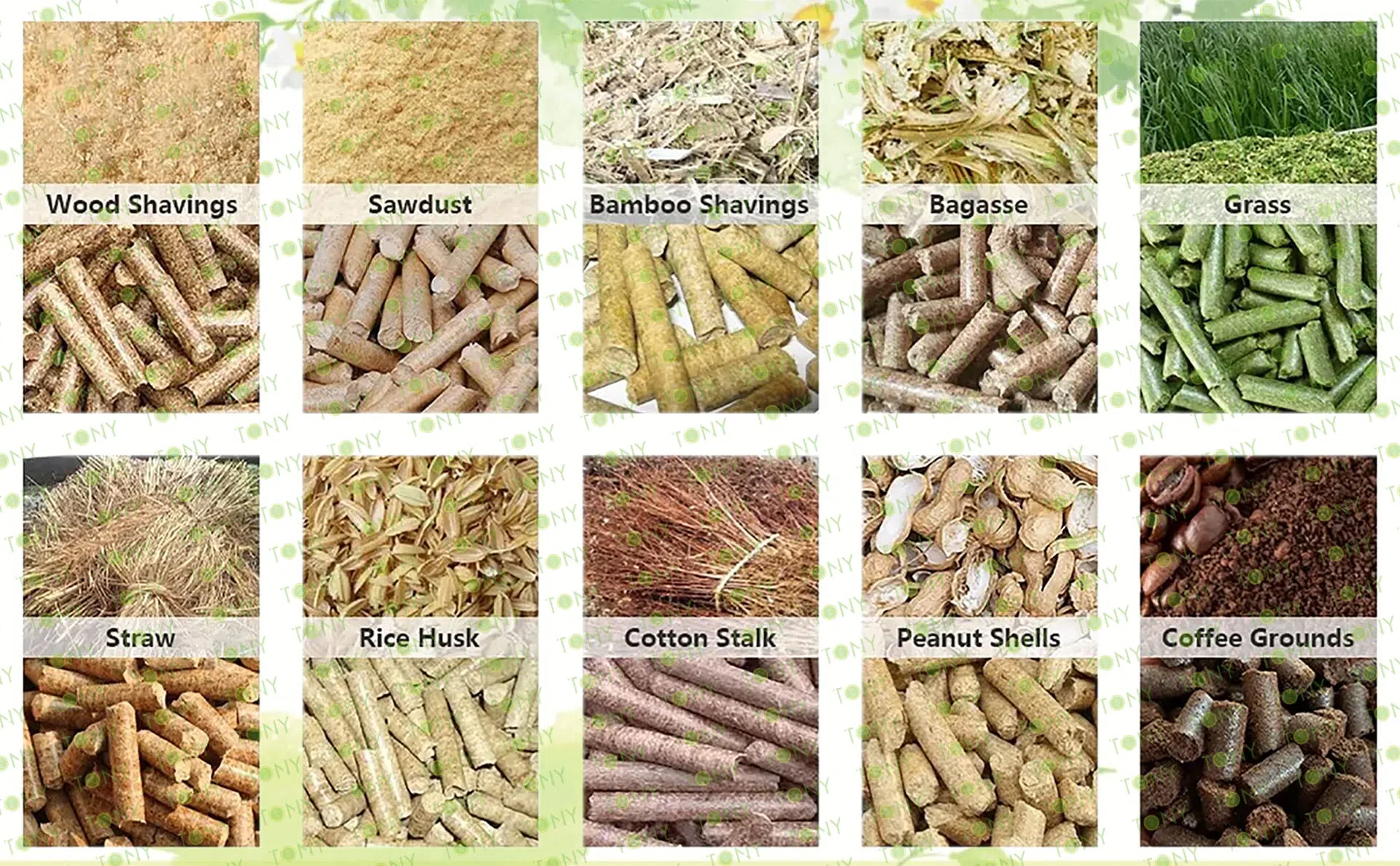
Biomass pellet fuel is an environmentally friendly fuel typically made from processed biomass raw materials. Biomass fuel raw materials come from a wide range of sources, primarily including the following:
1.Agricultural waste
Crop straw, such as corn stalks, wheat straw, and rice straw, is a common raw material for biomass fuel. These straws are abundant and relatively inexpensive to harvest.
Agricultural processing waste: This includes rice husks, peanut shells, corn cobs, and sugarcane bagasse. These wastes typically have a certain energy content and can be processed into high-quality biomass fuel.
2. Forestry waste
Wood chips and sawdust: Wood chips and sawdust generated during wood processing are the primary raw materials for wood biomass fuel. They have high density and energy content, as well as good combustion properties.
Branches and leaves: Branches and fallen leaves from tree pruning can also be used as raw materials for biomass fuel. However, these branches require pre-processing, such as shredding, before they can be used in production.
Residues such as treetops and roots left over from logging can also be collected and processed and converted into biomass fuel, effectively utilizing resources.
3. Livestock Manure
Livestock manure contains a large amount of organic matter. After fermentation and other processes, it can produce biogas, making it an important raw material for gaseous biomass fuel. Dried manure can also be mixed with other biomass feedstocks to produce solid fuel.
4. Industrial Organic Waste
Food Processing Waste: Organic waste from food processing plants, such as fruit peels, fruit cores, vegetable waste, and distiller's grains, is rich in organic components such as carbohydrates and can be used to produce biomass fuel.
Paper Mill Waste: Bark and waste paper pulp produced during the papermaking process are rich in cellulose. After treatment, they can be used as a raw material for biomass fuel.
Dyeing and Printing Wastewater: Some wastewater from dyeing and printing plants contains organic dyes, fibers, and other substances. With proper treatment, the organic components can be extracted and used to produce biomass fuel.
5. Energy Crops
Miscanthus and Sugarcane: These perennial herbaceous plants are characterized by rapid growth, large biomass, and strong adaptability. They are rich in cellulose and hemicellulose, making them potential raw materials for producing solid biomass fuel.
Application Scenariors
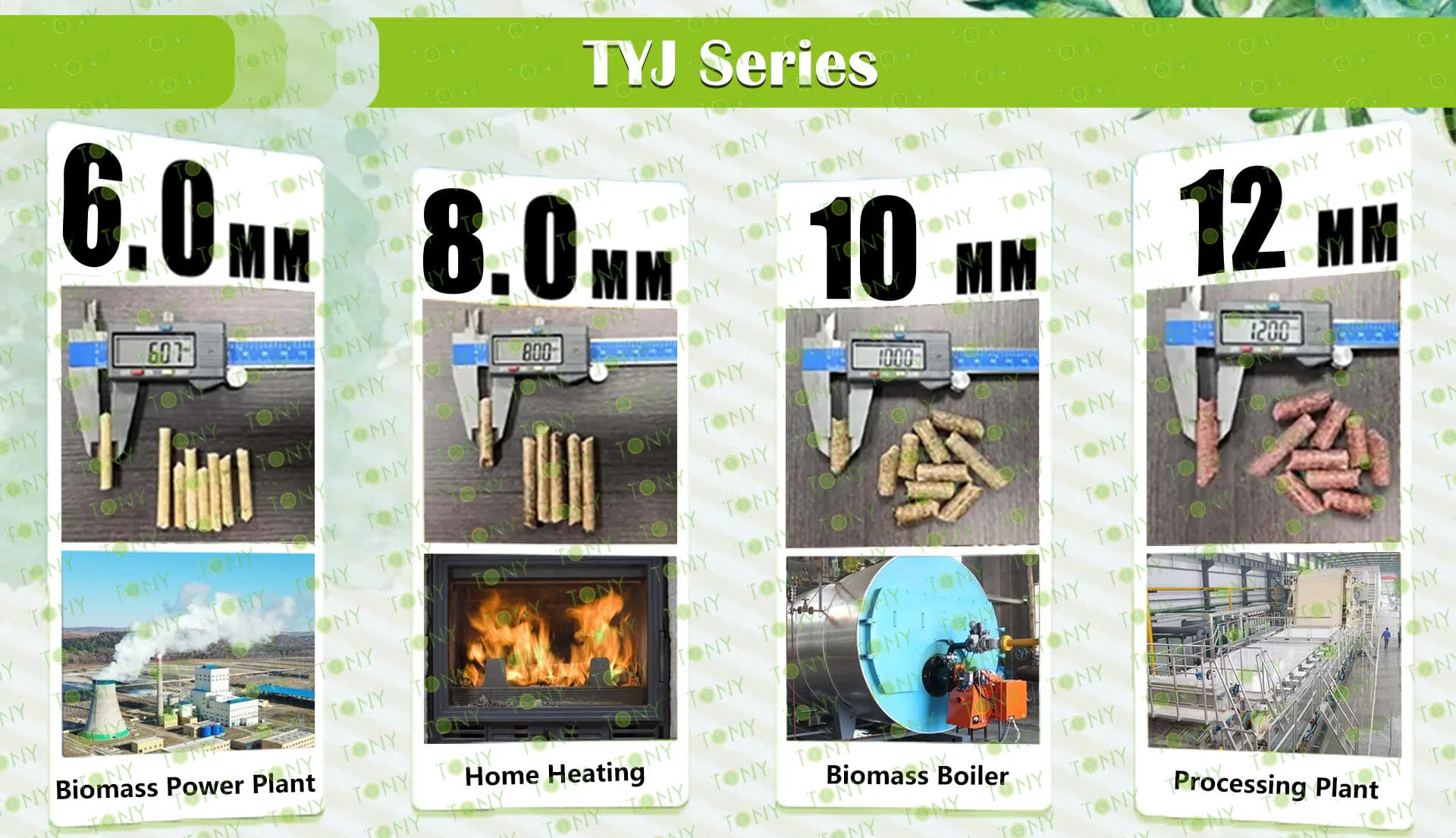
Rice mill boiler heating, industrial biomass boiler fuel supply, biomass power plant feedstock, agricultural waste recycling stations, rice husk pellet export.
Machine Details
Selection Guide
1. Raw Materials & Applications
- Types: Straw, sawdust, rice husks, etc., vary in hardness and fiber structure.
- Moisture: 10–15% ideal; too high needs drying, too low affects density.
- Use: Fuel requires density ≥0.8g/cm³; feed requires uniform 3–8mm sizing.
- Specs: Pellet diameter 2–12mm; equipment should support die changes.
2. Performance & Structure
- Capacity: 1–5T/h for medium commercial; 10T/h+ for large lines.
- Power: Higher capacity needs more power; check energy consumption ratio.
- Pelletizing Rate: ≥95%, smooth surface, no cracks, proper hardness.
- Wear Parts: Consider replacement frequency and cost; custom wear-resistant parts save long-term.
3. Integration & Automation
- Auxiliary Equipment: TONY offers integrated lines—crushing, drying, pelletizing, cooling, packaging.
- Automation: PLC control, real-time monitoring, overload protection, temperature alarms, auto lubrication.
4. Cost & Service
- Price: Compare configurations, not just low price.
- Energy & Labor: Efficient motors save long-term; automation reduces operators.
- Manufacturer: Choose experienced makers like TONY (20+ years).
- Warranty: One-year warranty, spare parts supply, installation and training.
Also consider environmental regulations and regional policies.
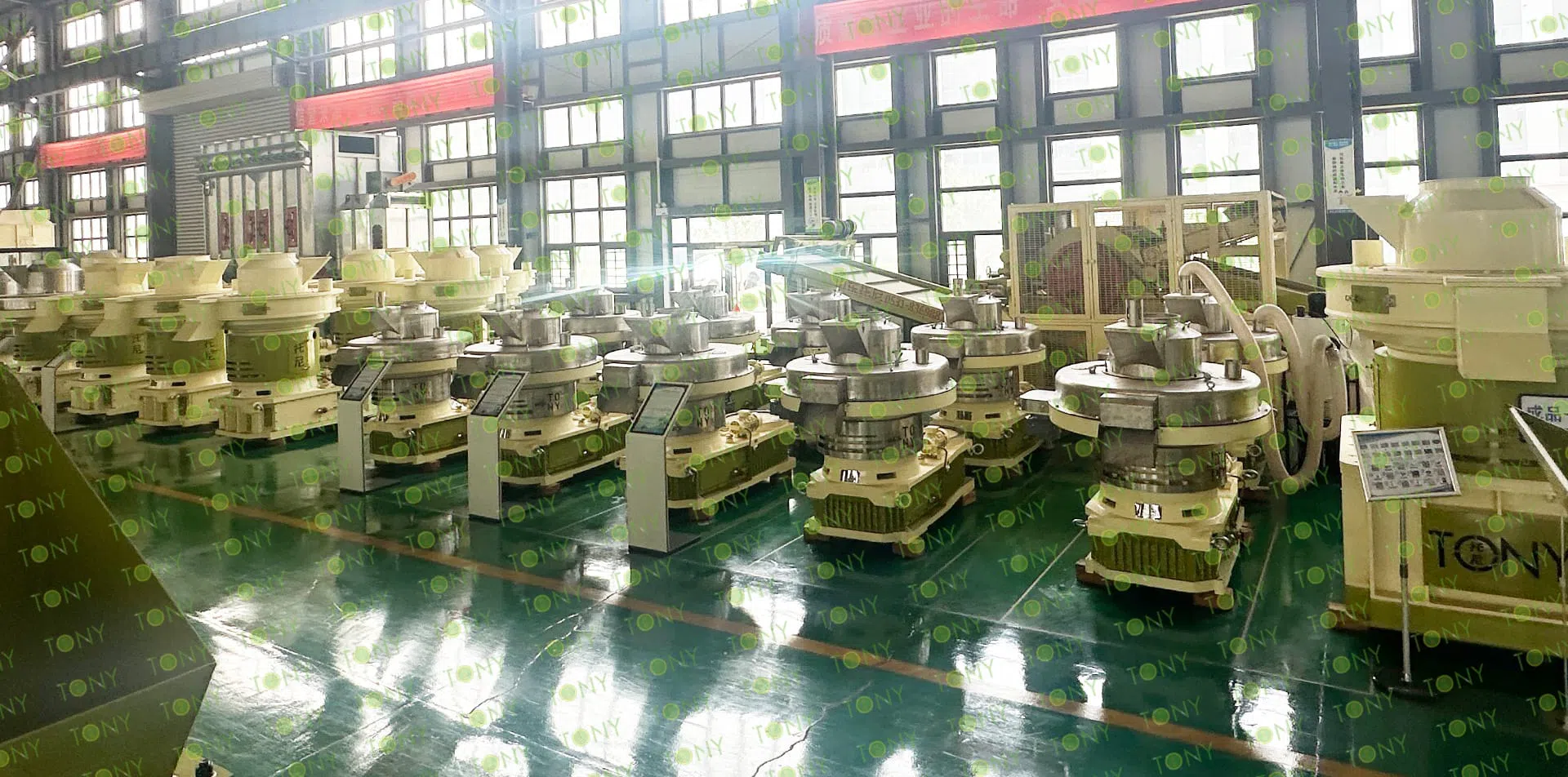
Machines Show