
Brief Introduction
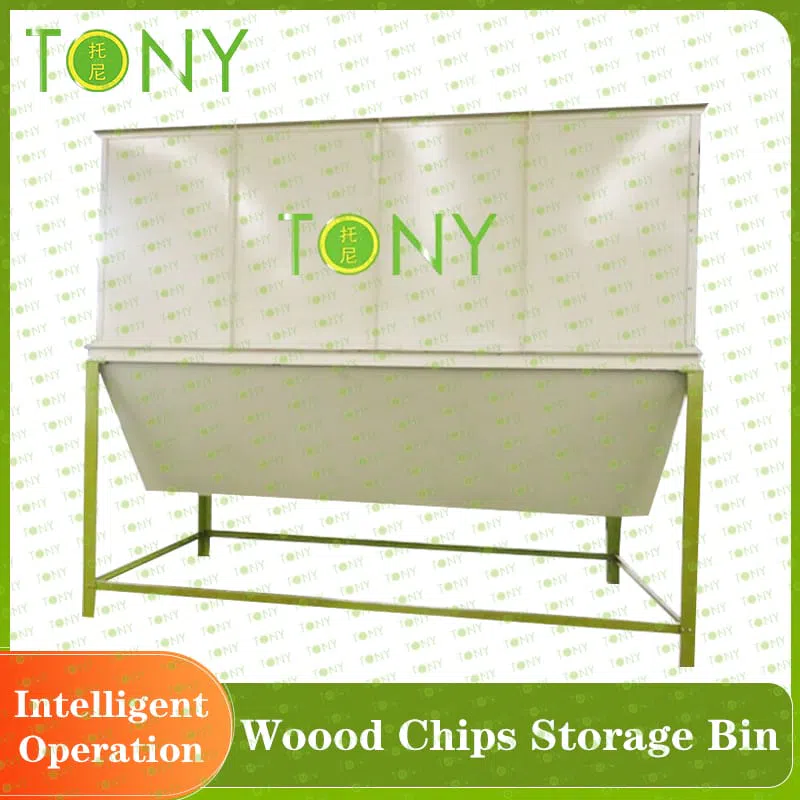
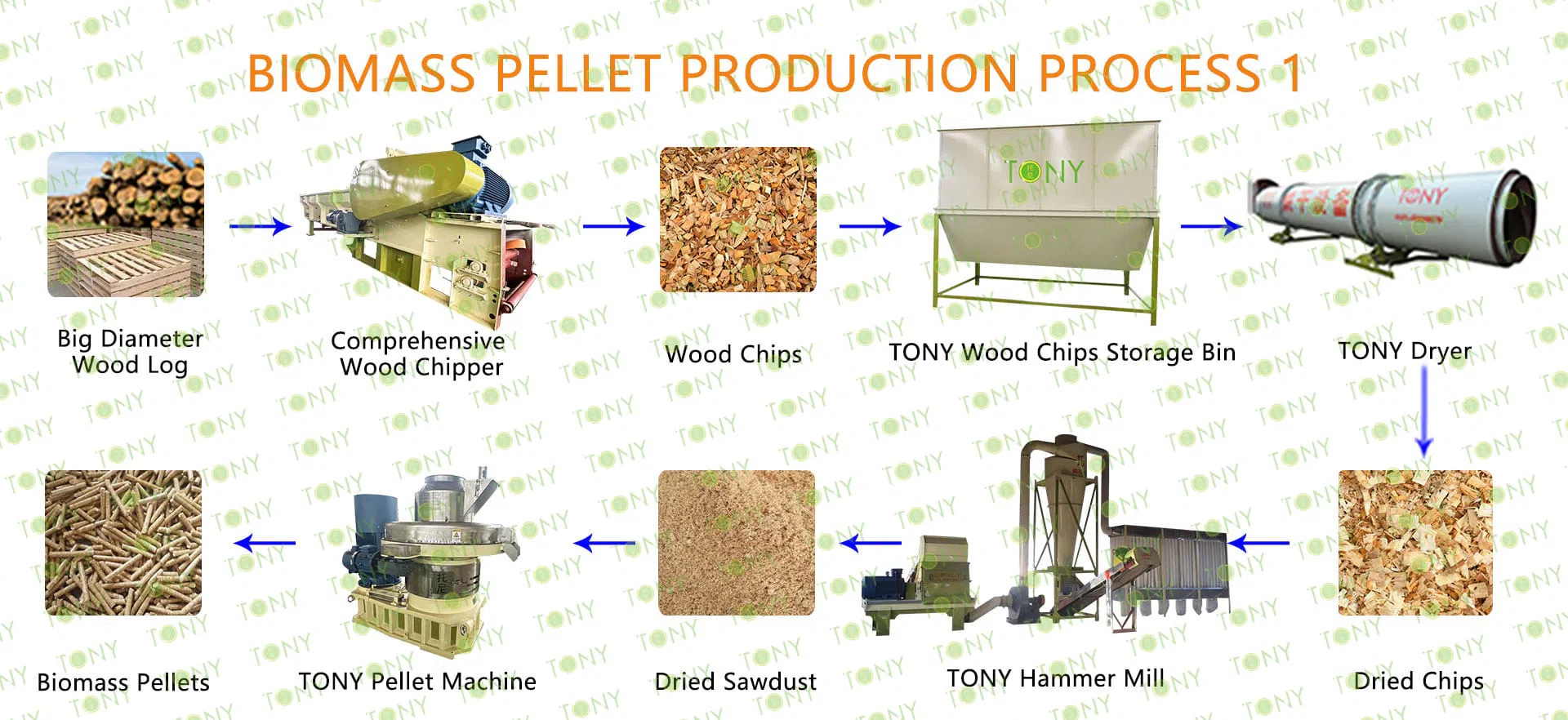
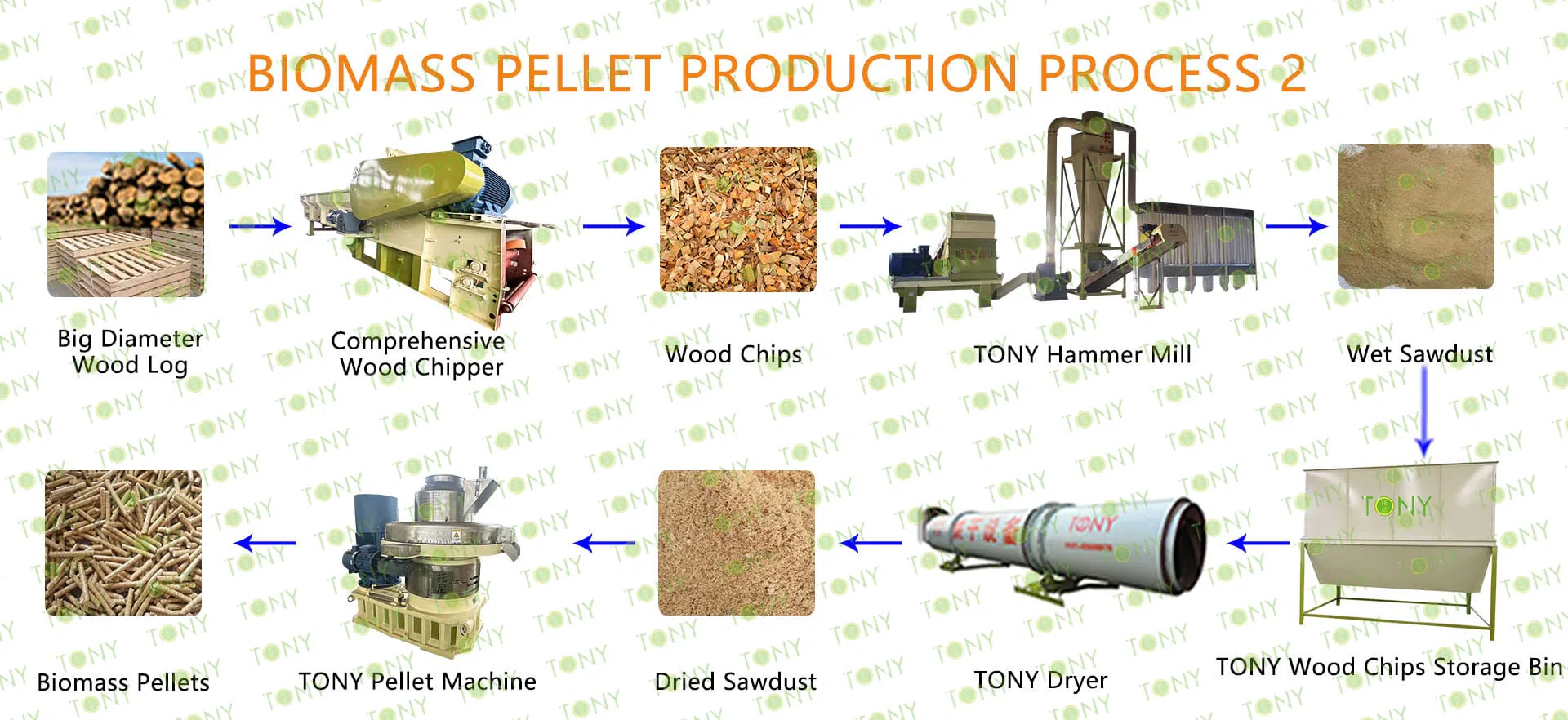
TONY wood chip storage bin serves as a raw material buffer unit at the front end of the biomass pellet production line. It stores wood chips discharged from the chipper, acting as a buffer to balance supply and production capacity while temporarily holding material. By linking the chipping stage with the subsequent grinding and drying stages, it ensures continuous, stable operation of downstream equipment and prevents system-wide shutdowns caused by supply interruptions.
TONY wood chip storage bin features a galvanized steel structure and a steep-angle hopper design. It is equipped with an anti-bridging system—including air cannons and a disc feeder—to prevent fibrous wood chips from bridging or clogging.
High and low-level sensors monitor material inventory, while integrated ventilation and explosion-venting systems mitigate the risks of spontaneous combustion and dust explosions.
The equipment operates on a "First-In, First-Out" (FIFO) basis to ensure a steady, continuous material supply for the grinding process. It is available in capacities ranging from 30 to 300 cubic meters to meet the requirements of pellet production lines with varying output capacities.
Working Principle
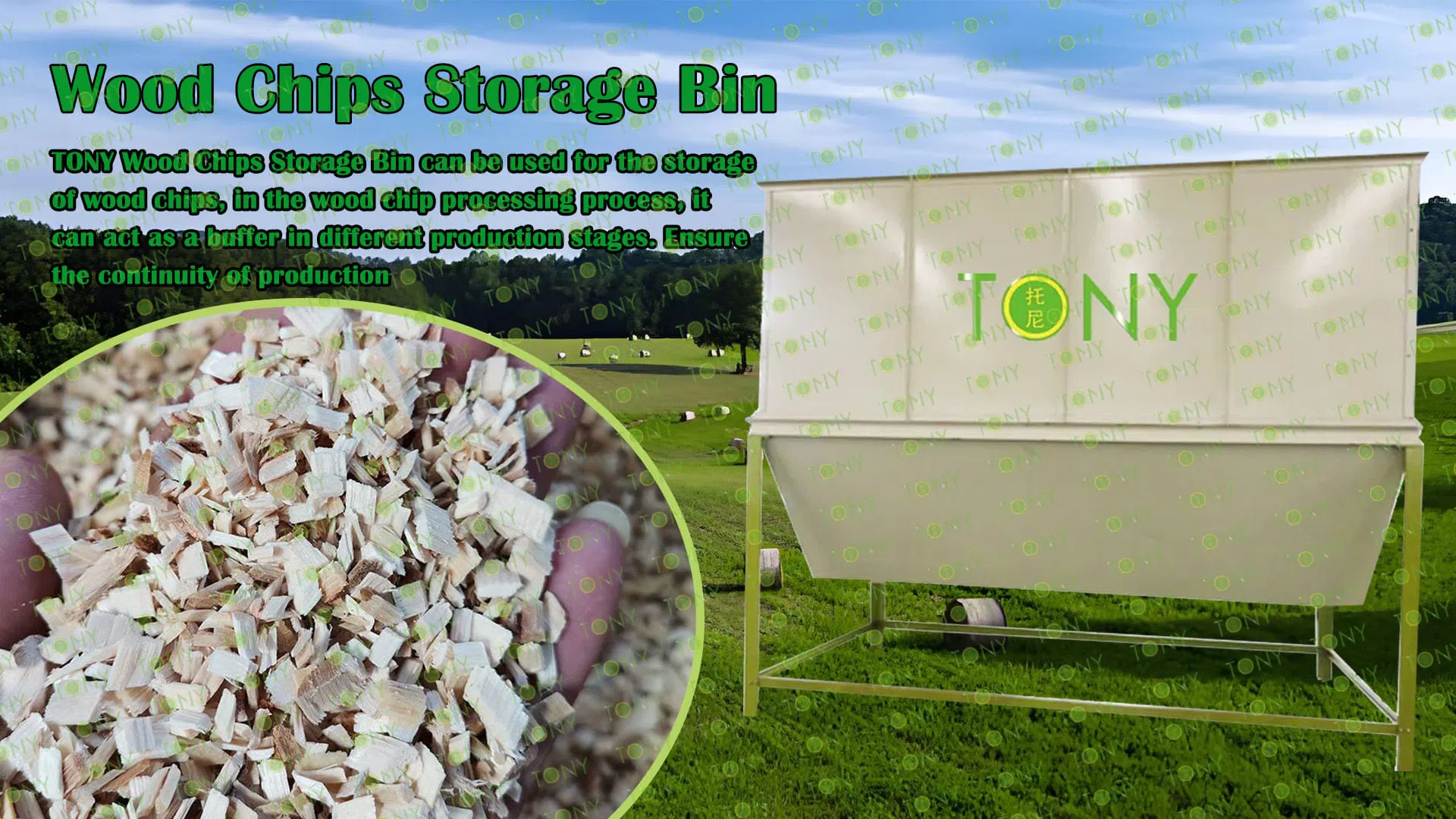
The wood chip storage bin serves as a core buffer storage unit at the front end of the biomass pellet production line. It stores wood chip feedstock from the initial chipping stage, effectively linking the chipping and pulverizing processes to resolve capacity mismatches and ensure the continuous, stable operation of the entire line. Chipped material is conveyed uniformly into the silo for temporary storage; the large-capacity design enables substantial feedstock reserves, allowing upstream chipping equipment to operate efficiently while ensuring a steady supply to downstream pulverizers and drying systems.
To address the tendency of wood chips to tangle and form bridges or arches, the equipment features specialized anti-bridging and anti-clogging mechanisms. A combination of air cannons and vibrating discharge devices continuously breaks up material arching and clumping, effectively eliminating blockages and flow interruptions. The silo utilizes a steep-angle conical hopper design with wear-resistant lining to minimize material adhesion to the walls and ensure smooth discharge.
An integrated high/low-level sensor system monitors material inventory in real-time, automatically triggering shutdowns when full and alarms when levels are low, thereby enabling intelligent material management. The system also incorporates ventilation, dust removal, and explosion-relief structures to promptly vent moisture and combustible gases, preventing heat buildup, mold growth, and dust-related safety hazards. Operating on a "first-in, first-out" (FIFO) principle, the silo uses a variable-frequency discharge mechanism at the bottom to feed material at a constant rate, matching the operational demands of downstream pulverizing equipment and significantly enhancing the automation and stability of the entire pellet production line.
Main Parts
| 1.Main Silo Body:Constructed from carbon steel or hot-dip galvanized steel plate; features a cylindrical body and a conical hopper bottom. The hopper's slope angle exceeds the angle of repose for wood chips (45–60°) to minimize material hang-up and dead zones. Optional UHMW (Ultra-High Molecular Weight) wear-resistant liners can be installed on the inner walls to reduce friction and material adhesion. 2.Arch-Breaking and Anti-Clogging System (Core Component):Wood chips have long fibers prone to tangling, bridging, and arching. The system comes standard with air cannons, vibrators, and rotary disc dischargers to break up bridges and "rat-holes," ensuring continuous material discharge. |
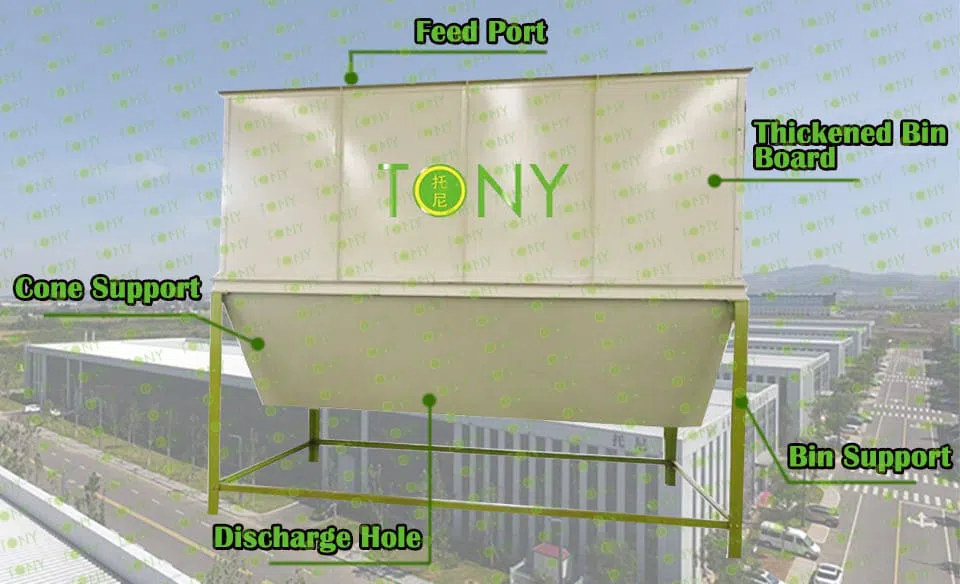
3.Infeed and Discharge Mechanisms:Material is fed via a top-mounted belt or scraper conveyor. The silo bottom is equipped with a variable-frequency discharge screw to convey wood chips at a steady rate to the grinder.
4.Material Level Monitoring:High and low-level sensors trigger alarms for low material levels and automatic shutdowns when the silo is full.
5.Ventilation and Safety Components:Roof vents reduce moisture accumulation inside the silo. Explosion relief panels and dust extraction ports are included to comply with dust explosion safety standards and prevent heat buildup within the wood chip mass.
6.Maintenance Platform and Manhole:Facilitate routine inspections and the removal of residual material from the silo.
Parameter
Effective volume | 30–300 m³ (small buffer silo30–80 m³; large outdoor steel silo 100–300 m³) |
Bulk density | Wood chips 0.18–0.28 t/m³ |
Hopper inclination angle | 50–60° |
Discharge method | Variable-frequency screw / rotary disc discharger |
Configuration | Air cannons, level sensors, ventilation/dust extraction ports, explosion relief devices |
Suitable Raw Materials
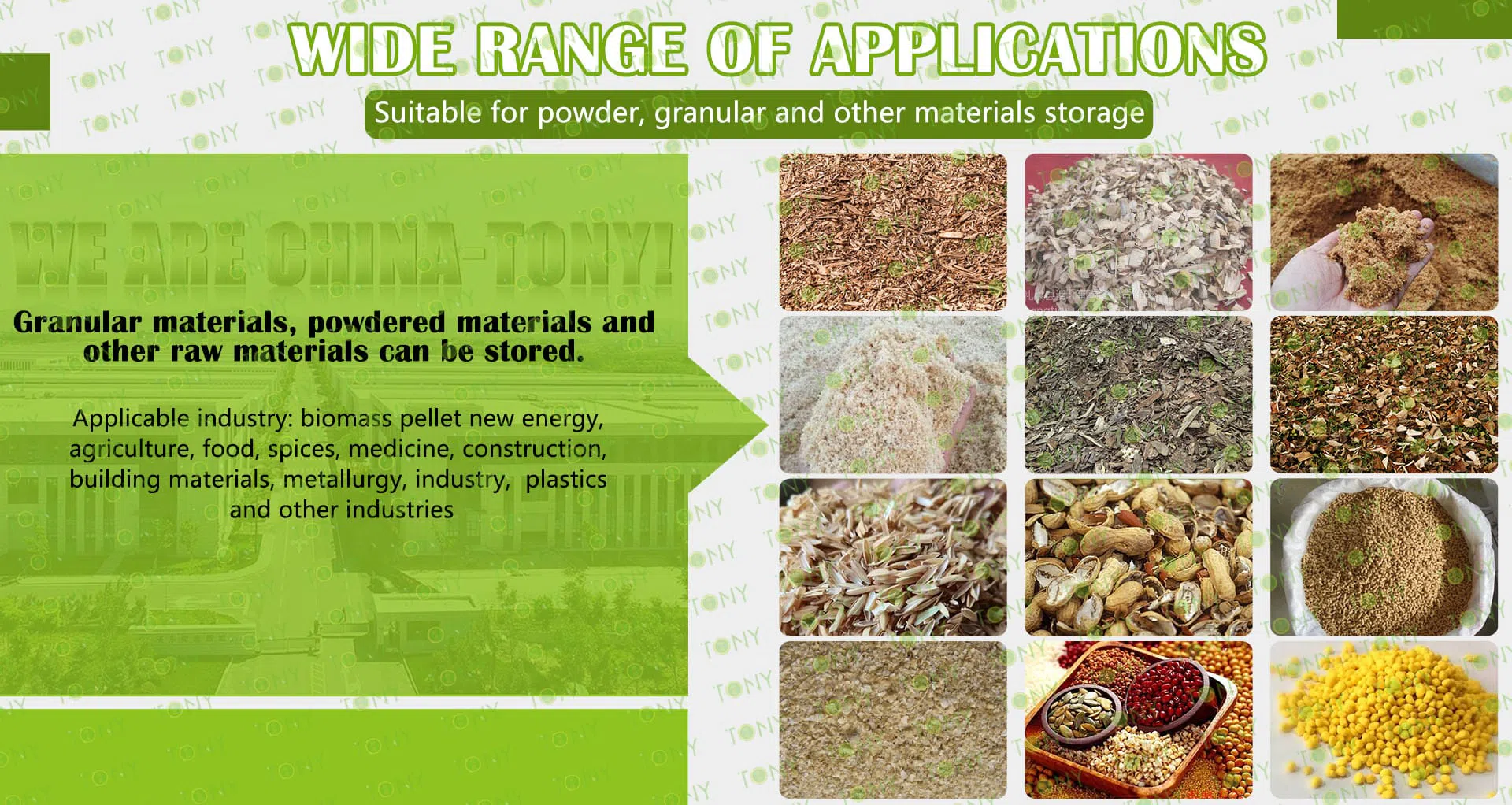
1.Various wood chips:Chips derived from pine, poplar, birch, mixed wood, logging residues (slash), and offcuts/scraps; these are the most common feedstocks for biomass pellet plants.
2.Forestry waste:Logging residue fragments, bark chips, and sawdust mixtures.
3.Agro-forestry fibrous materials:Fibrous feedstocks such as chopped straw, palm fibers, and bamboo chips (characterized by poor flowability, requiring equipment to prevent bridging/arching).
4.Other biomass fragments:Shredded waste formwork and crushed fruit tree branches.
5.Material requirements:Feedstock should be in chip or short-fiber form with moderate moisture content; excessive moisture causes clumping, bin clogging, and heating or mold growth.
Features
1.Balanced Process Capacity:Buffers raw wood chips to smooth out timing differences between crushing and drying stages, reduces equipment start-stop cycles, and boosts overall production line efficiency. 2.Continuous, Stable Discharge:Features a steep-angle conical hopper with an anti-bridging device and wear-resistant lining to prevent fibrous material from clogging or sticking; variable-frequency bottom discharge ensures uniform feeding and stable input to the pulverizer. 3.Facilitates Production Scheduling:Maintains sufficient raw material reserves to prevent downtime caused by supply interruptions; offers various indoor buffer bin and outdoor steel silo options to suit pellet plants of different scales. 4.Reliable Safety Protection:Equipped with material level monitoring, ventilation, explosion venting, and dust removal systems; employs a "first-in, first-out" flow to minimize risks of overheating, mold, spontaneous combustion, and dust-related hazards. 5.Eco-friendly and Space-saving:Enclosed bin design suppresses dust; galvanized models allow for outdoor storage, saving factory floor space and meeting environmental regulations. | 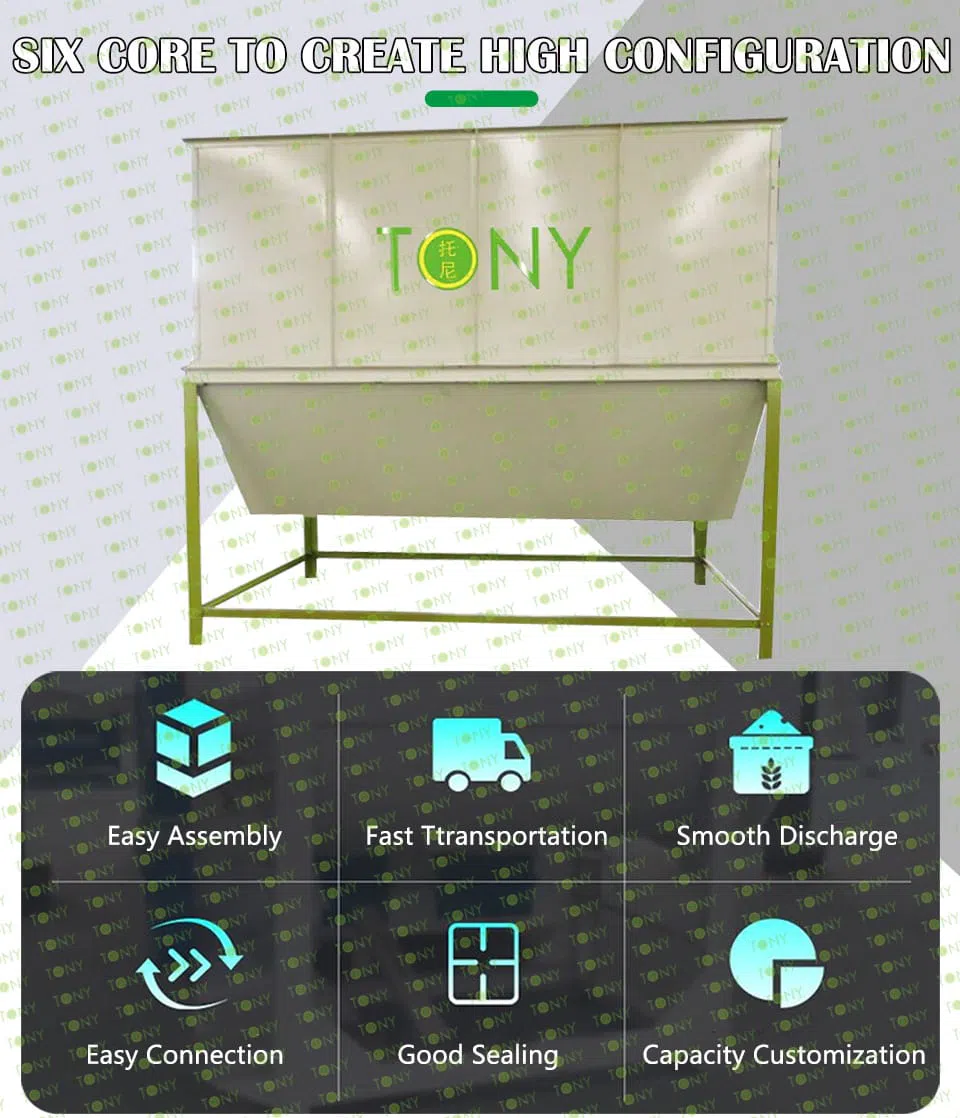 |
6.Automation Reduces Labor:Enables automatic shutdown when full and low-level alarms, as well as automated material intake and discharge, reducing the need for manual material handling.
Usage Scenario
Model Selection Key Points
1.Capacity Sizing:Select the volume based on the production line's raw material consumption over 1–3 days; choose indoor buffer silos for smaller facilities and large outdoor steel silos for large-scale plants.
2.Prioritize Arch-Breaking Systems:Due to the long fibers of wood chips, standard vibrators are insufficient; prioritize a combination of air cannons and rotary disc dischargers to minimize clogging.
3.Ensure a hopper cone angle of ≥50° and line the interior walls with wear-resistant material to reduce material adhesion and buildup.
4.Safety First:Biomass wood chips are flammable; include provisions for explosion venting, ventilation, and dust extraction, and strictly adhere to dust explosion prevention standards.
5.Downstream Equipment Compatibility:The discharge screw conveyor's capacity must exceed the maximum throughput of the grinder and should be equipped with a variable frequency drive (VFD).
6.Control Wood Chip Moisture Content:Wet wood chips are more prone to clumping, mold growth, and silo clogging.
Customer Case
Exhibition

Customer Visiting

Why Chose TONY?
Contact Us
If You Are lnterested,Please Send Us Inquiry Freely.
Before quotation we need to know:
1.What raw materials do you want to store?
2.How much do you want to store?
3.What is the nature of the raw materials you want to store?Such as the dry and wet conditions of raw materials, the size of raw materials and so on
4. Where do you use it specifically?


