
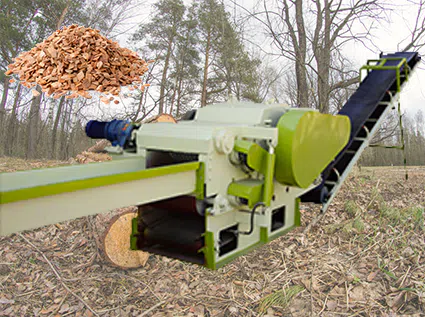
The Important Role of Wood Chipper in a Full Biomass Pellet Production Line
businesses that buy pellet production equipment often focus on the pellet machine while not realizing how important the beginning steps of preparing raw materials are. A wood chipper is the unit for reducing the size of biomass pellet plants. It turns messy wood waste into standard wood chips that match the needs of the hammer mill, dryer and pellet machine. Without chipping performance, big logs, thick branches and waste lumber will cause frequent blockages, uneven grinding and low forming rates in the pellet machine. This directly affects the quality of the finished pellets and the overall production speed of the line.
The process of a pellet line follows a clear order: raw wood material → wood chipper → hammer mill fine grinding → drying → pellet machine compression → cooling and screening → packaging. The wood chipper sets the stage for the production chain. Consistent chips from the wood chipper provide feeding for the next equipment. This reduces the load on grinding equipment lowers the energy used per ton of pellets and helps the pellet machines parts longer. For large biomass factories a properly matched wood chipper is the key to making continuous, stable and low-cost pellet production possible.
Many Types of Raw Materials Processed by Industrial Wood Chipper
Forestry Residues and Wood Processing Waste
The wood chipper is made to handle different types of woody biomass feedstock. This helps pellet producers use waste resources and keep their supply chains stable. The main materials it can process include logs, tree branches, tree tops, bark, slabs and leftover materials from forest harvesting. Waste lumber, wooden pallets, formwork, offcuts and trimming scraps from sawmills and furniture factories are also great inputs for this wood chipper.
Softwood and hardwood types like pine, poplar, eucalyptus, birch and fruit wood can all be used. The wood chipper can deal with materials that have levels of moisture including fresh wet wood and air-dried wood waste. It is important to note that wood that is very dirty with paint, glue or metal should be sorted out before it is used. Magnetic separators can be added at the entrance of the wood chipper to remove nails and iron pieces. This protects the cutting blades and the pellet machine that comes after.
Even though the wood chipper mainly works with wood materials it can also handle some woody crop residues, like big bamboo stalks. These chipped materials can be mixed with wood chips. Ground again before going into the pellet machine to make mixed biomass fuel pellets.
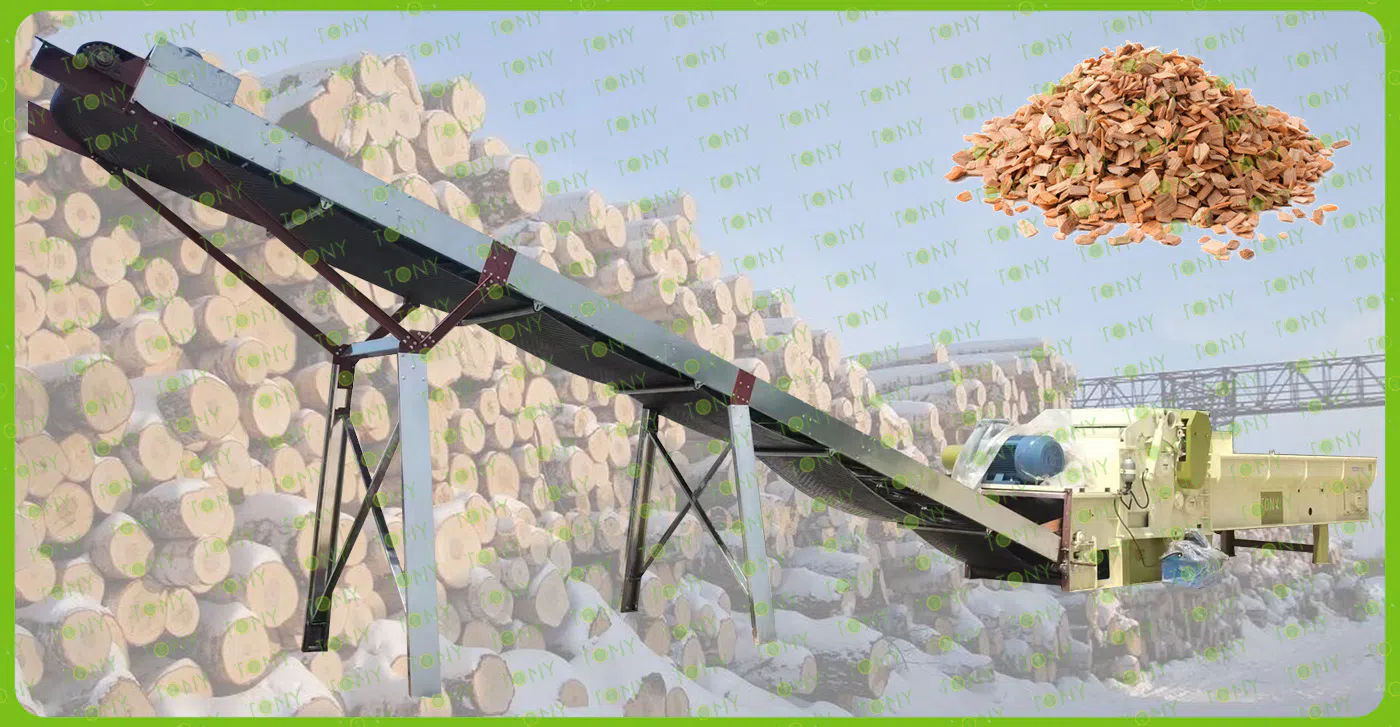
Key Performance Advantages of Industrial Wood Chipper for Pellet Plants
When choosing a wood chipper for pellet processing buyers in business-to-business markets look for a wood chipper that has capacity can adjust chip size is strong and safe to use. Our wood chipper line has drum wood chipper and disc wood chipper to fit project sizes. Disc wood chipper gives even chip output, which is good for medium pellet lines that need strict chip size rules. Drum wood chipper has a feeding opening and strong cutting power so it can handle thick logs and tangled branches with fewer blockages, which is ideal for big biomass factories that need high hourly output.
The wood chipper uses tungsten carbide alloy blades that resist wear and last long. Operators can change the gap between the blade and the bed knife to set chip thickness usually making chips 10 to 30 millimetres which is the best size for grinding before pelletizing. Hydraulic automatic feeding rollers push material steadily into the cutting chamber and the anti‑jam system automatically reverses feeding when there is an overload, which cuts down on shutdowns.
We offer both fixed wood chipper for factory layout and mobile wood chipper with diesel engine. Mobile wood chipper can work right at logging sites or wood waste yards chipping material on site and lowering the transport cost of raw wood. Different power options exist, such as motor and diesel drive so the wood chipper works for factories with steady grid power and for places that do not have reliable power.
How Wood Chipper Improves Final Pellet Quality and Production Profitability
Consistent chip size from the wood chipper gives economic benefits to pellet producers. First uniform chips let the hammer mill grind material into powder that is evenly distributed. Powder with a particle size helps the pellet machine make dense smooth pellets that break less have high energy value and low ash. Those pellets meet the quality rules of other international biomass fuel markets.
Second standardized wood chips dry evenly in the rotary dryer. If raw material contains wood blocks drying is uneven: some parts stay too wet while others dry too much. Unstable moisture is a cause of bad pellet forming and high wear on the pellet machine ring die and rollers. By using the wood chipper plant managers can set moisture precisely in the ideal 12 to 18 percent range for pelletizing.
Third pre‑chipping raises the density of raw material. Chipped wood takes up space than whole branches and logs saving warehouse space and cutting the cost of internal conveyor transport. For pellet makers who buy raw wood waste from suppliers, a reliable wood chipper lessens the risk of raw material supply changes and boosts the overall profit margin of pellet production.
Match Wood Chipper with Your Pellet Machine and Production Line
There is no wood chipper that fits all pellet projects. The right wood chipper depends on the raw material diameter you have the hourly output you want the types of raw material and whether you need mobile operation.
For pellet workshops that use a 1 to 3 ton per hour pellet machine, a compact disc wood chipper is enough.
For industrial lines that have a 5 to 15 ton per hour pellet machine, a heavy‑duty drum wood chipper that can handle high throughput is recommended.
Our technical team can design the line layout matching the wood chipper, conveyor, hammer mill, dryer, pellet machine, cooler and packaging machine into a complete integrated solution. We also supply parts give remote operation guidance and provide after‑sales maintenance service, for overseas B2B buyers.
If you want to get more information, please contact TONY.


